In a strategic pivot that signals a new phase in the global artificial intelligence arms race, Meta’s Superintelligence Lab unveiled its latest breakthrough on Monday: the "Muse Wonder" and "Muse Wonder Full" models. These systems represent Meta’s inaugural foray into the realm of frontier-class artificial intelligence, moving beyond the lightweight, latency-focused iterations that have defined the company’s recent trajectory.
For Meta, this is more than just a software update. It is a fundamental shift in its architectural philosophy, representing what the company describes as a "major leap toward personal superintelligence." By positioning these models to compete directly with the industry’s most advanced offerings—such as OpenAI’s GPT-6 Astra and Fable 5.1—Meta is signaling that it is no longer content to play the role of an experimental underdog.
The Technical Foundation: Moving Beyond Lightweight
For the past year, Meta’s AI roadmap has been dominated by "Muse Spark," a model optimized for speed and low-latency performance. While effective for simple, conversational interactions, Spark lacked the deep reasoning and complex coding capabilities required for power users and enterprise applications.
The new Wonder models change that narrative. Built on the infrastructure of Meta’s massive Prometheus data center in central Ohio, which began operations earlier this year, these models demonstrate a significantly higher parameter count and increased computational depth. According to internal benchmarks released by Meta, the Wonder series is capable of tackling sophisticated coding tasks, nuanced logical reasoning, and high-stakes data synthesis that were previously out of reach for the Muse family.
A Chronology of Meta’s AI Evolution
The journey to the Wonder models is part of a broader, year-long organizational restructuring overseen by Scale AI founder Alexandr Wang. Since his appointment to reorganize Meta’s AI efforts in August 2025, the company has operated with a disciplined, iterative approach.
- August 2025: Meta undergoes a major leadership and structural reorganization of its AI research division to prioritize efficiency and long-term scaling.
- Late 2025 – Early 2026: Focus shifts to the development of "Muse Spark," a lightweight model designed to integrate seamlessly into existing consumer products, emphasizing responsiveness.
- Early 2026: The Prometheus data center in Ohio comes online, providing the massive GPU clusters necessary to train larger, frontier-level models.
- September 2026: Meta launches expanded features for the Muse agent, laying the groundwork for more complex, multi-step task execution.
- Today: The launch of Muse Wonder and Muse Wonder Full, marking Meta’s formal entry into the high-compute frontier model market.
Supporting Data: Benchmarking Against the Titans
Meta’s entry into the frontier space is underscored by aggressive performance claims. In its official model card, the company provides a comparative analysis showing that Wonder and Wonder Full hold their own against market leaders.
The MemoryBench Advantage
Perhaps the most significant differentiator is the introduction of "active memory." Unlike standard LLMs that operate on a "stateless" basis—treating every new interaction as if it were the first—Meta has optimized these models to retain context across days, weeks, and months. To validate this, Meta introduced MemoryBench, a proprietary testing framework designed to evaluate how well a model constructs and maintains a coherent "memory" of user interactions.
Internal testing data indicates that Muse Wonder significantly outperforms competitors like Fable and Opus on the MemoryBench scale. This capability is expected to be the cornerstone of the updated Muse agent, allowing the AI to become a truly personalized assistant that understands the evolving preferences and history of its user.
Economic Positioning
The pricing strategy for the Wonder series reflects its status as a premium product. Available via the Meta Model API, the standard Wonder model is priced at $4 per million input tokens and $20 per million output tokens. This places it in direct economic competition with industry benchmarks like GPT-6 Sol and Opus 5.5, positioning Meta to capture a share of the high-end enterprise developer market.
Notably, "Muse Wonder Full"—the most capable iteration—is being held back from the public API, reserved exclusively for Muse Code subscribers. This move indicates a bifurcated strategy: Meta intends to use its most powerful compute to build a proprietary ecosystem rather than serving as a utility provider for all third-party developers.
Official Perspectives: The Vision for "Personal Superintelligence"
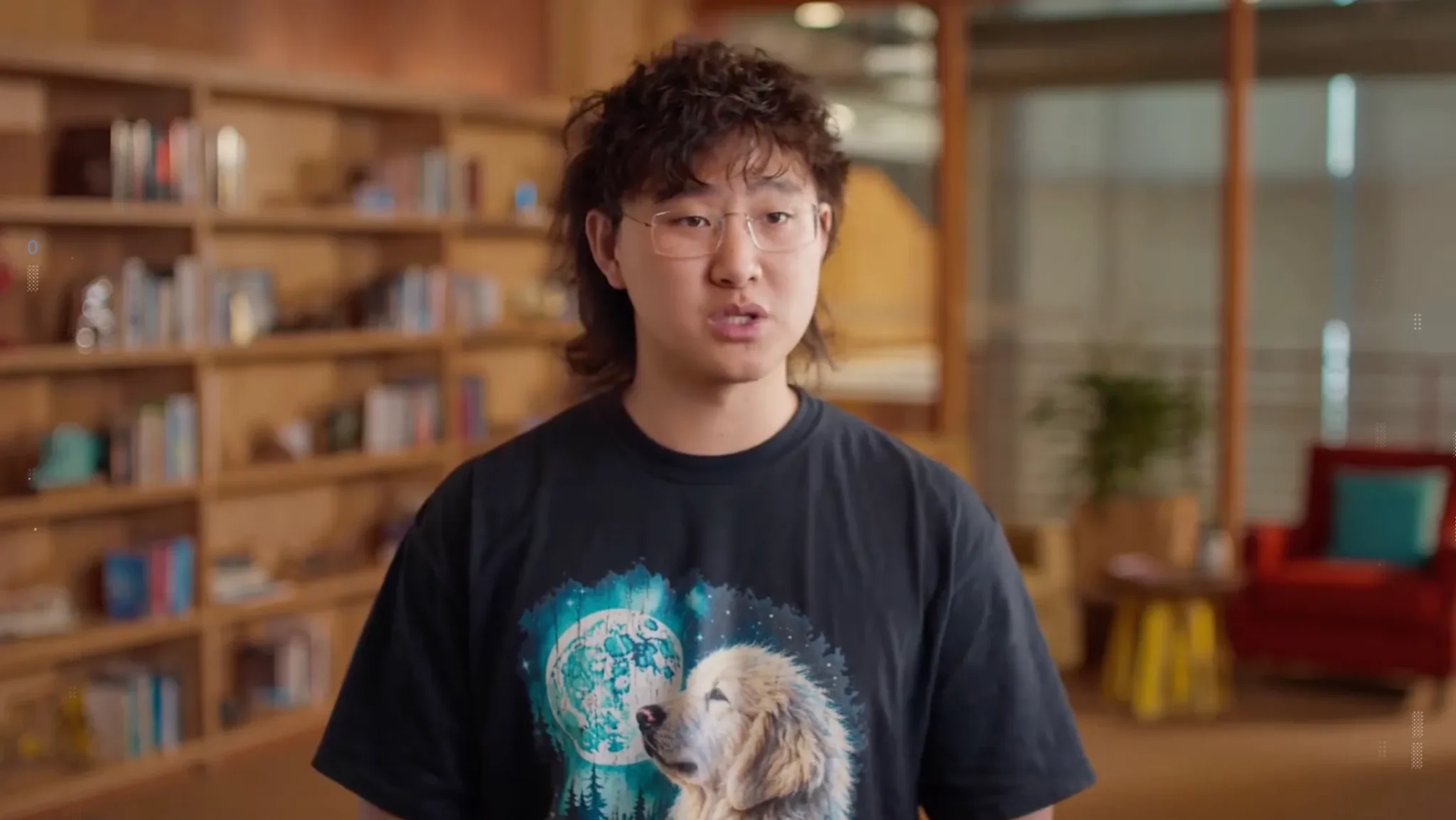
The official stance from Meta’s research team is one of cautious optimism tempered by ambitious engineering goals. Kavya Kopparapu, a lead research scientist at the Superintelligence Lab, emphasized the human-centric nature of these developments in a launch video.
"We put a tremendous amount of effort into making sure your model can remember what’s important to you over days, weeks, months, and beyond," Kopparapu stated. This emphasis on "active memory" suggests that Meta’s ultimate goal is not just to build a faster chatbot, but a persistent digital companion that integrates into the user’s life with minimal friction.
The company’s blog post describes the Wonder models as "the next step on our scaling ladder." This metaphor is crucial; it suggests that Meta views the current release not as an endpoint, but as a proof-of-concept for even larger, more capable models currently in the pipeline.
Implications for the AI Ecosystem
The release of Wonder has profound implications for the current AI landscape, which has been dominated by the binary competition between OpenAI and Anthropic.
1. The End of the "Lightweight-Only" Era
Meta’s pivot proves that even companies that prioritize edge-computing and mobile-first AI cannot afford to ignore the frontier. By building out its own infrastructure, Meta has effectively removed the bottleneck of relying on third-party compute providers, allowing it to control the full stack from model design to hardware optimization.
2. The Rise of Memory as a Feature
For years, the industry focused on context windows—how much a model could read at once. Meta is shifting the focus toward long-term recall. If Meta can successfully operationalize "active memory" at scale, it will likely force a industry-wide pivot. Competitors will be compelled to move away from stateless interactions toward more persistent, agentic frameworks that can mimic human continuity.
3. The Enterprise Moat
By restricting the most powerful model, "Wonder Full," to subscribers of their code-focused services, Meta is attempting to build a walled garden. This strategy targets the lucrative software engineering sector, where AI-assisted coding has become a standard productivity tool. If the Wonder models prove superior at complex software architecture, Meta could quickly erode the dominance of current incumbents in the developer-tooling space.
4. Regulatory and Ethical Considerations
As these models move from research labs to the hands of the public, the spotlight will inevitably turn to the safety and privacy of the data being "remembered." The concept of "active memory" raises immediate questions about data persistence: How does a user purge their memory? How is this sensitive personal information encrypted and stored? While Meta has not yet provided a full policy breakdown on the privacy implications of MemoryBench-optimized models, these questions will likely become central to the regulatory conversation in the coming months.
Conclusion: A New Front Opens
Meta’s introduction of the Muse Wonder series marks a defining moment in the development of AI. By marrying the massive computational power of the Prometheus data center with a laser focus on persistent, long-term memory, Meta has clearly signaled its ambition to reclaim its status as a leader in artificial intelligence.
Whether the market will embrace a shift toward these more "persistent" assistants, and whether Meta can sustain the high costs associated with training and running such massive models, remains to be seen. However, one thing is certain: the era of the "chat-and-forget" model is coming to a close. With Muse Wonder, the competition for the digital brain of the future has just accelerated.