At the Busan International Film Festival’s Asian Contents & Film Market (ACFM), one project has emerged as a focal point for both its cinematic ambition and its unflinching moral inquiry: Once Upon a Time in the Philippines. The debut feature from filmmaker E del Mundo, currently featured at the festival’s prestigious Asian Project Market, serves as a haunting exploration of the 2009 Maguindanao massacre, a tragedy that remains an open wound in the collective consciousness of the Filipino people.
Through the eyes of a fictional protagonist, Sam, del Mundo attempts to dissect how a society allows, absorbs, and eventually normalizes state-sanctioned violence. By shifting the lens from the historical event itself to the quiet, suffocating life of a young woman caught in its periphery, the film promises a harrowing examination of complicity and the structural rot of power.
The Anatomy of the Narrative: A Witness to Atrocity
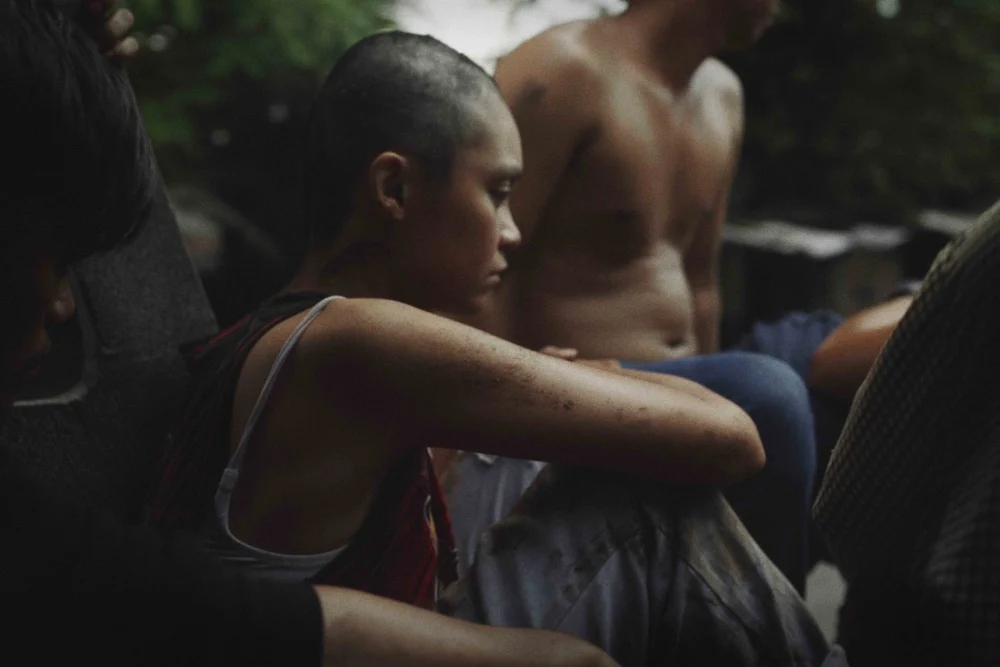
The film centers on Sam, a 19-year-old gas station attendant living in a fictional locale that mirrors the volatile landscape of the southern Philippines. Her life, already defined by the limited agency afforded to her in a male-dominated society, is upended when she finds herself an unwilling witness to a brutal massacre orchestrated by the private army of a powerful political clan.
As the narrative unfolds, Sam’s survival instinct shifts into a desperate, dangerous search for her missing boyfriend. Her quest for the truth reveals a terrifying reality: the perpetrators are not merely rogue gunmen but are embedded within a vast, interconnected apparatus of violence that implicates the police, local institutions, and the very fabric of her community.
Del Mundo characterizes the film as "a coming-of-age story swallowed whole by the political reality of the Philippines." It is a narrative that refuses to offer the comfort of a clear-cut hero or villain, instead focusing on the "multitude of people who obey, participate, remain silent, or simply stop asking questions."
Chronology: Remembering the Maguindanao Massacre
To understand the weight of del Mundo’s project, one must look back at the harrowing events of November 23, 2009. On that day, in the province of Maguindanao, a convoy of civilians—including the wife, relatives, and legal counsel of a gubernatorial candidate—along with a large group of journalists, were traveling to file election candidacy papers.
They were intercepted by more than 100 armed men, allegedly commanded by members of the Ampatuan political dynasty. The civilians were abducted and brutally executed. The death toll reached 58, including at least 32 journalists and media workers. This event was not merely a crime; it was an act of political theater designed to consolidate power through absolute terror.
The massacre is widely documented as the single deadliest attack on journalists in history. In the years following, the slow grinding of the Philippine judicial system turned the case into a symbol of both the persistence of the human rights community and the crushing weight of impunity that defines the nation’s political landscape.
Supporting Data and the Architecture of Silence
Del Mundo’s approach is rooted in the conviction that atrocities are not the work of a single "monster," but the result of a societal architecture. In the Philippines, this architecture is often built upon the "political clan" system, where local dynasties command private armies that operate with near-total immunity.
The significance of the massacre extends beyond the 58 lives lost; it serves as a litmus test for the rule of law. As co-producer Gian Carlo Librojo, who brings his own background as a broadcast journalist to the project, notes: "The massacre cannot be treated only as a closed chapter in history. It reveals structures of political power, fear, and impunity that continue to shape Philippine society."
The film acts as a "forensic examination" of the director herself—and by extension, the audience—within this society. By focusing on the fragility of a young woman’s mind, del Mundo interrogates the "steady acceptance of violence" that has become a survival mechanism for those living under the shadow of such clans.
Official Responses and Production Milestones
Once Upon a Time in the Philippines has garnered significant international support, signaling a global interest in the universal questions it poses. The production team—led by Kyle Nieva and Gian Carlo Librojo of Screen Asia, alongside Pamela Reyes—has secured a formidable network of co-producers from France (Piano Sano Films) and Norway (DUOfilm).
The project’s development history is a testament to its artistic gravity. It has been cultivated through the most rigorous development labs in the industry, including:
- Cannes’ Cinéfondation L’Atelier and Producers Network
- Venice Gap-Financing Market
- Locarno Open Doors (where it secured a development award and a Sørfond award)
- TorinoFilmLab (FOCAL Resource Award recipient)
- Singapore International Film Festival’s Southeast Asian Film Lab
Financial backing has been equally robust, with support from the CNC and Institut français’ Aide aux cinémas du monde, the Norwegian Film Institute’s Sørfond, Visions Sud Est, and Purin Pictures. This extensive pedigree reflects the industry’s faith in del Mundo’s ability to treat political violence not as mere spectacle, but as a deeply human, psychological experience.
Implications: The Search for a Collective Truth
The implications of Once Upon a Time in the Philippines are profound. In a country that has yet to fully "come to terms" with the trauma of 2009, the film attempts to facilitate a difficult conversation about the nature of complicity.
Del Mundo’s hope for the audience is clear: she wants viewers to recognize that they belong to a structure larger than themselves—a structure that carries within it "the good, the bad, and the ugly." By placing the audience in the shoes of a witness who becomes an accomplice, she forces a confrontation with the uncomfortable truth that in a state of institutionalized violence, neutrality is rarely an option.
As the team arrives at the Busan International Film Festival, they are looking to cross the final bridge between development and production. The hope is that the film will not just serve as a memorial to the victims of the Maguindanao massacre, but as a mirror held up to a society still grappling with the echoes of that day.
The Road Ahead
For Kyle Nieva, the project’s journey is nearing a critical juncture. "After such a long development journey, we hope Busan can be the final bridge between development and production," he says. The transition from the page to the screen will be the ultimate test of del Mundo’s vision: to turn a specific, localized trauma into a resonant, universal warning about the fragility of democracy and the dangerous silence of the bystander.
In the landscape of modern cinema, where political violence is often stylized or exploited, Once Upon a Time in the Philippines stands as a quiet, rigorous challenge. It asks whether we, like its protagonist, are merely watching the machinery of power from the sidelines, or if we have already begun to move the gears ourselves. As the industry gathers in Busan, the anticipation surrounding this film is not just for a new piece of art, but for the necessary, painful, and vital dialogue it is destined to provoke.