In the rapidly shifting landscape of the global automotive industry, the internal combustion engine is far from dead—it is simply evolving. As the transition toward full electrification continues to face infrastructure hurdles and consumer range anxiety, Chinese automakers have doubled down on a hybrid strategy that pushes the laws of thermodynamics to their limits.
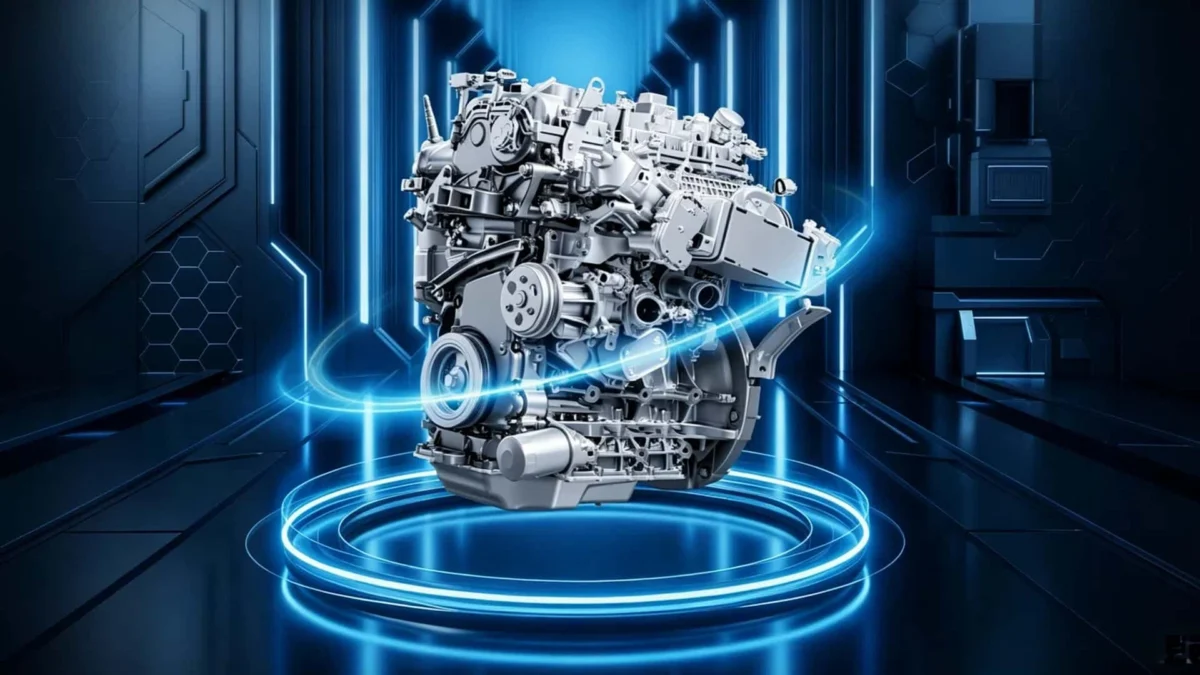
The latest breakthrough comes from Dongfeng Motor Corporation, which has officially announced that its new Mach Power 2.0T engine has achieved a record-breaking thermal efficiency of 45.5 percent. This figure, verified by the China Automotive Technology and Research Center (CATARC) Huacheng, marks a significant milestone in automotive engineering, positioning Dongfeng at the forefront of the highly competitive Chinese hybrid SUV market.
The Pursuit of Efficiency: Main Facts and Technical Context
Thermal efficiency in an internal combustion engine is a measure of how much energy from fuel is converted into useful motion versus how much is lost to heat. For decades, the industry standard for production engines hovered between 30 and 38 percent. Crossing the 40-percent threshold was once considered the "holy grail" of engineering. Now, with the certification of the Mach Power 2.0T, Dongfeng has firmly surpassed the 45-percent barrier.
This achievement is particularly notable because it was not realized in a small, low-displacement engine optimized solely for city commuting. Instead, this is a turbocharged 2.0-liter powerhouse specifically engineered for larger vehicles, including hybrid SUVs. These vehicles face a unique set of challenges: they must balance the heavy weight and aerodynamic drag of a larger frame with the power requirements for towing, high-speed highway cruising, and consistent performance across diverse climates.
By achieving this level of efficiency in a 2.0T platform, Dongfeng is proving that hybrid powertrains can maintain the visceral performance drivers expect while delivering fuel economy figures that were previously the sole domain of compact, naturally aspirated engines.
A Chronological Perspective: The Road to 45.5 Percent
The development of the Mach Power 2.0T did not occur in a vacuum; it is the culmination of years of targeted research and development aimed at neutralizing the inherent inefficiencies of traditional combustion.
- Initial Research Phase (2020-2022): Dongfeng’s powertrain division began intensive research into high-compression combustion cycles, specifically looking at how to mitigate "engine knock"—the premature ignition of fuel that causes internal damage—without sacrificing power output.
- The MAKC Combustion Concept: By 2023, the company finalized the "MAKC" combustion design. This architecture moved away from standard engine geometry to favor a long-stroke configuration, specifically utilizing a 1.29 stroke-to-bore ratio. This change was designed to stabilize the burn rate within the cylinder, a crucial step in maintaining efficiency at high loads.
- Verification and Certification (May 2024): Following extensive bench testing and durability trials, the engine was submitted to the independent CATARC Huacheng organization. On May 22, 2024, the formal certification process was completed, validating the 45.5 percent thermal efficiency rating.
- Public Unveiling (June 2024): The official announcement was made public, signaling to competitors like Geely and Chery that the stakes in the hybrid powertrain race have been raised significantly.
Under the Hood: The Engineering Behind the Breakthrough
The technical prowess behind the Mach Power 2.0T is a multi-layered approach to energy management. To understand how Dongfeng reached this efficiency milestone, one must look at three critical pillars of the engine’s design: combustion control, friction reduction, and thermal management.
Smarter Combustion and the MAKC Design
At the heart of the engine is the MAKC (Multi-Stage Advanced Kinematic Combustion) system. Traditional engines often struggle with the "trade-off" between high compression ratios and the risk of pre-ignition. Dongfeng’s solution was to pair a high-energy ignition system with 350-bar high-pressure direct injection. This allows for a much finer atomization of fuel, ensuring that the air-fuel mixture ignites precisely when intended.
Furthermore, the integration of a cooled low-pressure Exhaust Gas Recirculation (EGR) system plays a pivotal role. By reintroducing cooled exhaust gases back into the intake, the engine lowers peak combustion temperatures, which not only prevents engine knock but also allows the compression ratio to be pushed higher than ever before. Dongfeng engineers estimate this system alone contributes to a 3 to 10 percent improvement in real-world fuel economy.
Friction Reduction and Advanced Materials
Internal friction is the "silent killer" of engine efficiency. To combat this, Dongfeng turned to advanced material science. Key moving parts, particularly those subject to high wear and heat, have been coated in diamond-like carbon (DLC). DLC coatings are exceptionally hard and have a low coefficient of friction, allowing components to slide against one another with minimal energy loss.
Additionally, the engine utilizes an electronically controlled variable-displacement oil pump. In a conventional engine, the oil pump draws a constant amount of power from the crankshaft, regardless of engine demand. Dongfeng’s pump adjusts its output based on real-time load, ensuring that energy is not wasted circulating oil when it isn’t needed.
Variable-Geometry Turbocharging
Maintaining efficiency in diverse environments is difficult for any forced-induction engine. The Mach Power 2.0T utilizes a variable-geometry turbocharger (VGT), which allows the engine to optimize boost pressure across a wide RPM range. Whether the vehicle is navigating high-altitude mountain passes at 8,202 feet or cruising at sustained highway speeds, the VGT ensures the engine operates in its "sweet spot." According to company data, these advancements have expanded the engine’s high-efficiency operating range by 30 percent compared to the previous generation of Mach Power units.
Implications for the Hybrid Market
The introduction of this engine is not just a technical victory for Dongfeng; it is a strategic maneuver in one of the world’s most aggressive automotive markets. In China, the "45 percent club" has become the new benchmark for excellence. As manufacturers vie for dominance in the SUV segment, the ability to market a high-performance vehicle with industry-leading efficiency is a massive competitive advantage.
The Competitive Landscape
Brands like Geely and Chery have been making significant strides in their own hybrid platforms. Geely’s Thor hybrid system and Chery’s Kunpeng engine series are already delivering impressive results. However, Dongfeng’s 2.0T platform directly challenges the perception that "power" must be sacrificed for "efficiency." By offering a 2.0-liter engine that rivals the fuel economy of smaller motors, Dongfeng is catering to a demographic that wants the towing capacity and road presence of a traditional SUV without the punishing fuel costs.
Consumer Impact
For the end consumer, this development suggests a near future where hybrid vehicles become even more cost-effective. As these engines hit mass production, the manufacturing costs of high-efficiency components—such as DLC coatings and variable-displacement pumps—are likely to decrease due to economies of scale. This could lead to a lower total cost of ownership for hybrid SUV owners, making the transition away from pure gasoline vehicles more palatable for the average family.
The Future of Combustion
While the global automotive narrative is heavily focused on Battery Electric Vehicles (BEVs), the reality of infrastructure and raw material supply chains suggests that the internal combustion engine will remain a vital component of the transportation mix for decades to come.
Dongfeng’s success with the Mach Power 2.0T confirms that there is still significant "headroom" for combustion development. By focusing on hybrid-specific optimizations, manufacturers are finding ways to make gasoline engines cleaner and more efficient than even the most optimistic engineers predicted a decade ago.
As the industry moves toward 2030, the battle will no longer be fought on horsepower alone, but on the efficiency of the "energy conversion." With a thermal efficiency of 45.5 percent, Dongfeng has signaled that they are not just participating in the hybrid race—they are helping to set the pace. Whether this technology will be integrated into international export models remains to be seen, but for now, the Mach Power 2.0T stands as a formidable testament to the endurance and potential of the modern combustion engine.