For decades, our understanding of human evolution has been constructed primarily from the "hard" evidence of history: the fragmented skulls, isolated teeth, and scattered limb bones that survived the ravages of time. However, bones tell only a partial story. They represent individuals who lived and died over vast swathes of geological time, often mixing the remains of thousands of generations into a single sediment layer.
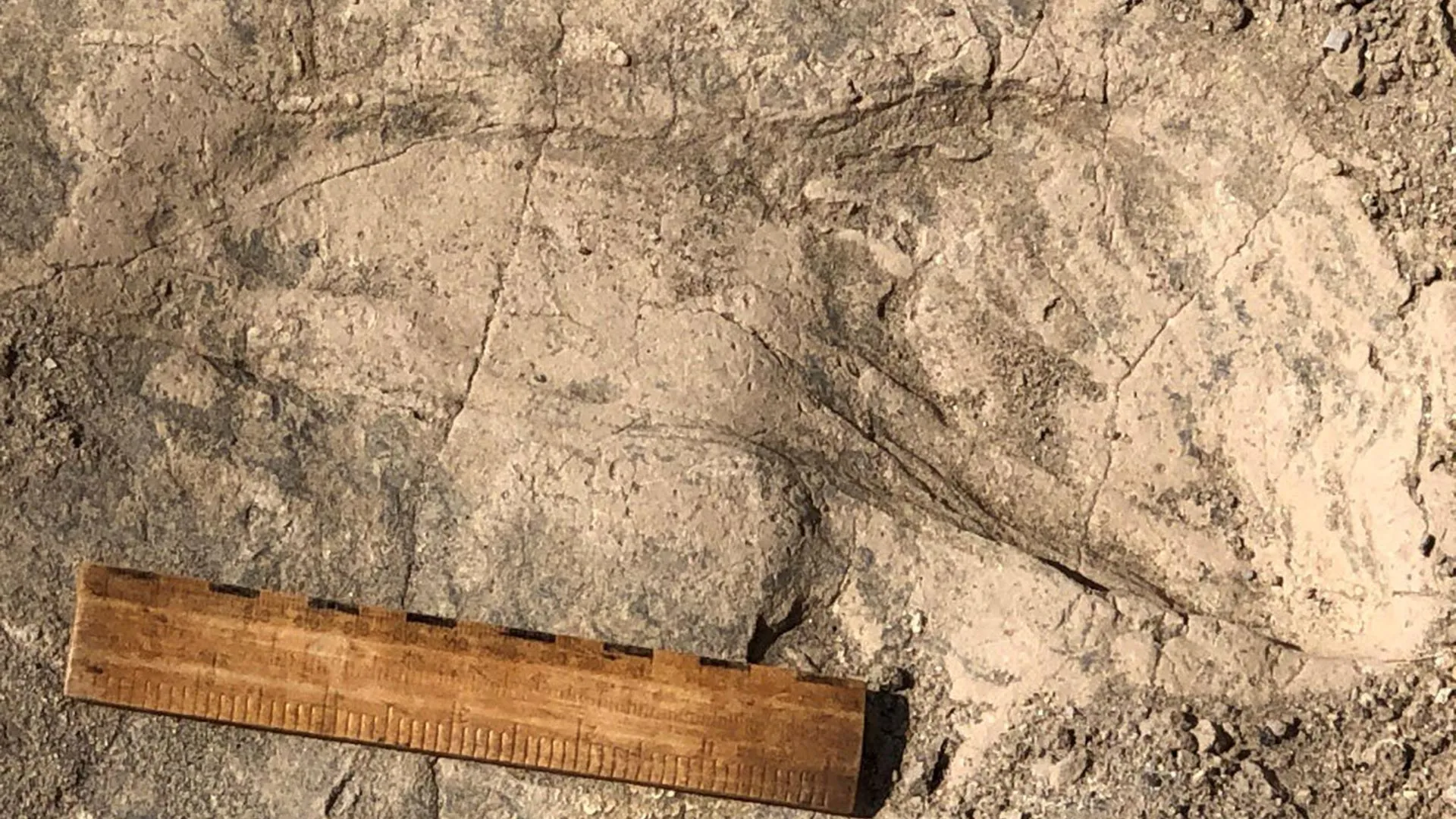
A groundbreaking discovery near the shores of Lake Turkana, Kenya, has shattered these conventional limitations. An international team of scientists has uncovered a remarkable set of fossil footprints dating back 1.4 million years, providing an unprecedented "snapshot" of a specific moment in the life of Paranthropus boisei, an extinct hominin cousin of early humans. These tracks, preserved with startling clarity, offer a rare, dynamic glimpse into the anatomy, social structure, and behavior of a species that walked the earth long before the dawn of modern civilization.
The Evidence: A Snapshot of Ancient Behavior
The tracks, found in the ancient, sediment-rich environment of East Turkana, represent the movements of eight Paranthropus boisei individuals. Unlike skeletal remains, which accumulate over centuries or millennia, footprints are formed in an instant. They are the geological equivalent of a photograph, capturing a fleeting event in the Early Pleistocene.
The research team, comprised of experts from the United States and Kenya, utilized cutting-edge analytical techniques—some pioneered by the group as recently as 2024—to categorize the tracks. By examining the subtle biomechanical markers in the prints, such as weight distribution and stride length, the scientists were able to distinguish these hominins from other contemporary species, such as Homo erectus. The resulting data paints a picture of a group navigating a lakeshore environment, providing a rare window into the lived experience of our evolutionary neighbors.
Chronology of Discovery and Research
The journey to this discovery began years ago, as researchers systematically combed the Lake Turkana region—a site globally recognized as a "cradle of humanity." The Turkana Basin is unique in its ability to preserve hominin history due to its history of volcanic activity and sediment deposition, which effectively "sealed" these tracks in time.
- The Early Excavations: For years, the team focused on mapping the geological strata of the region, identifying surfaces that were once soft, muddy lakeshores capable of recording impressions.
- The 2024 Breakthrough: The development of advanced anatomical analysis software allowed the team to refine their identification methods, enabling them to attribute the footprints to P. boisei with a higher degree of statistical confidence than previously possible.
- Field Verification: Recent expeditions to the site allowed for the precise mapping of the eight trackways, confirming that the individuals were moving in a consistent direction at approximately the same time, strongly suggesting they were traveling as a cohesive group.
- Ongoing Investigation: The team plans to return to the site in the coming months, aiming to map additional surfaces that may reveal further details about the group’s social dynamics and the environmental pressures they faced.
Supporting Data: Challenging Evolutionary Assumptions
Perhaps the most startling revelation from the study is the physical stature of the P. boisei individuals. Historically, paleontologists viewed this species as smaller and more robustly built, with massive jaws and teeth adapted for chewing tough vegetation. The footprints, however, tell a different story.
Redefining Body Size
"The sizes of the footprints indicate human-like body sizes—up to 1.8 meters tall and around 75 kilograms," explains lead author Dr. Kevin Hatala of Chatham University and the Max Planck Institute for Evolutionary Anthropology. This discovery suggests that P. boisei was significantly larger than previously estimated. By analyzing the footprint dimensions against modern human biomechanical models, the researchers have effectively challenged the long-held assumption that P. boisei was diminutive compared to Homo erectus.
Anatomy and Locomotion
The tracks provide direct evidence of how these individuals moved. The depth and shape of the heel strikes and toe-off points indicate a bipedal gait that is strikingly similar to our own. This evidence confirms that while P. boisei followed a distinct evolutionary path—one that eventually led to their extinction—they had already perfected the biomechanical efficiency of walking on two feet.
Official Responses and Expert Insights
The scientific community has reacted to the study with significant enthusiasm, noting that it bridges a major gap in the fossil record. By moving away from "bone-centric" studies, researchers are now beginning to explore the social and behavioral complexities of our extinct relatives.
Dr. Neil Roach of Harvard University, a co-author of the study, emphasizes the social implications of the findings. "The fact that eight, mostly adult male, Paranthropus boisei individuals seemingly traveled together as a group, without females or children, hints at a complex social structure," says Dr. Roach. "They may have lived in large groups where males competed for mates, yet were forced to tolerate one another for the sake of safety in an inherently dangerous, predator-filled environment."
The environmental context of the discovery is equally critical. Dr. Kay Behrensmeyer of the Smithsonian Institution notes that the recurrence of these tracks at the lakeshore suggests that the environment was a reliable, resource-rich hub. "To me, it is amazing that we have the same kind of lake margin deposits in two areas of East Turkana that are 40 kilometers apart, at about the same age," she observes. Her ongoing research into the geological conditions of these sites aims to explain why hominins returned to these specific shorelines for over 100,000 years.
Dr. Purity Kiura of the National Museums of Kenya echoes this sentiment, framing the discovery as a victory for conservation and global heritage. "The discovery… reinforces the region’s global importance in understanding human evolution," she states. "It highlights our responsibility to protect this irreplaceable heritage, as these sites provide the only physical record we have of how our ancient relatives engaged with their world."
Implications for the Study of Human Evolution
The significance of the Turkana footprints extends far beyond the identification of a single species. It signals a fundamental shift in how paleoanthropology is conducted.
Moving Beyond the "Bone" Paradigm
For over a century, the study of human evolution was defined by the recovery of skulls and limbs. While these remains offer a wealth of information regarding biological evolution, they are silent on the issues of behavior, group dynamics, and cognitive interaction. Footprint analysis adds a layer of "behavioral archaeology" to the mix. It allows scientists to calculate group size, observe social tolerance, and hypothesize about the survival strategies of early hominins.
Environmental Stewardship and Paleo-ecology
The study also highlights the interplay between ancient environments and evolutionary success. Why did these groups return to the lakeshore? Was it for the water, the vegetation, or to avoid predators? By mapping hundreds of footprints across multiple sites in the region, the team is building a "photo album" of the Early Pleistocene. This, in turn, provides context for the climate conditions that defined the era, helping researchers understand how changing environments influenced the migration and survival of various hominin species.
A Legacy for Future Generations
The work at Lake Turkana is far from complete. As Dr. Hatala noted, each new site is a window into a different moment in our past. By combining high-resolution digital mapping with traditional field excavation, the team is creating a record that is as durable as the fossils themselves.
The implications for our understanding of Paranthropus boisei are profound. We are no longer looking at a "dead end" species as a simple, small-brained, or purely instinctual creature. Instead, we are beginning to see them as members of a sophisticated, socially-driven group that occupied a complex ecological niche. The ability to walk, to gather in groups, and to adapt to the specific requirements of the East African landscape suggests that our ancestors—and their cousins—possessed a high degree of adaptability.
As the team prepares for their next expedition, the scientific world waits with anticipation. The tracks at Lake Turkana are a reminder that the story of human evolution is still being written in the mud and dust of the past. By continuing to preserve these sites, we ensure that we can continue to read the story of our origins, one footprint at a time. The discovery not only validates the importance of the Kenyan landscape in the story of life on Earth but also forces a re-evaluation of what it means to be a successful primate in an unforgiving, ever-changing world.