In an industry where reputation is the most valuable currency, the downfall of Joseph Molloy serves as a stark reminder that personal integrity is not a quality that can be toggled on and off at the office door. The Financial Conduct Authority (FCA), Britain’s primary financial watchdog, has officially prohibited Molloy, a former banker at HSBC Holdings, from ever working in the regulated financial services sector again. The catalyst for this career-ending sanction was not a multi-million-pound insider trading scheme or a complex money-laundering operation, but a calculated, persistent effort to avoid paying train fares totaling just under £6,000.
The final notice, issued by the FCA on October 1, 2024, concludes a saga that saw Molloy transition from a high-functioning professional at one of the world’s largest banks to a convicted fraudster. His method, a deceptive practice known in transit circles as "donutting," allowed him to evade £5,911 (approximately $7,800) in travel costs over the course of nearly a year. While the sum may seem negligible compared to the balance sheets Molloy likely handled at HSBC, the FCA’s decision underscores a fundamental principle of the British financial regulatory framework: honesty is indivisible.
The Mechanics of "Donutting": A Sophisticated Deception
The fraud perpetrated by Molloy was not a series of impulsive decisions or a simple case of forgetting to tap a contactless card. According to the FCA’s findings and court records, the scheme was a "sophisticated and determined" effort to defraud SE Trains Limited, the operator better known as Southeastern.
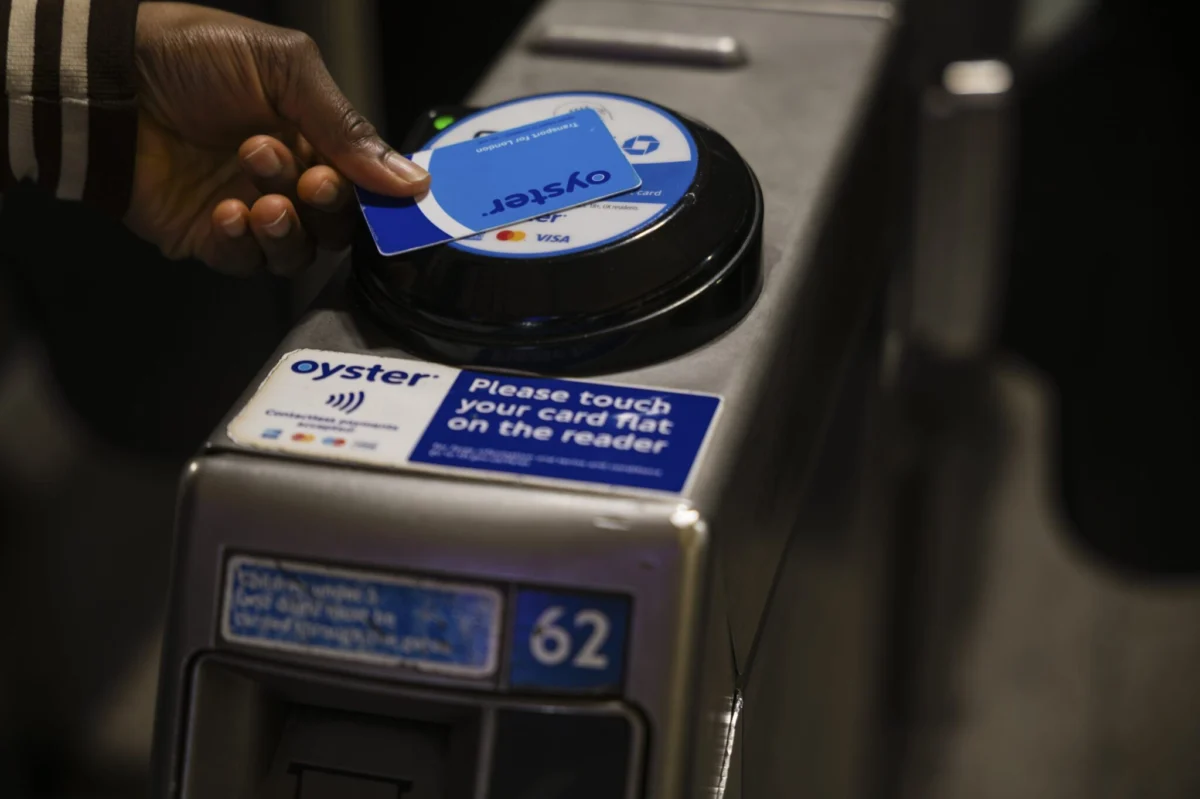
Between October 2023 and September 2024, Molloy engaged in a practice colloquially referred to as "donutting." This involves a commuter paying for two short journeys at either end of a long-distance commute while leaving a "hole" in the middle—the most expensive part of the trip. To facilitate this, Molloy established two separate accounts with Southeastern. To evade detection and link the journeys to his true identity, he utilized false names, fabricated addresses, and various email accounts to acquire travel cards.
By tapping in and out for a short journey near his home and doing the same near his place of work in London, Molloy created the digital illusion of two local trips. In reality, he was traversing the entire length of the line. The FCA noted that Molloy employed this tactic on at least 740 individual journeys. The sheer volume of the infractions transformed what might have been a minor civil matter into a criminal case of fraud by false representation.
Chronology: From Commuter to Convicted Felon
The timeline of Molloy’s downfall illustrates the speed with which a professional reputation can unravel once a pattern of dishonesty is brought to light.
- October 2023 – September 2024: Molloy carries out the fare evasion scheme, utilizing false identities to bypass the automated ticketing systems of Southeastern.
- Late 2023: Southeastern’s fraud detection units identify irregularities in travel patterns and account details, leading to an investigation.
- January 2024: Molloy appears at Inner London Crown Court. Facing overwhelming evidence of his 740 fraudulent journeys, he pleads guilty to fraud by false representation under Section 2 of the Fraud Act 2006.
- February 17, 2024: Molloy is sentenced. The judge hands down a 10-month prison sentence, suspended for 18 months, acknowledging the gravity of the "sophisticated" fraud while weighing mitigating personal factors.
- August 3, 2024: Following the criminal conviction, the FCA issues a Decision Notice to Molloy, signaling its intent to ban him from the industry. Molloy is given 28 days to refer the matter to the Upper Tribunal but chooses not to contest the findings.
- October 1, 2024: The FCA publishes the Final Notice, officially barring Molloy from performing any function related to regulated financial activities.
Supporting Data: The Financial and Regulatory Thresholds
The FCA’s decision to ban Molloy is rooted in the "Fit and Proper" test for Employees and Candidates (FIT), a cornerstone of the FCA Handbook. The regulator assesses individuals based on three primary criteria: honesty, integrity, and reputation; competence and capability; and financial soundness.
In Molloy’s case, the "honesty and integrity" pillar was irrevocably damaged. The FCA Final Notice stated: "Mr. Molloy’s conviction demonstrates a clear and serious lack of honesty and integrity such that he is not fit and proper to perform regulated activities." The regulator gives "particular consideration" to convictions involving dishonesty, as these traits are viewed as incompatible with the responsibilities of managing or advising on other people’s money.
The Scale of Fare Evasion in London
Molloy’s actions, while individual, contribute to a massive systemic problem for UK transit operators. Data from the London Assembly and Transport for London (TfL) highlights the scale of the issue:
- Revenue Loss: TfL estimated that 3.9% of journeys across its network went unpaid in the 2023/24 fiscal year, resulting in a revenue loss exceeding £130 million ($171.9 million).
- Specific Network Pressure: On the London Underground alone, the evasion rate was recently estimated at 5.03%, costing the system roughly £141 million.
- Future Targets: TfL has set an ambitious goal to reduce the fare evasion rate to 1.5% or less by the 2030/31 period through increased inspections and improved gate technology.
For a National Rail operator like Southeastern, which relies on fare revenue for infrastructure maintenance and staffing, a single commuter evading nearly £6,000 represents a significant hit to the public purse.
Official Responses and Judicial Commentary
The judicial response to Molloy’s actions was scathing, focusing on the discrepancy between his professional status and his criminal behavior. During sentencing, the presiding judge at Inner London Crown Court emphasized that this was not a crime of necessity.
"In my judgment, this is a high culpability," the judge remarked. "It is sophisticated, with considerable planning, conducted over a period of almost 12 months." The judge further noted that Molloy was "clearly in a financial position to pay the fares," yet he chose to evade them, an act that "causes a loss to the whole of society."
Despite the harsh criticism, the court did acknowledge mitigating circumstances. Molloy reportedly stopped the fraud of his own volition before being caught and expressed "genuine remorse." He was also experiencing "difficult personal circumstances" at the time of the offenses. These factors influenced the court’s decision to suspend his 10-month prison sentence.
In addition to the suspended sentence, the court ordered:
- 80 hours of unpaid community work.
- 10 rehabilitation activity days.
- A 12-month ban from using Southeastern train services.
- Full compensation to Southeastern of £5,000, plus costs and a victim surcharge.
For its part, the FCA remained clinical. When approached for comment, the regulator pointed to the Final Notice as its definitive stance. HSBC, Molloy’s former employer, has remained silent, declining requests to comment on the employment status or past performance of their former staff member.
Broader Implications: The "Cost of Character" in High Finance
The case of Joseph Molloy is not the first time a high-earning London professional has lost a career over rail fares. In 2014, Jonathan Burrows, a managing director at BlackRock, was banned for life by the FCA after it was discovered he had evaded fares totaling more than £43,000. These cases highlight a specific regulatory philosophy in the United Kingdom: the "integrity of the market" depends on the personal integrity of its participants.
1. The Zero-Tolerance Policy on Dishonesty
The FCA’s message is clear: there is no "de minimis" threshold for fraud when it comes to fitness and propriety. Whether the fraud involves £6,000 or £6,000,000, the underlying character flaw—the willingness to deceive for personal gain—is viewed as a risk to the financial system. If a banker is willing to defraud a train operator, the regulator argues, how can they be trusted with fiduciary duties toward clients or shareholders?
2. Career Suicide vs. Financial Gain
The financial irony of Molloy’s situation is profound. By evading $7,800 in fares, he has effectively forfeited a career that likely paid a six-figure annual salary. The "return on investment" for his fraud was spectacularly negative. This serves as a cautionary tale for professionals in regulated industries regarding the long-term consequences of "minor" ethical lapses.
3. The Digital Paper Trail
Molloy’s downfall also illustrates the increasing difficulty of committing "analog" crimes in a digital world. Modern transit systems use sophisticated data analytics to flag "incomplete" journeys and suspicious ticketing patterns. The very technology that makes commuting more convenient also makes it easier for operators to spot "donutting" and other forms of evasion.
4. Societal Impact and Public Perception
At a time when the banking industry continues to struggle with public trust following various scandals, the sight of a well-paid banker systematically "cheating the system" reinforces negative stereotypes. The judge’s comment about the "loss to the whole of society" reflects a growing intolerance for white-collar entitlement.
In conclusion, Joseph Molloy’s ban is more than just a punishment for unpaid train tickets; it is a reaffirmation of the ethical standards required to operate within the heart of the UK’s financial system. As the FCA continues its crackdown on non-financial misconduct, the Molloy case stands as a landmark example that for those in the world of finance, the most expensive ticket is the one you don’t buy.