The financial life of a modern billionaire-turned-politician is rarely a simple affair, but the latest disclosures from Donald Trump have pushed the boundaries of traditional federal transparency. Running to a staggering 927 pages, the 2025 financial disclosure has ignited a firestorm of speculation regarding the nature of the former president’s investment strategies. While critics point to the sheer volume of trades as evidence of potential market manipulation or insider activity, a closer examination by fintech experts and wealth management professionals suggests a more technical—and automated—reality.
Main Facts: A Disclosure of Unprecedented Scale
The primary point of contention lies in the contrast between Donald Trump’s filings and those of his predecessors. Barack Obama’s final financial disclosure spanned a mere eight pages; Joe Biden’s most recent filing reached only 11. In contrast, Trump’s 927-page document details a labyrinthine network of golf course revenues, book royalties, and, most notably, thousands of individual stock trades and over $1 billion in cryptocurrency-related income.
The sheer frequency of the transactions is what has drawn the most intense scrutiny. The filing reveals a pattern of high-volume trading in blue-chip technology stocks, including Nvidia, Apple, and Microsoft. On certain days, these stocks were bought and sold dozens of times. To the uninitiated, this looks like the behavior of a day trader at a terminal, raising questions about how a high-profile political figure could personally direct such a frenetic level of market activity without violating ethical boundaries or neglecting their public duties.
However, industry insiders argue that the optics of "chaos" are misleading. According to experts in direct indexing and automated portfolio management, the data points to a sophisticated, rules-based investment strategy that is becoming increasingly common among the ultra-high-net-worth (UHNW) population.
Chronology: From Social Media Allegations to Expert Analysis
The debate surrounding these disclosures began in earnest following a previous quarterly report in March. At that time, the disclosure showed approximately 3,700 trades in a single quarter, prompting immediate pushback from political opponents.
- March 2024: Following the release of a quarterly disclosure, Senator Elizabeth Warren and other critics alleged that the Trump family was potentially leveraging their political stature for market gain. The high volume of trades in tech giants was cited as a primary "red flag."
- The Defense: Eric Trump, Executive Vice President of the Trump Organization, responded via a post on X (formerly Twitter). He clarified that the investments were held in accounts managed by third-party financial institutions. He asserted that these firms held "sole authority" over all investment decisions, utilizing automated, model-based portfolios and direct indexing strategies.
- Trump’s Public Confirmation: When questioned about the trading volume, Donald Trump echoed his son’s defense, stating, "I don’t get involved in my personal—we have funds that run my money." He described the arrangement as a "blind account," claiming he never speaks to the money managers at the large institutions handling his capital.
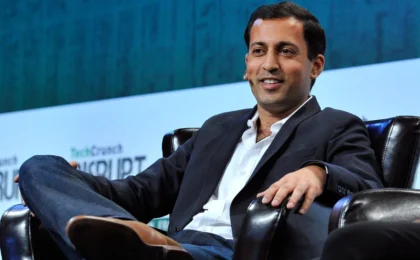
- Industry Deep Dive: Following these statements, Mo Al Adham, CEO of the direct-indexing platform Frec, and his team conducted a forensic analysis of the trade patterns to determine if the "automated" claim held water. Their findings, released in late 2024 and expanded upon in 2025, suggest the patterns are almost certainly the result of algorithmic rebalancing.
Supporting Data: The Mechanics of Direct Indexing
To understand why 3,700 trades in a quarter might be "normal," one must understand the mechanics of Direct Indexing. Unlike a traditional Mutual Fund or Exchange-Traded Fund (ETF), where an investor owns a share of a single fund that holds many stocks, direct indexing involves owning the individual underlying stocks that make up an index (such as the S&P 500 or the Russell 1000) directly in one’s own brokerage account.
The Volume Metric
Mo Al Adham’s analysis found that the trade count in the Trump filings was "right in the sweet spot" for a direct indexing strategy. "We usually trade between 500 and 1,000 times every quarter for a standard account," Al Adham noted. "Scaled up across the size of these accounts, seeing volumes above 3,000 wouldn’t be surprising, especially if the account is tracking the Russell 1000, which has significantly more positions than the S&P 500."
Tax-Loss Harvesting and Correlation
The "smoking gun" for automation, according to analysts, is not the volume but the timing and correlation of the trades. Al Adham’s team identified "distinct splits in trading behavior." On days when the broader tech sector experienced a drawdown, the accounts simultaneously sold correlated stocks like Nvidia, Apple, and Amazon.
This is a hallmark of Tax-Loss Harvesting. When a stock’s value drops, an automated system sells it to "realize" a capital loss, which can be used to offset capital gains and reduce the investor’s overall tax liability. The system then immediately buys a similar (but not identical) security to maintain the portfolio’s market exposure. This process, when applied to hundreds of stocks across multiple linked accounts, generates the thousands of pages of trades seen in the Trump disclosure.
The Rise of the Liquid Billionaire
The data also aligns with broader trends in global wealth. According to UBS’s Global Wealth Report 2025/2026, liquid investable assets—such as cash and securities—have grown to represent 47% of personal net wealth in the United States, up from 38% in 2011. This is the highest share tracked globally. Furthermore, the population of individuals with $5 million to $100 million in net assets—the primary demographic for direct indexing—has grown at a compound annual rate of over 7% for the last 25 years. Trump’s shift toward a high-volume, liquid portfolio reflects this broader migration of wealth into systematic, market-linked instruments.
Official Responses and Institutional Oversight
The Trump Organization has maintained a consistent stance: the former president is insulated from his portfolio by a wall of institutional management. Eric Trump’s assertions that the trades are "solicited" and "systematic" suggest that the firms—which often include major Wall Street players—operate under strict mandates that preclude client interference.
Manish Jain, CFA, and CEO of Mezzi, an AI-powered investment adviser, notes that for individuals with complex revenue streams—like Trump’s golf courses and licensing deals—wealth is often naturally "overconcentrated." Jain explains that founders and entrepreneurs often end up with massive, lopsided positions that require automated rules to manage. "If a customer was more than 10% in crypto, we would flag them," Jain said. "But for founders in the hundreds of millions or billions, their needs for diversification are handled through specific, rules-based equity market strategies."
The Trump Organization has not responded to specific requests for the names of the "big institutions" managing these funds, but the filing’s structure—showing identical trades executed across multiple accounts on the same day—is consistent with a professional manager running linked accounts through a unified algorithmic interface.
Implications: The Need for Disclosure Reform
While the technical explanation for the 927-page filing may be rooted in standard financial technology, the political implications remain fraught. The current federal disclosure format does not require a distinction between a manual trade made by the filer and an automated trade made by a third-party algorithm.
The "Discretion" Gap
This lack of clarity is what fuels suspicion. In the private sector, employees at high-frequency trading firms or law firms often provide "no-discretion" letters to their compliance departments. These letters from their brokers confirm that the employee has no control over individual trades, thereby clearing them of insider trading suspicions.
"A simple flag or a field in the disclosure that says ‘is this managed or individual?’ would be helpful to calm folks down," Al Adham suggested. Without such a field, every automated rebalancing of a direct index looks to the public like a deliberate, potentially informed trade.
The Evolution of Presidential Ethics
The Trump disclosures represent a collision between 1970s-era transparency laws and 2020s-era financial technology. When the Ethics in Government Act was passed in 1978, "index investing" was in its infancy, and "direct indexing" was non-existent. The law was designed to catch a politician buying a single stock based on a tip. It was not designed to process an algorithm harvesting tax losses across a 1,000-stock portfolio.
As more entrepreneurs and high-net-worth individuals enter the political arena, the "900-page disclosure" may become the new standard. Unless the reporting requirements are updated to account for automated, systematic trading, the optics of these filings will continue to invite scrutiny, regardless of whether the underlying activity is a matter of market manipulation or simply the efficient execution of modern financial code.
In the final analysis, the 927-page ledger serves as a testament to the complexity of 21st-century wealth. It depicts a world where $1 billion in crypto and thousands of tech trades are managed not by a man in a high-backed chair, but by a series of servers executing a sophisticated, tax-optimized dance. Whether the public—or the law—is ready to accept that "blindness" in the age of AI remains to be seen.