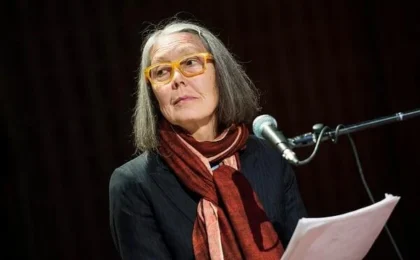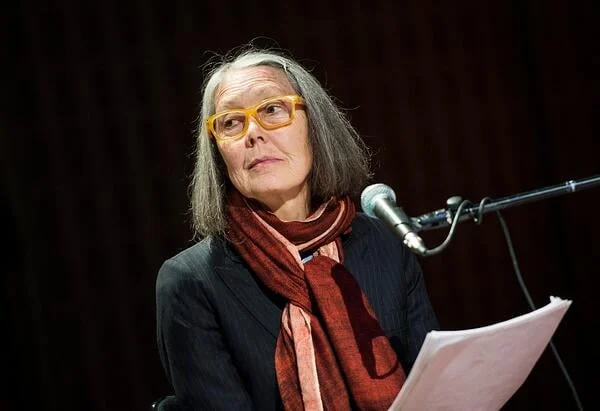
In a decision that celebrates the transformative power of language, the Swedish Academy has awarded the 2026 Nobel Prize in Literature to Anne Carson. A titan of contemporary letters whose work defies easy categorization, Carson has long been regarded as a singular voice in the global literary canon. By bridging the chasm between the ancient world and the postmodern experience, she has not only revitalized classical studies but has also invented entirely new modes of storytelling.
The Academy’s citation, read in Stockholm this Thursday, lauded Carson for her "bold and inventive oeuvre that, in playful dialogue with the classical tradition, has created new forms for contemporary literature." For the legions of readers, students, and fellow writers who have long championed her work, the Nobel recognition serves as a coronation for a career defined by intellectual rigor, emotional vulnerability, and a relentless refusal to adhere to traditional genre constraints.
The Intersection of Philology and Poetry: Core Facts
At the heart of Carson’s work lies an alchemy of the archaic and the immediate. As Anders Olsson, chair of the Nobel literature committee, aptly noted, her writing occupies the precise intersection "between the philologist’s obsession with words and the poet’s desire for new meaning."
Carson’s methodology is rooted in a profound reverence for the Greek and Roman masters—Sophocles, Euripides, Sappho, and Catullus—yet she wields this knowledge not as a curator of dusty relics, but as an architect of living, breathing art. Her work often exists in a liminal space: part essay, part poem, part classical commentary, and part personal memoir. It is this refusal to stay in a "lane" that has made her one of the most significant, if elusive, figures in modern literature.
A Life of Intellectual Odyssey: Chronology and Background
Born in Toronto in 1950, Carson’s trajectory was never destined for the conventional. She pursued an academic path that would eventually lead her to earn a doctorate in Classics from the University of Toronto in 1981. This rigorous academic grounding informs every stanza she writes, providing the structural integrity that allows her more experimental flights of fancy to remain tethered to the human experience.
Her professional life has been marked by a series of prestigious appointments at some of the world’s most selective academic institutions. She has held faculty positions at the University of Calgary, McGill University, the University of Michigan, New York University, and Princeton University.
Academic Milestones
- 1981: Earns Ph.D. in Classics, University of Toronto.
- 1990s: Begins a prolific period of publication, transitioning from academic monograph to experimental verse.
- 1998: Publication of Autobiography of Red, a watershed moment that brought her to a wider public audience.
- 2000s–2010s: Serves as Distinguished Writer in Residence at NYU, fostering a generation of MFA students through her collaborative teaching methods.
- 2026: Awarded the Nobel Prize in Literature.
Throughout these decades, Carson has remained an enigma. She famously avoids the limelight, preferring the company of her partner, the artist and collaborator Robert Currie, and the quietude of her current home in Iceland.
The Architecture of Myth: Supporting Data and Literary Impact
If any single work defines Carson’s ability to "re-mythologize" the ancient, it is Autobiography of Red. Published in 1998, the work reimagined the myth of Hercules and the monster Geryon as a contemporary love story. The book became a cultural phenomenon, selling nearly 100,000 copies in the United States alone—a staggering figure for a work of experimental poetic fiction.
Beyond her original compositions, Carson is perhaps the most vital translator of her generation. Her translations of Sophocles’ Electra and Antigone, and Euripides’ Bakkhai, are celebrated not for their fidelity to the literal—though she is a master of the original Greek—but for their tonal accuracy. She translates the feeling of the ancient world into a language that feels urgent and terrifyingly modern.
Her bibliography is a testament to her polymathic range:
- Poetry and Hybrid Works: Glass, Irony and God (1995), Autobiography of Red (1998), Men in the Off Hours (2000), The Beauty of the Husband (2001), Nox (2010), and Red Doc> (2013).
- Translations: Her work on the fragments of Sappho and the tragedies of Euripides has fundamentally changed how these texts are staged and read in the 21st century.
Echoes of the "Egocircus": Official Responses and Academic Legacy
The news of the Nobel win has sent ripples of celebration through the academic institutions where Carson taught. Deborah Landau, director of the NYU Creative Writing Program, expressed the sentiment of many who worked closely with the author.
"The NYU Creative Writing Program was incredibly fortunate to have had the singularly brilliant and visionary writer Anne Carson on faculty for 13 years," Landau stated. She highlighted the "Egocircus," a graduate workshop Carson co-taught with Robert Currie, which allowed students to move beyond the page and engage in multidisciplinary artistic collaboration. This, according to Landau, was the essence of Carson: a teacher who viewed the act of writing as a social, communal, and experimental endeavor.
The literary world has responded with near-unanimous approval. Critics note that by honoring Carson, the Swedish Academy is not merely rewarding a "poet," but is instead honoring the evolution of the book as an object of art—a move that recognizes how the boundaries of literature are expanding to include the visual, the performative, and the scholarly.
The View from Iceland: A Reaction to the Global Stage
The announcement of the Nobel Prize is often accompanied by a flurry of media activity, press conferences, and the expectation of profound statements. Anne Carson, however, remains characteristically unbothered by the spectacle.
When Ingrid Carlberg, permanent secretary of the Swedish Academy, reached out to notify her of the win, she found the author in Iceland. The brevity of the interaction was classic Carson. "All she had time to tell me was that she is for the moment in Iceland, where she’s listening to the wind," Carlberg recounted to the press.
In a follow-up with a local news outlet, Carson reflected on the sudden global attention with a blend of dry wit and genuine bewilderment. "I think they’re all crazy," she said of the Swedish Academy and the media circus surrounding the prize. "They have the usual questions, and I have no answers."
Implications: The Future of the "Carson Effect"
What does this Nobel Prize mean for the future of literature? For years, critics have debated whether poetry, especially experimental and classical-adjacent poetry, has a future in an age dominated by digital noise and short-form media.
By awarding the prize to Carson, the Swedish Academy has signaled a commitment to complexity. The "Carson Effect" is already visible in the work of younger writers who are increasingly comfortable blending genres—writing essays that read like poems, and novels that incorporate historical fragments. She has made it "safe" for writers to be intellectual, to be difficult, and to be deeply invested in the past without sacrificing the emotional core of the present.
As she remains in Iceland, "listening to the wind," the literary world is left to contend with a legacy that is still being written. The 2026 Nobel Prize is not an end point for Anne Carson; it is a recognition of a journey that has successfully dismantled the barriers between the reader and the text.
In a world that demands instant answers and definitive conclusions, Anne Carson offers something far more valuable: the courage to inhabit the question, the beauty of the fragment, and the enduring power of the ancient myth to explain our modern, fractured lives. She has, in the words of the Academy, created new forms—and in doing so, she has given us new ways to see ourselves.