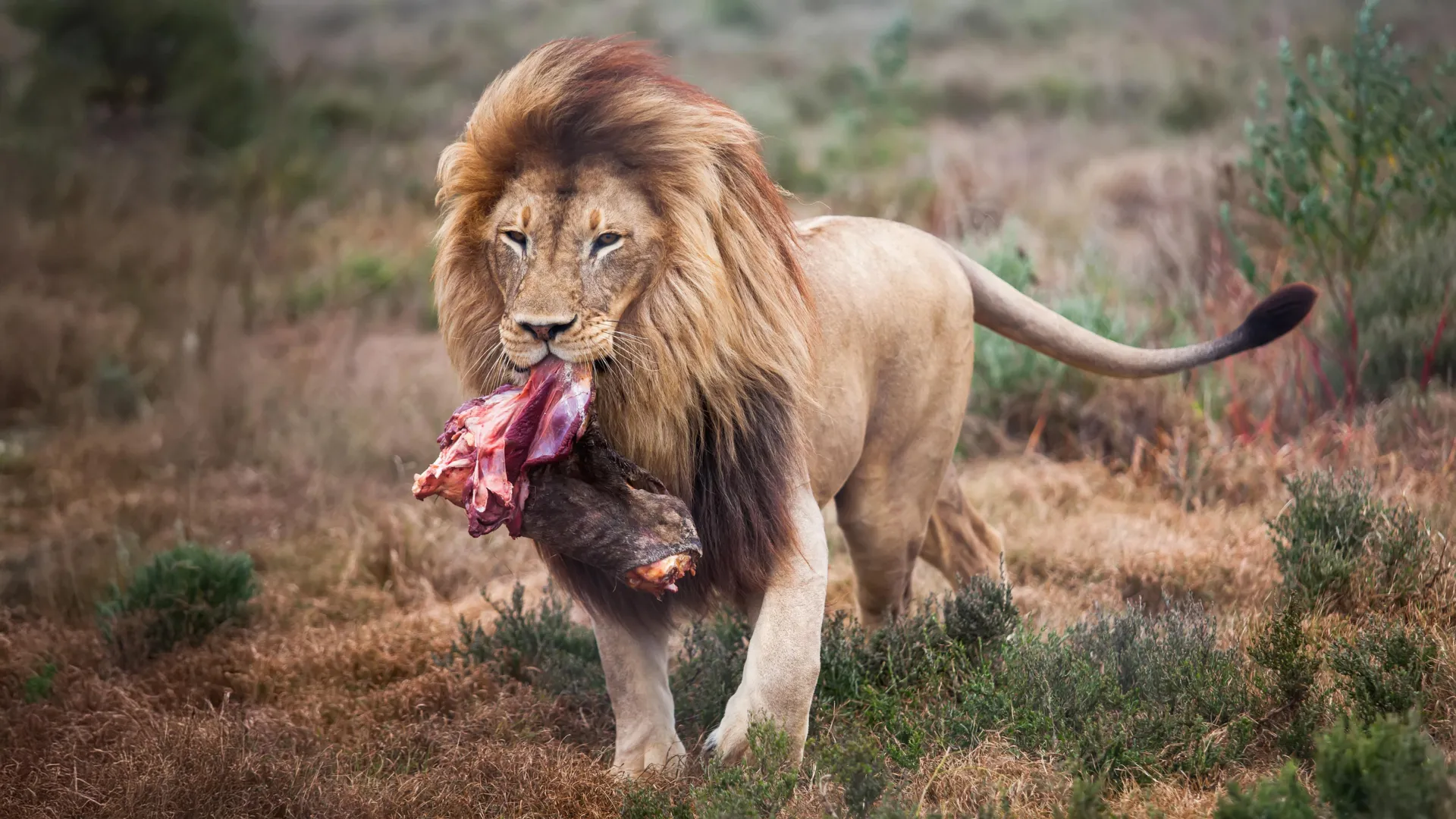
In the quiet, expansive enclosures of South Australia’s Monarto Safari Park, a group of three adult male African lions recently participated in a scientific study that is fundamentally shifting our understanding of carnivore management in zoos. By shifting away from the clinical, daily feeding routines common in captive settings and toward a more primal "feast and fast" schedule involving whole animal carcasses, researchers have unlocked a behavioral blueprint that mirrors the wild experience of these apex predators.
The study, published in the journal Applied Animal Behaviour Science, represents a collaborative triumph between the University of Adelaide’s School of Animal and Veterinary Sciences and the expert zookeepers at Monarto. The findings suggest that the way we feed lions in human care does more than satisfy their nutritional requirements; it dictates their psychological state, their activity rhythms, and their physical engagement with their environment.
The Natural Rhythm: Why Wild Lions Don’t Keep a Calendar
In the African savanna, a lion’s life is governed not by the clock, but by the hunt. Success is intermittent, and failure is common. A pride may gorge themselves on a significant kill, consuming massive quantities of protein, only to enter a period of lethargy and digestion that can last for days. This biological cycle of "feast and fast" has been honed over millions of years of evolution.
Conversely, traditional zoo practices have historically favored consistency: predictable meal times, processed meat portions, and daily feeding. While this approach ensures nutritional stability, it inadvertently strips away the natural behavioral "work" that defines a lion’s existence. Lead author Lesia Hryhorenko, a researcher at the University of Adelaide, noted that this dissonance is exactly what the study aimed to bridge.
"Wild lions don’t eat at the same time every day," Hryhorenko explained. "They experience natural periods of feasting and fasting depending on hunting success. We wanted to understand how African lions in human care respond when feeding routines more closely resemble those natural patterns."
A Chronology of the Experiment
The research team, which included international collaboration from Florence Demoulin of the University of Liege, set out to measure the impact of these naturalistic feeding cycles over a rigorous three-month period. The study was structured to provide a granular view of the lions’ daily lives through 24-hour continuous infrared video monitoring.
The Experimental Phase
The study proceeded through three distinct stages:
- Baseline Monitoring: Before the introduction of the carcass-based regime, the lions were observed under their existing, standard zoo feeding schedule to establish a baseline for activity, social interaction, and pacing behaviors.
- Introduction of the Carcass Regime: The research team introduced whole carcasses—approximately 200 kilograms of meat—every nine days. Unlike the standard bite-sized portions, these carcasses were left in the enclosure for up to three days, allowing the lions to choose when and how they consumed the food.
- Data Analysis and Post-Feeding Observation: Following the consumption of the carcass, the lions were observed throughout their natural period of rest and subsequent rise in activity levels, capturing a full, multi-day cycle of behavior rather than a snapshot.
The result was one of the most comprehensive datasets ever assembled for African lions in human care. The data provided a minute-by-minute account of how these apex predators navigate their days when given the opportunity to exhibit their natural predatory instincts.
Supporting Data: The Anatomy of a Feed
The statistics gathered during the experiment were stark. When provided with whole carcasses, the lions’ behavior underwent a transformation.
Consumption Patterns
On days when carcasses were present, the lions spent nearly three times as long eating compared to their standard diet days. This was not merely about the volume of food, but the process of eating. The animals engaged in tearing, pulling, and manipulating the carcass—actions that are physically demanding and mentally stimulating. By forcing the lions to process the animal themselves, the feeding routine acted as a high-level form of enrichment.
The Resting Response
Following the period of intense feeding, the lions exhibited a prolonged, sedentary state. They spent significantly more time lying down and resting, a classic physiological response to the intake of a large meal. This period of "digestive lethargy" is a hallmark of wild lion behavior, and its presence in the zoo setting indicated that the lions were not just eating—they were biologically fulfilling their natural cycles.
The Gradual Return to Activity
As the fasting period progressed, the researchers observed a clear, steady increase in movement. The lions transitioned from rest back to a state of active patrolling and exploration, effectively resetting their internal clocks for the next feeding event. This rhythmic oscillation—high activity during the hunt/feed, low activity during digestion, and a gradual ramp-up toward the next event—closely mirrored the documented patterns of wild pride populations.
Pacing and the Psychology of Anticipation
One of the most significant aspects of the study was the investigation into "pacing"—a repetitive, circular walking behavior often seen in captive carnivores. Pacing is frequently cited as a symptom of chronic stress or "anticipatory behavior," where the animal is waiting for something (usually food) to happen.
The study provided a nuanced insight into this phenomenon. Researchers found that while pacing did occur, it was not linked to hunger. If the lions were simply "starving," one would expect to see pacing increase as the fasting period went on. Instead, the highest rates of pacing were recorded around predictable, routine events—such as the arrival of keepers or the anticipated movement between habitat zones.
This suggests that pacing in this context is less about physiological distress and more about a learned expectation of human-provided routines. By removing the predictability of the daily "dinner bell," the carcass feeding schedule actually helped decouple the lions’ stress from the act of feeding itself. Furthermore, the study noted that the inclusion of whole carcasses did not increase inter-lion aggression or cause social instability, reassuring zoo management that such practices are safe for social groups.
Official Responses and Strategic Implications
Associate Professor Alexandra Whittaker, a co-author of the study, emphasized that this research has profound implications for how zoos evaluate their welfare standards. She argued that the traditional, short-term focus of animal behavior studies is insufficient.
"Many zoo studies focus only on what happens immediately after food is provided," Associate Professor Whittaker stated. "Our results show that feeding schedules can influence behavior for days afterward, making it essential to look at behavioral patterns across the entire feeding cycle rather than a single feeding event."
The implications are clear: zoo management must move beyond the "nutritional check-list" approach. Welfare is not just about the quality of the diet; it is about the temporal experience of the animal. If a zoo’s feeding schedule does not allow for the natural expression of "work" (tearing and pulling) and the subsequent "rest" (digestion), it may be failing to meet the full spectrum of the animal’s psychological needs.
Looking Ahead: The Future of Welfare Science
As the research team looks to the future, they suggest that integrating behavioral monitoring with physiological markers—such as fecal cortisol levels or heart-rate variability—will provide an even deeper understanding of animal well-being. By combining these metrics with the feast-and-fast feeding model, zoos could potentially optimize their care strategies to maximize the quality of life for their carnivores.
The success of the Monarto Safari Park study acts as a blueprint for other institutions. It demonstrates that with careful planning and scientific rigor, zoos can transform their enclosures from static exhibits into dynamic, naturalistic environments where the rhythm of the wild can once again be felt.
For the lions at Monarto, the change in routine has been a return to their roots—a reminder that even in the heart of human care, the spirit of the predator thrives when given the chance to live by its own biological clock. The findings serve as a powerful reminder that in the world of conservation, understanding the how and when of behavior is just as vital as understanding the what.