The rapid integration of generative AI into robotics is often hailed as the "iPhone moment" for physical machines. By handing the "keys" to large foundation models, developers have enabled robots to navigate, converse, and perform tasks with a level of fluidity that traditional, hard-coded algorithms could never achieve. However, this shift introduces a profound, systemic risk: unlike traditional software, which operates on deterministic, predictable logic, generative AI is inherently probabilistic. When a humanoid robot encounters an unexpected obstacle, it doesn’t just execute a "stop" command; it "thinks" through a solution—a black-box process that poses significant safety concerns for real-world deployment.
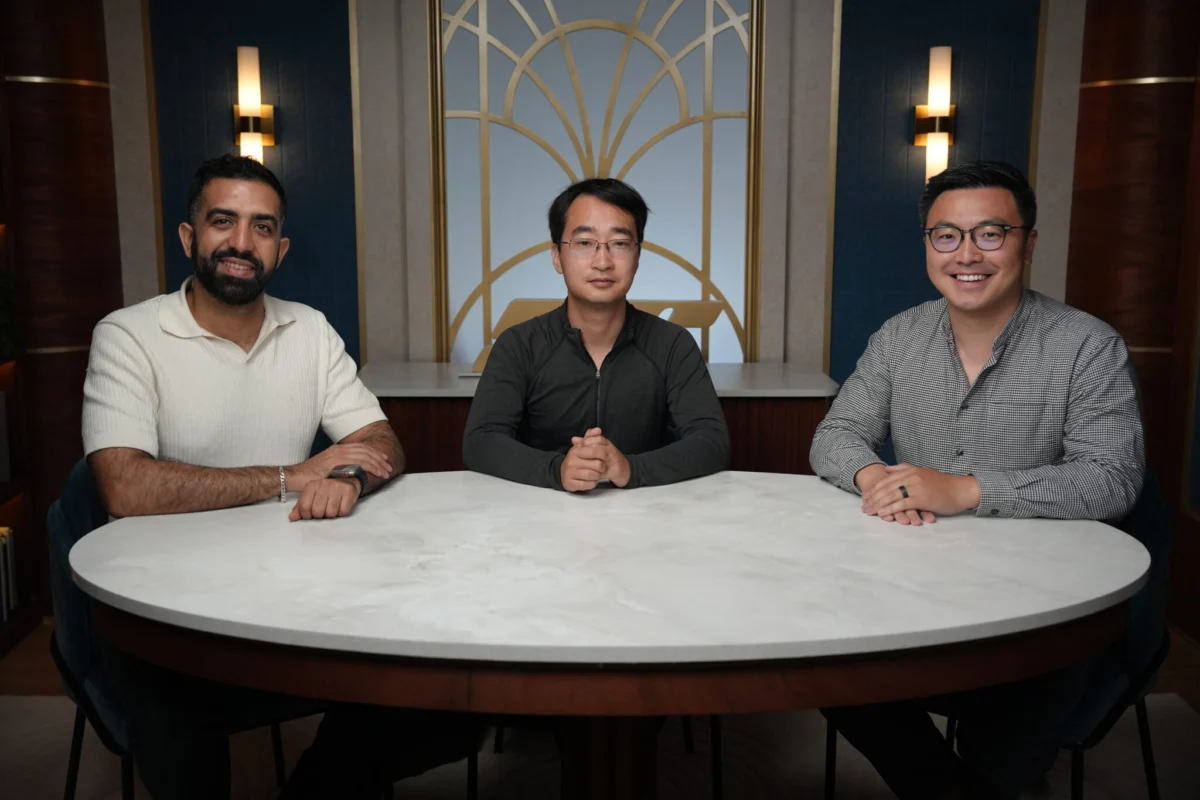
Enter Safeworld, a venture-backed startup emerging from stealth today with the mission to solve the industry’s most pressing "trust gap." Founded by Dr. Ding Zhao, a leading authority on Safe AI at Carnegie Mellon University, alongside veteran startup executive Kyle Wong and machine learning engineer Simo Rachidi, the company has secured over $12 million in seed funding. The round was led by Shine Capital and a16z Speedrun, with participation from notable entities including the Carnegie Mellon University Endowment, Box Group, Innovation Endeavors, and SV Angel.
The Core Challenge: Probabilistic Risk in Unstructured Environments
The fundamental problem facing modern robotics is that the "brain" of the machine is now a stochastic system. In the past, engineers could write a formal proof to demonstrate that a robotic arm would stop if a sensor detected an object within a specific radius. With generative AI, the robot’s decision-making process is far more complex, often relying on massive neural networks that are difficult to interpret.
"The safety challenge that we’re talking about is a combination of, one, really advanced generative AI probabilistic evals—how do you underwrite the risk of a probabilistic system?" Dr. Zhao explains. "The second part that’s really hard is the trust part, and you need both to deploy a robot."
Safeworld intends to provide the industry with a standardized framework for validating these systems. Their approach centers on high-fidelity simulation, where they subject robotic control systems to thousands of synthetic scenarios. By populating these digital environments with realistic human models—varying in size, shape, gait, and behavior—Safeworld can stress-test how a robot reacts to unpredictable human movement, such as a person tripping, falling, or appearing suddenly from a blind corner.
Chronology: From Academic Theory to Market Reality
The journey of Safeworld began in the hallowed halls of Carnegie Mellon University, where Dr. Zhao dedicated his career to the intersection of autonomous systems and safety. For years, the academic community struggled with the "sim-to-real" gap—the discrepancy between how a robot performs in a controlled virtual environment and how it behaves in the chaotic reality of a factory or a home.
- Foundational Phase: Dr. Zhao’s research at the Safe AI Lab established the early methodologies for evaluating AI behavior in extreme edge cases.
- The Generative Pivot: As the industry shifted toward Large Language Models (LLMs) and Vision-Language-Action (VLA) models to power robots, the need for a dedicated safety verification platform became apparent.
- Company Formation: Recognizing that academic research alone could not solve the industrial scaling problem, Dr. Zhao partnered with Kyle Wong and Simo Rachidi to commercialize these verification tools.
- Stealth Development: The team spent the last year refining their simulation engine, integrating it with platforms like Genesis and MuJoCo to ensure high-fidelity physics.
- Today’s Launch: Safeworld emerges with $12 million in funding, signaling a shift from experimental safety testing to a critical industry service.
Supporting Data: Why Simulation is the Only Path Forward
The robotics industry faces an empirical bottleneck. Because AI models are too complex to be verified through traditional mathematical proofs, companies must rely on observation. As Vishal Dugar, CTO of Gritt Robotics, notes, "It’s very hard to formally prove it by doing some math, writing some equations, and saying, ‘Yeah, the system is verified to be safe.’ It necessarily has to be done empirically."
Gritt Robotics, which develops AI for heavy-duty construction and solar-panel installation, is already partnering with Safeworld. The complexity of their environment is extreme: robots operate alongside humans who are kneeling, crouching, running, or carrying heavy loads. A robot that cannot differentiate between a pile of construction materials and a person who has tripped and fallen is a massive liability.
Safeworld’s platform addresses this by running thousands of iterations of these "edge cases." By simulating the robot’s real-world software in a virtual "sandbox," the company can identify the exact speed and stopping distance required for specific environments—a process that would be physically dangerous and prohibitively expensive if performed in the real world.
Official Responses and Strategic Vision
The investment community views Safeworld not just as a software company, but as a crucial piece of infrastructure for the future of the robotics economy. Jonathan Lai, a partner at a16z Speedrun, emphasizes that the industry must act now before public perception is damaged by preventable accidents.
"The time to build an industry safety standard is now while robots are being designed and deployed," Lai told TechCrunch. "By the time you have robots in households colliding with kids and causing safety incidents, that’s way too late."
Safeworld’s founders argue that while individual robot manufacturers—such as Tesla or companies building humanoid labor—have internal testing teams, there is a clear demand for a neutral, third-party validator. By acting as an objective auditor, Safeworld can create a shared safety standard, allowing the industry to benefit from "safety case" information that competitors might otherwise keep siloed.
Implications: The Future of Autonomous Deployment
As Safeworld looks toward the future, it faces a strategic fork in the road: should it operate as a software-as-a-service (SaaS) platform where developers upload their models, or should it offer a full-service consultancy that helps companies certify their hardware?
Dr. Zhao remains confident that the market demand will dictate their success. "We’ll probably be the first profitable company in this field," he says. "Because if anyone wants to deploy, they need to pay us to handle the situation."
The implications of their success are vast. If Safeworld can provide a "seal of approval" for robotic systems, it could accelerate the adoption of autonomous labor in factories, warehouses, and eventually, public spaces. Conversely, if the industry fails to adopt rigorous, third-party safety standards, the first major robotic accident involving a generative AI model could lead to regulatory crackdowns that stifle innovation for a generation.
The challenge is not just technical—it is psychological. For humans to accept robots in their homes and workplaces, they must trust that these machines have been "vetted" to a standard comparable to the aviation or automotive industries. Safeworld is betting that this trust is the most valuable commodity in the robotics revolution.
In the coming months, the company plans to scale its simulation library, incorporating more diverse human behaviors and more complex industrial settings. As they move out of stealth, the eyes of the robotics world will be on them, watching to see if they can turn the chaotic, probabilistic nature of AI into a predictable, safe reality for the next generation of machines.