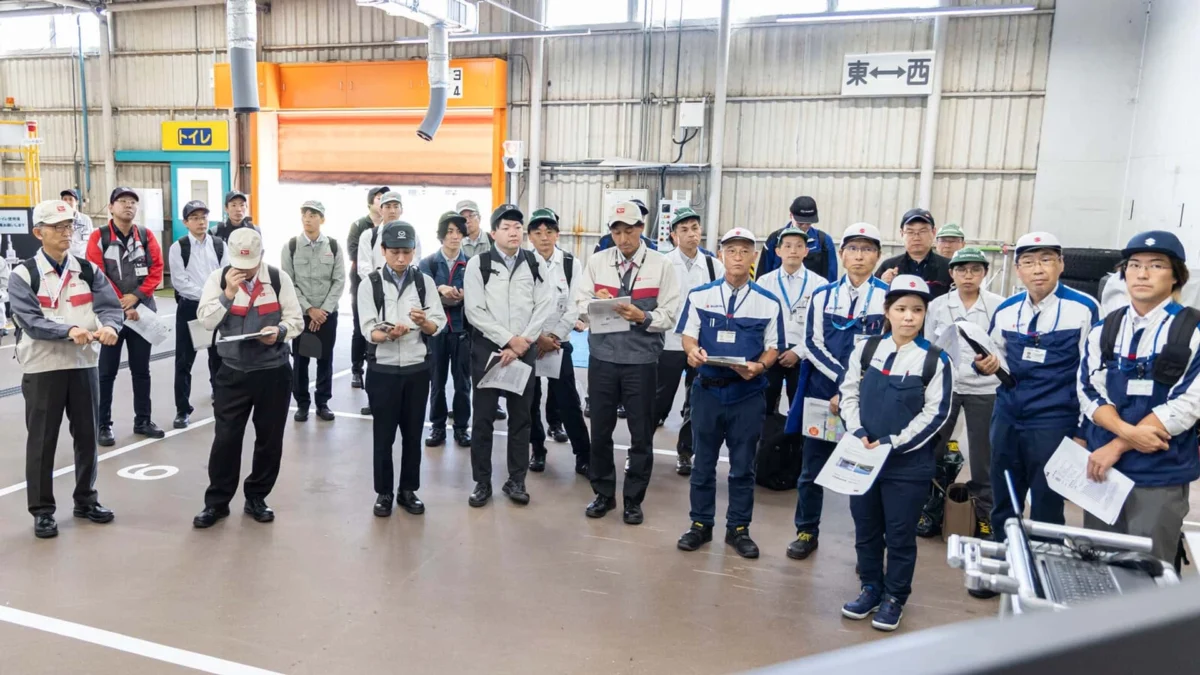
In an industry defined by cutthroat competition, proprietary secrets, and the relentless pursuit of market dominance, the image of Toyota, Honda, Mazda, Suzuki, and Mitsubishi sitting around a boardroom table—not to discuss merger terms, but to deliberate on the minutiae of plastic air-conditioning vents—is nothing short of revolutionary. Yet, this is the reality of the modern Japanese automotive landscape. In a strategic shift that defies decades of corporate isolationism, these domestic rivals are coming together to address a surprisingly mundane, yet economically critical, challenge: the standardization of quality.
The Genesis of the Smart Standard Activity
The roots of this collaborative movement can be traced back to 2017, when Toyota quietly launched its "Smart Standard Activity" (SSA). At its core, the SSA is an exercise in ruthless efficiency. For years, automotive manufacturing has been burdened by the "over-quality" trap—the practice of rejecting or reworking components due to microscopic cosmetic imperfections that have absolutely no bearing on vehicle safety, durability, or performance.
Toyota’s initiative sought to distinguish between "functional" quality and "perceived" quality. By identifying defects that are invisible to the customer or hidden from view—such as minor scuffs on the underside of an AC vane—Toyota realized it could save millions of dollars in waste and labor. However, the scope of the problem was larger than one company. Toyota’s suppliers were servicing multiple manufacturers, each with conflicting standards. A supplier might be forced to halt a production line to re-calibrate for a different brand’s arbitrary aesthetic requirement, a process that creates massive inefficiencies across the entire supply chain.
Chronology of an Industry Shift
- 2017: Toyota officially initiates the Smart Standard Activity (SSA) to reduce waste caused by excessive quality standards on non-functional parts.
- 2021: Realizing that supplier fragmentation is a systemic issue, Toyota begins informal dialogues with other Japanese manufacturers to discuss the feasibility of industry-wide standards.
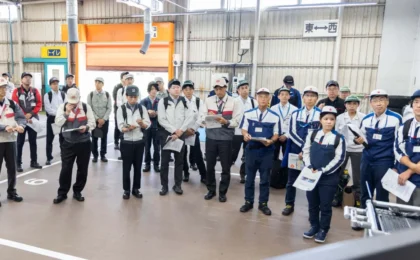
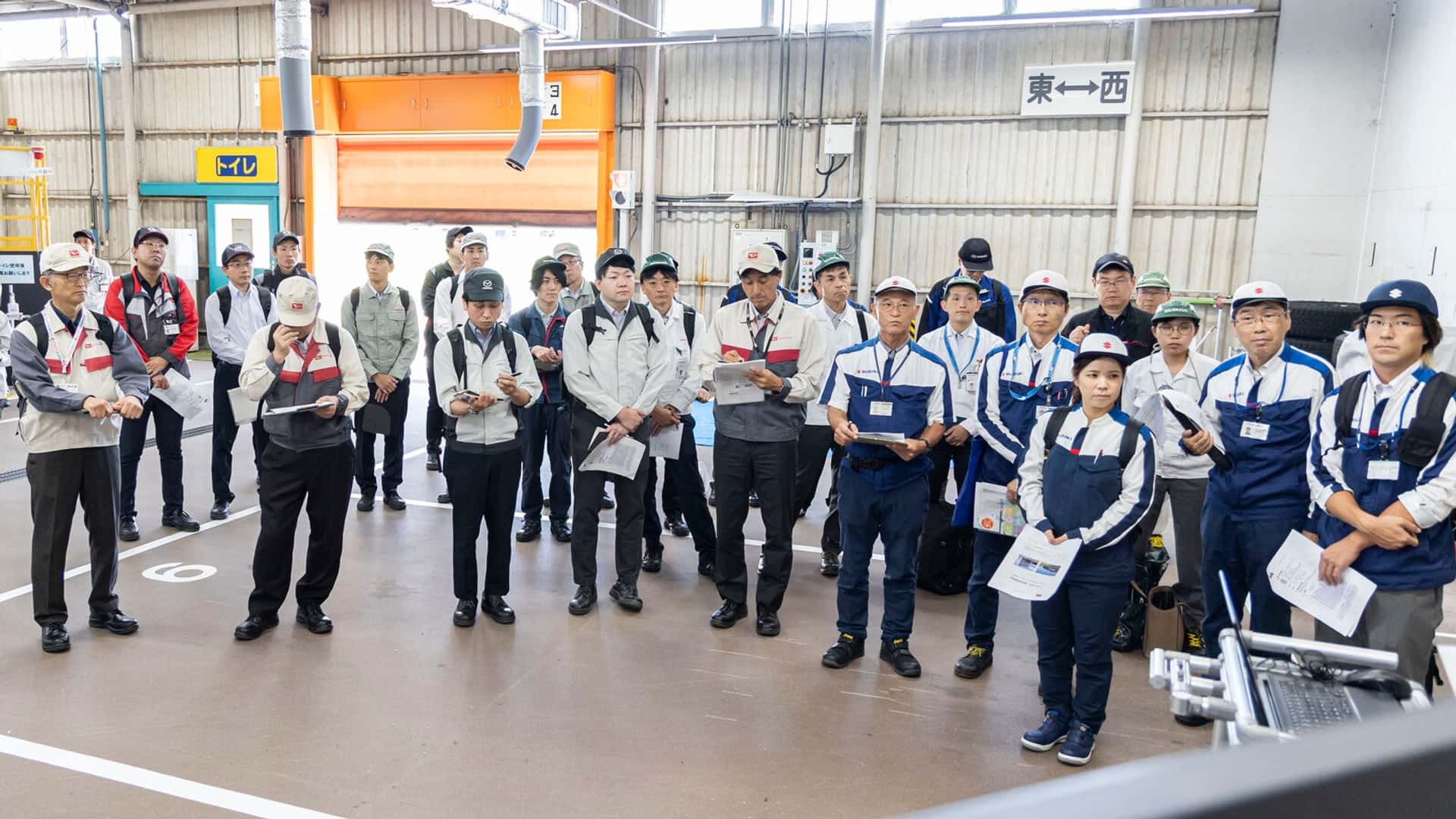
- July 2024: A pivotal, high-level meeting takes place at Toyota’s Tahara factory. Over 100 industry professionals from Toyota, Honda, Mazda, Suzuki, and Mitsubishi gather to inspect physical parts and synchronize quality expectations.
- April 2025: The Japan Automobile Manufacturers Association (JAMA) and the Japan Auto Parts Industries Association (JAPIA) formalize the initiative by establishing a joint SSA working group.
- Mid-2025: The "SSA Promotion Declaration" is issued, transitioning the project from a proprietary Toyota experiment to a national industrial strategy.
- Late 2025 – Present: The initiative scales globally, with SSA activities being implemented in North American, European, and Asian supply chains.
The Economics of "Good Enough"
The argument for this collaboration is purely mathematical. In the automotive sector, where margins are often razor-thin, the cost of "perfection" can be exorbitant. By establishing a shared baseline for what constitutes an acceptable component, automakers are effectively lowering the cost of entry for suppliers and simplifying production cycles.
Consider the complexity of modern supply chains. A single manufacturer might require a specific plastic texture that adds 5% to the production time. Another manufacturer might be indifferent to that texture but demand a specific color match that is equally costly. When suppliers are forced to toggle between these contradictory demands on the same assembly line, productivity plummets. By harmonizing these non-competitive standards, the Japanese auto industry is aiming to reclaim the competitive edge lost to rapidly advancing global rivals, particularly the surging automotive manufacturers from China.
Bridging the Gap: What They Are (and Aren’t) Discussing
It is important to emphasize that this is not a move toward a cartel or a unified super-company. The joint working group maintains strict boundaries. Sensitive subjects such as pricing, production volumes, proprietary engine technology, and unique brand design languages remain strictly off-limits.
This is a "co-opetition" model. The companies are choosing to cooperate in the "background" of the manufacturing process to ensure that the "foreground"—the unique driving experience, the styling, and the performance—remains distinctively their own. Toyota is not handing over its hybrid drivetrain secrets, and Mazda is not revealing the engineering behind the next Miata. Instead, they are discussing the philosophy of assembly. They are asking: Does this scuff matter? If the answer is no, the cost savings are passed down the line, eventually benefiting the consumer and the bottom line.
Supporting Data and Scaling Success
The success of the SSA is already tangible. By the end of 2025, Toyota’s internal metrics indicated that the program had processed roughly 7,500 individual cases, with a 67% adoption rate of the proposed standards. This isn’t just about a few scuffed vents; it represents a fundamental change in how Japanese industrial leaders view their supply chain.
The movement is expanding rapidly. Toyota has explicitly stated its goal to turn the SSA into an "All-Japan" movement. Given that the Japanese automotive industry employs approximately 5.5 million people, the implications of this shift are massive. The effort is no longer confined to the Japanese archipelago; it is being exported to North America, Europe, and other Asian hubs where these companies maintain production facilities. This global standardization ensures that a supplier in Ohio or a logistics partner in Germany is following the same "Smart Standard" as their counterparts in Nagoya.
Broader Implications: The Future of Manufacturing
The SSA is part of a larger trend of Japanese industrial consolidation. We have already seen this in the engine development sector, where Toyota, Mazda, and Subaru have formed an alliance to develop next-generation internal combustion engines. Despite the shared development costs, the end products remain uniquely "on-brand." Toyota focuses on high-output inline-four engines, Mazda continues to iterate on rotary technology, and Subaru remains committed to the boxer engine.
This dual-track approach—cooperating on the foundations while competing on the experience—may well be the blueprint for the survival of legacy automakers in an era of electrification and intense price competition.
Conclusion: Knowing What Not to Compete Over
As the global automotive market continues to undergo its most significant transformation since the invention of the assembly line, the lesson being learned in Japan is one of maturity. For decades, the industry was defined by the mantra that "different is better." While that remains true for the cars themselves, the manufacturing processes that build them are increasingly being viewed as a common good.
By learning to share the burden of quality control, Toyota, Honda, Mazda, Suzuki, and Mitsubishi are proving that the smartest move in a saturated market isn’t always to out-build the competition—it’s to realize that in certain areas, you aren’t competing at all. In an industry where every cent, or yen, is vital to long-term viability, this new era of cooperation might be the most important innovation to come out of Japan in the last decade. They haven’t become one company, but they have certainly become a more formidable front, proving that sometimes, the best way to move forward is to stop reinventing the wheel—together.