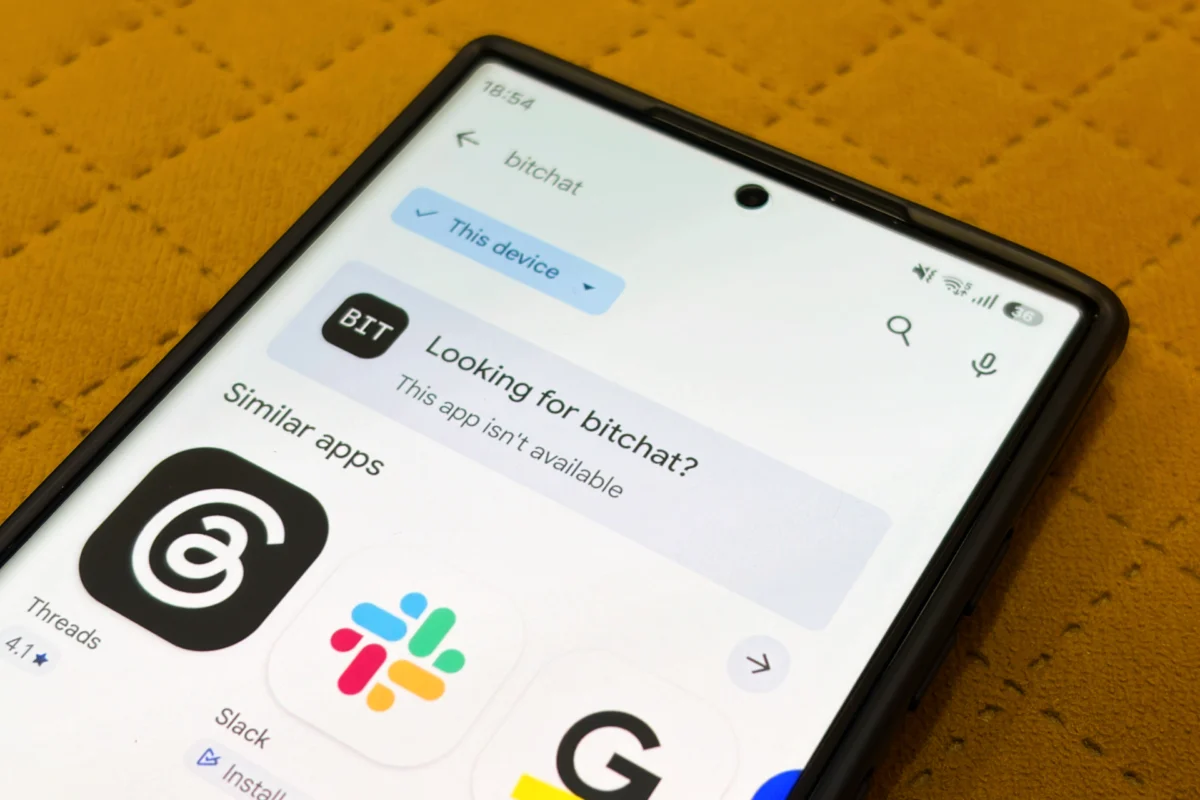
The battle for digital sovereignty in India has taken a sharp, authoritarian turn. Bitchat, the decentralized, Bluetooth-enabled messaging platform championed by former Twitter CEO Jack Dorsey, has been systematically purged from India’s digital ecosystem. In a move that has sent shockwaves through the global privacy community, Apple and Google have removed the application from their respective app stores in India, complying with government directives that underscore an escalating conflict between state surveillance capabilities and the right to private, unencumbered communication.
The disappearance of Bitchat—an open-source project designed to function in the total absence of cellular or internet infrastructure—coincides with a period of heightened domestic volatility in India. As youth-led protests against alleged voter roll manipulation sweep through the capital, the government’s decision to sever access to decentralized communication tools highlights a strategic pivot toward controlling the digital narrative during times of civil disobedience.
The Anatomy of the Blockade
The latest chapter in this saga began on a Saturday, when Jack Dorsey took to X (formerly Twitter) to share a chilling notice received by Apple. The correspondence confirmed that the Indian Ministry of Electronics and Information Technology (MeitY) had invoked Section 69A of the Information Technology Act to force the removal of Bitchat from the App Store.
Section 69A serves as the Indian government’s primary legal cudgel for ordering the blocking of online content. While the provision was originally intended to curb activities threatening the "sovereignty and integrity of India," "defense," and "public order," its application against a neutral, open-source communication tool signals a departure from traditional content moderation.
The scope of the order is comprehensive. Beyond the primary App Store, the directive mandated the removal of the app from Apple’s "TestFlight" beta-testing environment. By late Saturday, the impact was clear: Bitchat had vanished from the Google Play Store, and the app’s official website was rendered inaccessible across major Indian internet service providers (ISPs). This multi-layered "digital blackout" ensures that even users seeking alternative download methods are effectively walled off from the service.
A Chronology of Escalation: From GitHub to Total Blackout
The state’s campaign against Bitchat did not begin with the App Store; it has been a methodical, year-long siege.
- July 2025: Bitchat launches globally, marketing its "Bluetooth mesh networking" capabilities. By allowing nearby devices to exchange encrypted messages without relying on centralized servers or ISP gateways, the app positions itself as a "shutdown-proof" tool for human connection.
- July 2026: Indian authorities shift their focus to the development side of the equation. In a landmark move, the government ordered GitHub to take down repositories associated with the open-source project. This marked a shift from regulating content to regulating the code itself, raising profound legal questions about the responsibility of developers in the age of decentralized tech.
- The Regulatory Pivot: The 2026 order against GitHub was predicated on the argument that Bitchat’s architecture—which makes interception and user tracking nearly impossible—violated intermediary liability laws.
- October 2026: As protests against voter roll changes intensified in New Delhi, the government escalated from targeting the source code to targeting the distribution platforms (Apple and Google). The shift from the intermediary liability framework to the sweeping power of Section 69A suggests the government’s patience for decentralized, un-surveillable communication has officially expired.
Data-Driven Defiance: Why Bitchat Became a Target
The government’s hostility toward Bitchat is not abstract; it is rooted in data. As civil unrest peaked in July 2026, the utility of decentralized messaging became apparent to thousands of protesters.
Market intelligence firm Sensor Tower reported that India accounted for approximately 85% of Bitchat’s global downloads between July 17 and July 23, 2026. This represented a staggering surge from just 1% in the preceding month. This metadata provides a clear correlation: as internet services were throttled or suspended in protest-heavy zones, the populace flocked to the only tool capable of maintaining a communication mesh.
For the Indian state, which frequently employs internet shutdowns to maintain order during periods of civil unrest, an app that bypasses the need for the global web is not merely a piece of software—it is a disruption of state power.
The Silence of the Giants
In the wake of the removals, Apple, Google, and the Indian Ministry of Electronics and Information Technology have maintained a strategic silence. Despite formal requests for comment, none of the entities involved have provided a public justification for the specific criteria that rendered Bitchat an "unlawful" application.
This silence is particularly conspicuous given the precedent it sets. By complying with the order, Apple and Google have effectively affirmed their roles as enforcers of national censorship policies. For privacy advocates, the lack of transparency is the most alarming element. Neither the blocking order nor the specific content deemed "illegal" within the app has been released to the public, leaving users and developers in the dark regarding the legal basis for the app’s prohibition.
Implications: The Death of Digital Sovereignty?
The Internet Freedom Foundation (IFF), a New Delhi-based digital rights group, has been at the forefront of the backlash. They have characterized the government’s actions as fundamentally unconstitutional.
"The government is using Section 69A to block an entire application based on its potential to operate during a shutdown, rather than targeting specific, unlawful content," an IFF spokesperson noted. The argument is clear: the state is effectively criminalizing the architecture of privacy. If an app is illegal simply because the government cannot monitor it, the precedent could eventually be applied to any end-to-end encrypted service, from Signal to ProtonMail.
The Impact on Civil Liberties
The timing of the ban is inseparable from the current political climate. The recent detention of protesters in New Delhi, coupled with the 12-hour internet blackout around Jantar Mantar, illustrates a government that views the flow of information as a direct threat to stability.
By removing Bitchat, the government is not just stopping a messaging app; it is signaling to the youth-led protest movement that they cannot rely on "shadow networks" to organize. The implication for the future of Indian democracy is grave: if digital tools that ensure freedom of assembly and freedom of speech are systematically dismantled, the space for dissent will continue to shrink.
A Global Precedent
The Bitchat case is a canary in the coal mine for the global tech industry. As more nations adopt "digital sovereignty" laws that demand access to encrypted data or the ability to silence specific networks, the "open" nature of the internet is fragmenting into a series of regional intranets.
For Jack Dorsey and the developers of Bitchat, the Indian crackdown serves as a stress test for decentralized technology. While the code remains open-source and available elsewhere, the ability of a sovereign nation to gatekeep the physical hardware—the phones in the hands of its citizens—via the App Store and Play Store, demonstrates that even the most decentralized software is vulnerable to the centralized power of the "Big Tech" gatekeepers.
Conclusion
The removal of Bitchat from the Indian market is more than a regulatory skirmish; it is a profound collision between 21st-century technology and the traditional exercise of state power. As India tightens its grip on its digital borders, the world watches to see if the spirit of decentralized, private communication can survive in a landscape increasingly defined by surveillance, censorship, and the erosion of digital anonymity. For now, the silence from Apple, Google, and the Indian government continues to speak volumes, leaving millions of users in the dark—literally and figuratively.