By Political Correspondent
Latvia’s parliamentary elections have delivered a complex mandate that reaffirms the Baltic nation’s unwavering commitment to European integration and collective security, while simultaneously signaling a restless electorate grappling with the harsh realities of the cost-of-living crisis. As the dust settles on Saturday’s polling, Prime Minister Andris Kulbergs’ centre-right United List party appears to have secured a commanding lead, setting the stage for what promises to be a protracted and delicate process of coalition building.
While the preliminary exit polls suggest a victory for the pro-Western establishment, the rise of populist forces—fueled by economic anxiety and the shifting priorities of the country’s large Russian-speaking minority—has introduced a new layer of volatility into the Latvian political landscape.
Main Facts: The Electoral Landscape
According to exit polls published by the public broadcaster LSM, Prime Minister Andris Kulbergs’ United List party has garnered 35.6 percent of the vote. For Kulbergs, who ascended to the premiership only this past May, this result serves as a significant vote of confidence in his vision for a modernized, secure Latvia.
However, the parliamentary math is far from straightforward. The existing governing coalition appears fractured, with the Union of Greens and Farmers projected to fall below the critical five-percent threshold required for parliamentary representation. This collapse necessitates a fundamental reconfiguration of the ruling bloc.
The populist surge is headlined by "Latvia First," led by businessman Ainars Slesers, which claimed 11.3 percent of the vote, and "Sovereign Power," which secured 10.8 percent. While the former may emerge as a potential—if difficult—coalition partner, the latter remains a political pariah due to its vocal opposition to military aid for Ukraine and its skepticism toward NATO-aligned defense spending. Meanwhile, the pro-European, social-democratic "Progressives" have solidified their position in the legislature with 11.1 percent, potentially offering a bridge to a stable, albeit ideologically diverse, government.
Chronology: A Campaign Defined by Security and Survival
The Lead-Up: February – April 2026
The campaign period was defined by the dual pressures of regional geopolitics and domestic economic strain. Following Russia’s ongoing invasion of Ukraine, Latvia’s role as the eastern flank of the European Union and NATO became the primary focus of national discourse. During this time, the government prioritized defense infrastructure, pushing the nation’s military spending to nearly five percent of its GDP.
The May Transition
The political landscape shifted significantly in May 2026, when Andris Kulbergs assumed the role of Prime Minister. Inheriting a coalition under pressure from inflation and a stagnant economy, Kulbergs campaigned on a platform of "economic growth" and "future stability," framing his leadership as a bridge between urgent security needs and the daily struggles of Latvian families.
The Election Weekend: October 3, 2026
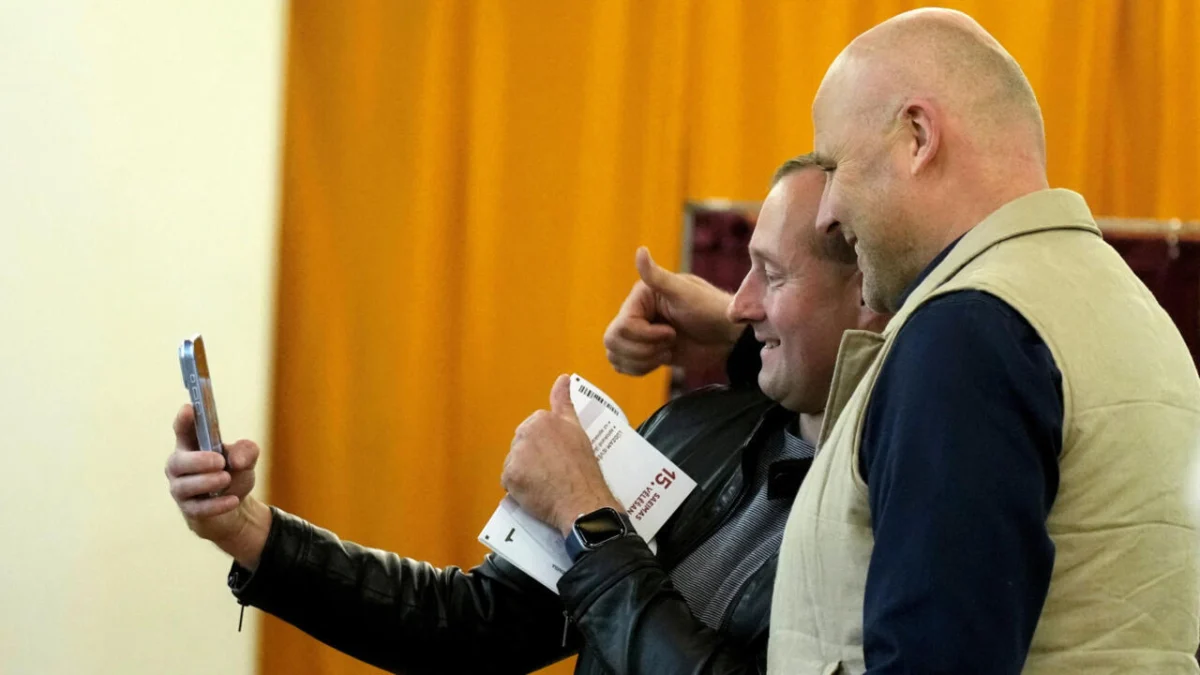
Voting proceeded under the watchful eye of international observers. Throughout the day, reports suggested a high degree of voter engagement in both urban centers like Riga and the more economically challenged border regions. The exit polls, released shortly after the polls closed, immediately sparked a flurry of analysis regarding the viability of a "United List" led administration.
Supporting Data: The Economic and Geopolitical Divide
The data paints a picture of a nation divided between its international responsibilities and domestic burdens.

- Defense Spending: As a frontline state, Latvia has committed unprecedented resources to its military. The current allocation of nearly five percent of GDP represents one of the highest levels of defense spending within the NATO alliance, reflecting a broad consensus that Russia remains an existential threat.
- The Populist Factor: The rise of Sovereign Power (10.8%) and Latvia First (11.3%) indicates that for approximately one-fifth of the electorate, the "security-first" narrative is secondary to the immediate impacts of inflation, rising energy costs, and the decline of public services.
- The Russian-Speaking Minority: Historically, the Russian-speaking electorate provided the backbone of support for the Harmony party. With Harmony’s collapse in 2022, this demographic has become a "swing" group. Analysts note that these voters are increasingly abandoning identity-based politics in favor of pragmatism, prioritizing economic stability and social protection over geopolitical rhetoric.
"The biggest increase in the actual results, compared to the exit polls, will likely be found among the parties supported by the Russian-speaking electorate," noted Roberts Kits, an analyst at the Latvian think tank LaSER. This suggests that the final tally could still provide a surprise, as voters who are traditionally hesitant to declare their support for radical parties may be underrepresented in early exit data.
Official Responses and Political Strategy
Prime Minister Kulbergs struck a cautious but optimistic tone in his post-poll remarks. Addressing the press, he noted that while the result is "higher than expected," the work of governance is only beginning. "That means people truly want change," Kulbergs stated. "They want economic growth, and they want a future for their children."
His strategy moving forward appears to focus on building a coalition that balances the necessity of strong defense with a robust domestic agenda. By emphasizing the concept of a "strong Latgale" and a "strong border region," Kulbergs is attempting to reconcile the security requirements of an EU border state with the economic needs of rural, underserved communities.
Other parties, meanwhile, are already posturing for the inevitable coalition talks. The Progressives, having secured over 11 percent, are well-positioned to leverage their support for social reform, potentially acting as a kingmaker in negotiations. Conversely, the isolation of Sovereign Power is expected to remain absolute, with major parties confirming their refusal to enter any alliance with the anti-aid, populist faction.
Implications: The Road to Stability
The immediate future for Latvia involves a period of intense, often opaque, inter-party negotiation. Several key implications emerge from these preliminary results:
1. A Shift in Coalition Dynamics
The exit of the Union of Greens and Farmers from the parliamentary fold leaves a vacuum that must be filled. The United List will need to court either the Progressives or the more moderate wing of the populist movement. Each option comes with significant political baggage, as the Progressives may push for higher taxes on the wealthy to fund social programs, while Ainars Slesers’ Latvia First may demand concessions on energy policy that could conflict with EU regulations.
2. Continued Pro-Ukraine Stance
Despite the gains by populists, the parliamentary arithmetic strongly favors a continuation of the current foreign policy. The overwhelming majority of seats are held by parties that support NATO membership, increased defense spending, and continued aid to Kyiv. Regardless of the final cabinet composition, Latvia is unlikely to deviate from its role as a staunch ally of Ukraine.
3. The Challenge of Populism
The strong showing of parties that prioritize "domestic issues" over "security concerns" is a warning shot to the political establishment. If the incoming government fails to address the cost-of-living crisis, the next election cycle could see even greater radicalization. The government’s ability to communicate the link between a strong, secure, and democratic Latvia and the personal prosperity of its citizens will be the defining challenge of the coming term.
4. Demographic Integration
The evolving voting patterns of the Russian-speaking population suggest that the old tropes of the "pro-Russian vs. pro-Western" divide are fading. This offers an opportunity for a more integrated national discourse, provided that mainstream parties can craft economic platforms that appeal to the needs of all citizens, regardless of their native language.
As the official results arrive on Sunday, the focus will shift from the ballot box to the negotiating table. The path forward for Latvia is one that requires careful navigation: maintaining the fortress-like stability necessary to survive in a dangerous neighborhood, while simultaneously building an economy that provides tangible relief to the people living within those walls. Whether Prime Minister Kulbergs can synthesize these competing demands will determine the long-term success of his premiership and the stability of the Baltic region for years to come.