By Jack Maloney
October 3, 2026
In a moment that will be etched into the annals of WNBA history, the Golden State Valkyries have officially arrived as a championship contender. On Friday night, the expansion franchise completed a stunning 16-point comeback against the Dallas Wings, securing a 77-73 victory in their winner-take-all Game 3. With the win, the Valkyries have punched their ticket to the WNBA semifinals, where a daunting date with the reigning champion Las Vegas Aces awaits.
For a franchise that only opened its doors in 2025, this milestone represents a meteoric rise. While the organization spent its inaugural season establishing a culture of grit and defensive tenacity, Friday’s victory validated that identity on the biggest stage. As the final buzzer sounded in San Francisco, the atmosphere inside the arena was electric, marking the culmination of a hard-fought series that tested every facet of the team’s resilience.
A Tale of Two Halves: The Chronology of a Comeback
The road to the semifinals was anything but linear. Following a narrow overtime defeat in Game 2, the Wings entered Game 3 with palpable momentum. Dallas looked comfortable early, leveraging the offensive brilliance of Arike Ogunbowale to build a nine-point lead by the second quarter.
The Valkyries briefly countered with a surge of their own, but the momentum shifted violently before the intermission. The Wings executed a clinical 11-0 run to close the half, silencing the home crowd and setting the stage for a third-quarter onslaught. By the midway point of the third, the Valkyries found themselves staring at a 16-point deficit. Their offense, which had been the subject of scrutiny all season, looked stagnant and desperate, enduring a harrowing stretch where they missed 15 consecutive field goals.
The turning point, however, arrived midway through the third frame. Recognizing that their season was slipping away, the Valkyries tightened their defensive rotations, forcing the Wings into uncharacteristic turnovers. A 14-4 run to close the third period cut the lead to five, breathing life back into the arena.
The fourth quarter evolved into a tactical chess match defined by high-stakes intensity. With less than two minutes remaining, the tension spilled over when Valkyries head coach Natalie Nakase collapsed on the sidelines during a heated discussion with officials. The game was momentarily paused, creating a scene of genuine concern. Fortunately, Nakase was quickly attended to, and the team later confirmed that the coach, who had been battling exhaustion, was physically fine and had simply become lightheaded. She returned to the bench to guide her team through the final, crucial minutes.
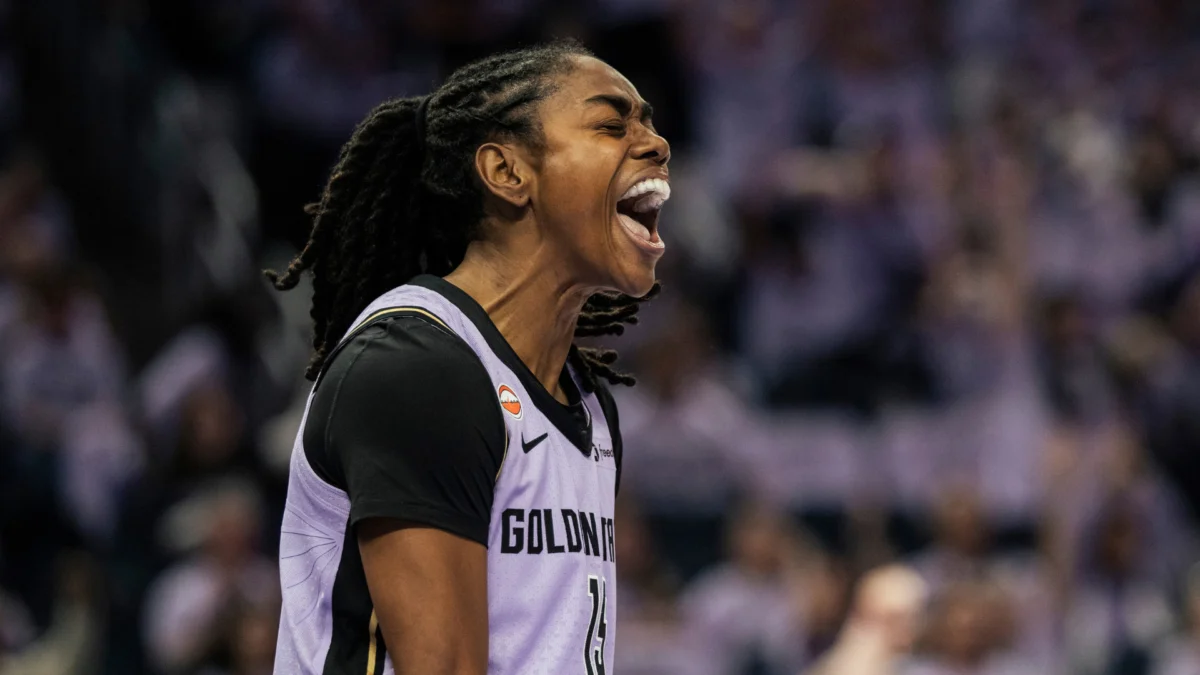
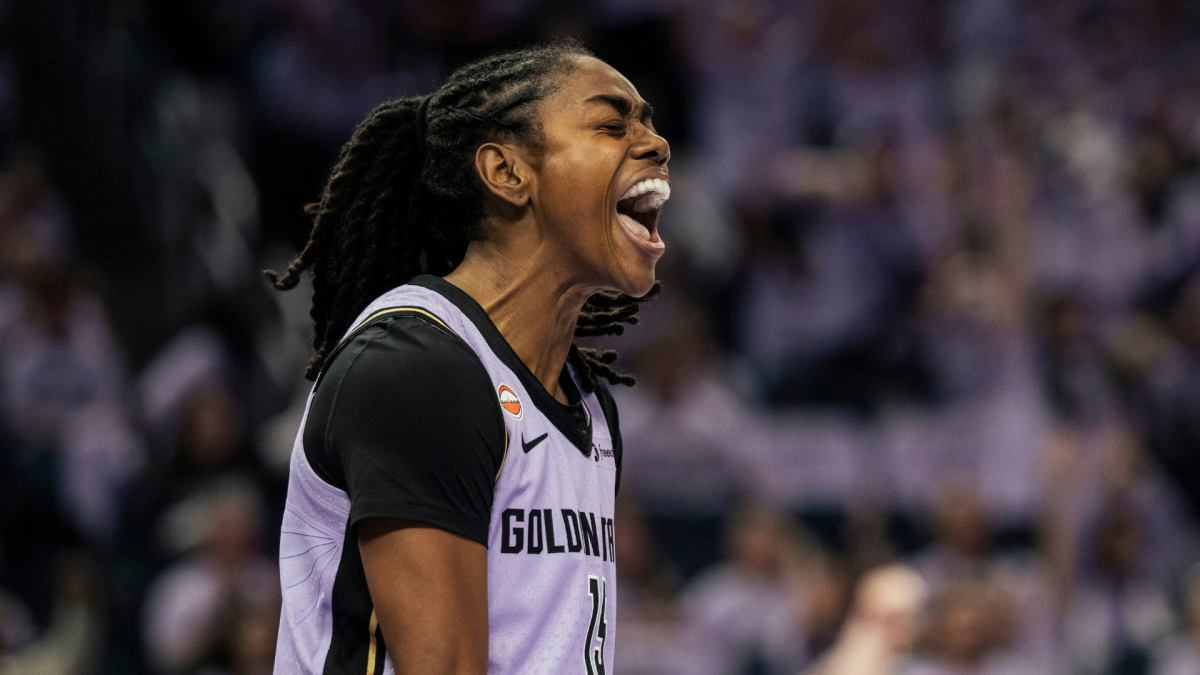
In the dying seconds, it was Gabby Williams who assumed the role of closer. Her pull-up jumper at the 1:17 mark gave the Valkyries a lead they would not relinquish, and her composure at the free-throw line ultimately sealed the series victory.
The Defensive Wall: A Statistical Resurgence
To understand the Valkyries’ success, one must look at the data. During the regular season, Golden State boasted a defensive rating of 99.1—the best in the WNBA—a full four points per 100 possessions better than their closest rival. Yet, through the first two games of this series, that identity was elusive.
"We were absolutely on a string, we were absolutely communicating with each other," said Tiffany Hayes, who provided a critical spark off the bench with 18 points. "A switch flipped. It’s win or go home, so you have to do something."
The transformation in the second half of Game 3 was statistically profound. Over the final 18:02 of play, the Valkyries held the Wings to a dismal 6-of-21 shooting performance (28.5%). More importantly, they forced four turnovers during that span, disrupting the rhythm of a Dallas offense that had looked nearly unstoppable earlier in the night.
By forcing the game into a lower-possession, defensive grind, the Valkyries neutralized the Wings’ ability to transition into easy points. This defensive discipline provided the necessary oxygen for their own offense, which finally found its range. After struggling to shoot under 30% for the first half, the team converted 42.4% of their attempts in the final 18 minutes, including a clutch 7-of-10 performance from beyond the arc.
Star Power and Supporting Cast
The individual performances in Game 3 highlighted both the brilliance of the opposition and the depth of the Golden State roster.
For Dallas, Arike Ogunbowale delivered another heroic performance, scoring 30 points despite battling a late-game groin injury. Her ability to keep the Wings competitive was remarkable, especially considering the defensive pressure applied by the Valkyries in the second half. However, the lack of secondary scoring proved fatal; while Paige Bueckers contributed 17 points, her 3-of-14 shooting night left the Wings vulnerable when Ogunbowale needed support.
Conversely, the Valkyries thrived on a balanced, if late-blooming, attack. Gabby Williams, the team’s heartbeat, finished with a team-high 19 points. Her recovery from a slow start—where she tallied only two points in the first half—was the defining narrative of the night. After being benched for four minutes in the third quarter, Williams returned with a vengeance, scoring 17 of her 19 points in the second half.
Veronica Burton also played a quintessential "glue" role, recording a double-double with 16 points, 10 rebounds, and six assists. Her ability to facilitate the offense when the Valkyries were struggling to find rhythm kept the team within striking distance, allowing them to capitalize when the momentum finally turned.
Official Responses and Emotional Toll
The incident involving Coach Nakase served as a reminder of the immense physical and mental toll required during a deep playoff run. In the post-game press conference, the team was quick to pivot away from the scare, emphasizing their coach’s resilience.
"She’s our leader," Tiffany Hayes noted regarding the team’s belief in their staff and their star players. "We trust the scheme. We trust the process. When the lights are brightest, you see what this team is made of."
The coaching staff’s decision to stick with the defensive-first philosophy, even as the deficit ballooned to 16, proved to be the decisive factor. Nakase’s halftime adjustments—focusing on defensive communication and limiting second-chance points—provided the framework for the comeback.
Implications: A New Era for Golden State
As the Valkyries look toward their Sunday matchup with the Las Vegas Aces, the implications of this victory extend far beyond a single series win. By eliminating a dangerous Dallas squad, the Valkyries have proven that their expansion-era success is sustainable. They have successfully navigated the "playoff intensity" that often dismantles younger or less experienced rosters.
However, the challenge ahead is arguably the most difficult in the modern WNBA. The Las Vegas Aces represent the gold standard of the league—a veteran, championship-tested juggernaut. For the Valkyries, the quick turnaround between Friday’s physical battle and Sunday’s series opener will test their depth and conditioning.
Furthermore, the team must address their offensive consistency. While they proved they can "flip the switch," relying on 16-point comebacks is not a viable long-term strategy against a team as efficient as the Aces. If the Valkyries can integrate their league-best defense with a more consistent perimeter shooting threat, they may well be on their way to a historic inaugural Finals appearance.
For now, however, the Golden State Valkyries can savor the moment. They have taken the first step, broken the barrier of their first series victory, and sent a clear message to the rest of the WNBA: the new kids on the block are ready to compete for the throne.