The annual release of the U.S. News & World Report Best Colleges rankings has long been a watershed moment for higher education, serving as both a prestigious barometer of institutional quality and a high-stakes marketing tool. However, this year’s release has triggered a peculiar phenomenon: a deluge of press releases from institutions across the country, many of which are touting “success” despite significant drops in their overall standing.
As public trust in higher education hits record lows, the disconnect between institutional messaging and objective data has never been more pronounced. While colleges have always practiced the art of “strategic highlighting,” the current trend of cherry-picking positive metrics while ignoring steep, multi-year declines suggests a growing desperation to control a narrative that is increasingly slipping from their grasp.
The Anatomy of a Spin: The New College of Florida Case Study
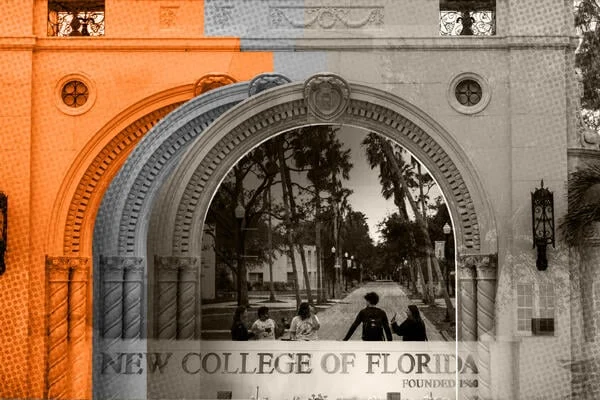
Perhaps no institution exemplifies this “rankings dissonance” more starkly than the New College of Florida (NCF). Since 2023, when Governor Ron DeSantis initiated a comprehensive conservative overhaul of the liberal arts college, the institution has seen a precipitous decline in its standing. Before the restructuring, NCF held a respectable 76th position among national liberal arts colleges. In the most recent U.S. News report, the college landed at 150th—a staggering 74-spot drop in just two years.
Despite a 15-spot slide since last year alone, the college’s communication office issued a celebratory press release titled “New College of Florida on the Rise Across Three National Rankings.” The release bypassed the U.S. News overall ranking entirely, opting instead to spotlight specific, granular metrics: financial resources per student, the academic profile of the incoming class, and the ratio of full-time faculty.
NCF President Richard Corcoran defended this narrative, framing it as a shift in values rather than a failure of metrics. “Last year I said we were determined to earn top rankings across multiple national publications,” Corcoran stated. “These metrics prove the positive outcomes New College is creating. It also comes at a moment when families are asking a fair question about whether a degree is still worth the investment. Our answer is that the content of the four years matters.”
Corcoran’s argument positions the institution as a boutique experience—emphasizing thesis requirements and faculty-student relationships—as a superior measure of quality compared to the broad, often arbitrary, data points used by ranking agencies. Yet, for many alumni, this explanation rings hollow. William Rosenberg, president of the Novo Collegian Alliance, has been a vocal critic of the administration’s tactics. “For the million-dollar compensation package Corcoran is receiving, Florida’s taxpayers are entitled to honesty, not window dressing,” Rosenberg remarked.
Chronology of a Declining Metric
The erosion of institutional rankings in the state of Florida has not been limited to a single campus. The State University System of Florida, which oversees 12 member institutions, issued a statement last week trumpeting an “upward trajectory.” This framing is notable because, in reality, the majority of the system’s member institutions fell in the U.S. News rankings this year.
This represents a tactical pivot from 2025, when the system focused exclusively on the prestige of U.S. News results. By broadening the scope to include a variety of other ranking schemes, the system was able to locate data points that support a narrative of growth, effectively insulating itself from the negative press associated with the U.S. News decline.
Outside of Florida, the University of Texas Rio Grande Valley (UTRGV) offers a similar example of the “selective disclosure” strategy. The institution dropped 37 spots year-over-year, falling from 213 to 250 in the national universities category. Yet, the university’s official communication remained silent on the overall drop, choosing instead to focus exclusively on gains in social mobility rankings and individual program achievements.
Data, Methodology, and the Peer-Assessment Problem
At the heart of the current controversy is a fundamental disagreement over what constitutes “objective” quality. When pressed on the decline, NCF spokesperson James Miller pointed to the influence of “peer assessment”—a subjective survey that accounts for 20 percent of the U.S. News methodology.
“U.S. News is the only one of these rankings that incorporates subjective peer assessment into its methodology, and many Florida and Southeastern institutions ranked lower this year as a result,” Miller wrote in an email to Inside Higher Ed. “By every objective measure, New College is getting stronger and better.”
The debate over peer assessment is not new. Critics have long argued that these surveys measure institutional reputation rather than student outcomes, essentially creating a “popularity contest” that favors legacy institutions over emerging or reforming ones. However, defenders of the U.S. News methodology argue that academic reputation is a critical, albeit intangible, component of an institution’s value.
The reliance on multiple, competing ranking systems creates a "buffet" of data for university administrators. If an institution fails to perform well in U.S. News, it can look to the Wall Street Journal, Forbes, or Washington Monthly to find a methodology that favors its specific institutional profile. This flexibility allows colleges to maintain a veneer of prestige even when their standing in the most historically significant rankings is in freefall.
The Dual-Edged Sword of Institutional Reputation
Teresa Valerio Parrot, principal of TVP Communications, views the current landscape as a “double-edged sword.” She notes that while university leadership often publicly bemoans the rankings, they are simultaneously obsessed with them in private.
“Sometimes they tell you what you want to hear, and other times they’re an interesting mirror of where you maybe need to spend more time or effort or potentially money,” Parrot explained. “And there is this duality that on campus the faculty often rue the rankings, and board members bring them up and want to either celebrate or to fix what they don’t think the institution got right that year.”
Parrot emphasizes that there is nothing inherently wrong with highlighting institutional strengths. The ethical line is crossed, however, when marketing materials are used to obfuscate reality. “It makes sense for colleges to emphasize outcomes that best align with their mission and strengths, so long as the framing offers an accurate picture of their performance,” she noted. “They drift toward spin when you purport the rankings to show something that they don’t.”
Implications for the Future of Higher Education
Why does this matter? For prospective students and their families, the U.S. News rankings serve as a primary decision-making heuristic. Nicholas Bowman, a professor of higher education and student affairs at the University of Iowa, notes that the rankings are particularly influential for international students and those choosing between selective institutions.
“They matter to folks who are making meaningful decisions about where to go, as opposed to whether to go,” Bowman said. Despite the mounting criticism of U.S. News’s flawed methodology, the publication’s status as a first-mover in the market gives it an inertia that is difficult to break. As long as parents and students seek a simple number to validate a high-tuition investment, rankings will remain a dominant force.
However, the trend toward “spin” carries significant long-term risks. When institutions prioritize marketing over transparency, they risk further eroding the fragile public trust that universities rely upon for state funding, philanthropic support, and enrollment. As the gulf between the "official narrative" and the "data reality" grows wider, the credibility of higher education institutions faces a quiet, but dangerous, decline.
Ultimately, the rankings game has become a performative exercise. Colleges are no longer just competing to be the best; they are competing to be the best at narrating their own success. For students, the challenge is no longer just deciphering the methodology of a ranking system, but navigating the sophisticated public relations campaigns designed to make every decline look like a victory. In a world where every college claims to be rising, the task of identifying which institutions are truly thriving—and which are merely spinning their way to the bottom—has never been more difficult.