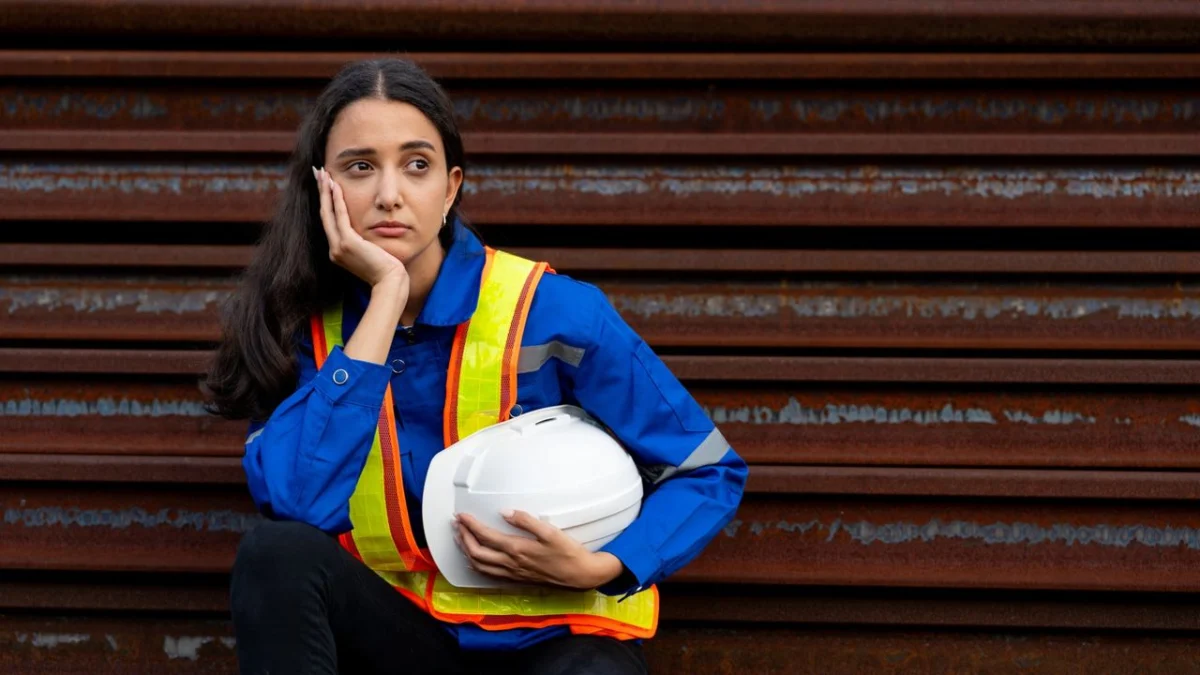
As artificial intelligence continues to accelerate its integration into the global economy, a singular, simplistic narrative has taken hold in corporate boardrooms and policy circles: if your white-collar job is being hollowed out by automation, simply go learn a trade.
On the surface, the advice is pragmatically alluring. Skilled trades—plumbing, electrical work, HVAC installation, and infrastructure maintenance—are facing a well-documented labor shortage. They are sectors that, by their nature, require physical presence and complex, context-dependent manual dexterity that AI and robotics are still decades away from mastering. However, this "pivot to the trades" rhetoric fails to account for the profound financial, psychological, and structural barriers facing millions of displaced professionals. Treating a complex, systemic economic transition as a simple retraining problem risks creating a lost generation of workers who feel abandoned by the very institutions that promised them security in exchange for their education and expertise.
The Mirage of the Simple Pivot
The "go learn a trade" movement is not a manufactured myth. It is rooted in a genuine economic reality: there is a desperate need for skilled labor. As Gen Z and younger millennials increasingly question the ROI of the traditional, debt-heavy four-year degree, many are turning to vocational pathways as a stable, high-demand alternative.
Yet, for a 45-year-old project manager, accountant, or paralegal whose role has been compressed or eliminated by generative AI, the transition to the trades is rarely a "pivot." It is a catastrophic collision. A professional who has spent two decades building a niche career, a six-figure salary, and a middle-class lifestyle cannot simply swap their keyboard for a wrench without suffering devastating economic and personal consequences.
The current discourse treats the trades as a universal safety net, ignoring the fact that these are high-skill professions that require years of apprenticeship and physical toll. Expecting a displaced knowledge worker to seamlessly transition into manual labor is a fundamental misunderstanding of the modern labor market—and of human capital.
A Chronology of Disruption: How We Reached This Point
To understand the current crisis, one must look at the evolution of white-collar vulnerability.
- The Pre-AI Era (2000–2015): Previous waves of automation primarily targeted repetitive manual labor and routine manufacturing tasks. White-collar work, defined by cognitive complexity and critical thinking, was considered the "safe harbor" of the economy.
- The Generative Inflection (2022–2024): With the arrival of sophisticated Large Language Models (LLMs), the "cognitive advantage" evaporated. Roles involving data analysis, report generation, routine legal research, and entry-level programming became immediately susceptible to AI acceleration.
- The Current Crisis (2025–Present): We are now witnessing the "compression" of the middle-management layer. Companies are realizing they can maintain output with fewer human heads, leading to widespread, quiet layoffs.
- The Policy Vacuum: As these layoffs mount, the institutional response has been reactive rather than proactive, focusing on individual reskilling rather than systemic labor market interventions.
Supporting Data: The Scale of the Shift
The numbers behind the disruption are sobering. Recent research from organizations like Anthropic and the Brookings Institution suggests that AI can now perform the equivalent of more than 10% of U.S. jobs, with that percentage growing as models improve.
The financial gap remains the most daunting metric. While a mid-career professional might be accustomed to a salary ranging from $90,000 to $150,000, an entry-level position in many skilled trades often starts in the $45,000 to $60,000 range. For a worker with a mortgage, student loans, and family obligations, this is not just a "pay cut"—it is a total collapse of their financial foundation.
Furthermore, the "retraining" success rate is historically poor. Decades of data on worker displacement—from the decline of manufacturing to the outsourcing of call centers—show that when workers are forced into new industries, they rarely return to their previous earning levels. They often end up in "survival" jobs that offer little room for upward mobility, trapping them in a cycle of economic precarity.
The Emotional Cost: The Invisible Toll of Displacement
While economists focus on wage growth and employment rates, they often overlook the psychological fallout of professional displacement. White-collar work is tied to a specific form of social identity. Many professionals have spent their entire adult lives cultivating an image of competence, expertise, and status.
When that expertise is suddenly rendered obsolete by an algorithm, the result is an intense, internalized form of self-blame. Unlike manual labor displacement, which is often framed as a broader industrial issue, white-collar displacement is often perceived as a personal failure to adapt. This leads to profound mental health issues, destabilized marriages, and a long-term erosion of confidence.
The "shame" of being displaced is a significant factor in why these workers often struggle to re-enter the workforce. They are not just looking for a paycheck; they are looking for a role that validates their years of experience—a commodity that the current labor market is increasingly unwilling to value.
Official Responses and Policy Implications
Policymakers have largely relied on the "Reskilling Mantra." The idea is that if we provide enough bootcamps, certifications, and subsidies, the workforce will spontaneously rebalance itself. However, this ignores the velocity of AI development.
By the time a worker completes a six-month certification in a new digital field, the AI models have often evolved to make that specific skill set less relevant. The "moving target" nature of AI means that traditional, static educational models are fundamentally broken.
What a Nuanced Strategy Looks Like
A more effective, comprehensive approach would move beyond the "learn a trade" rhetoric to include:
- Transition Income Support: Recognizing that "reskilling" is a full-time job, displaced workers require temporary income support that allows them to learn without the immediate threat of homelessness.
- Holistic Counseling: Integrating mental health support into workforce development programs to combat the shame and identity crisis associated with career displacement.
- Bridge Programs: Rather than moving from "Accountant" to "Plumber," we need programs that help professionals move into "AI-Augmented" roles where their domain knowledge (the "human in the loop") becomes a competitive advantage.
- Corporate Responsibility: Shifting the burden of retraining from the individual to the firm. Companies that benefit from the cost-savings of AI have a moral and economic duty to fund the transition of their displaced staff.
The Road Ahead: Uncertainty is Not a Strategy
There is a school of thought that suggests AI will create more jobs than it destroys. This is a common refrain throughout history—from the steam engine to the internet. However, even if that holds true in the long run, the "long run" is a dangerous place to leave millions of people behind.
The current transition is unique because it targets the cognitive elite—the very people who have, for generations, been told that their specialized knowledge was the key to economic immortality. When that promise is broken, it doesn’t just result in a shift in employment; it results in a shift in social trust.
The skilled trades will undoubtedly continue to be a vital, high-growth sector. They are essential to our infrastructure and our future. But they cannot be used as a convenient "out" for a system that is struggling to handle the massive, rapid displacement of the professional class.
We need a strategy that acknowledges the reality of AI-driven labor disruption. We need to stop treating workers as modular units that can be swapped from one industry to another without friction. If we fail to do so, we risk more than just economic stagnation; we risk a profound, lasting alienation of the workforce, one that could shape the political and economic landscape for decades to come.
The era of assuming that education alone provides lifetime protection is over. The next era must be built on flexibility, empathy, and a realistic understanding that in the age of AI, the most important skill is not just what you know—but how quickly you can be supported as you navigate a world where the ground is constantly shifting beneath your feet.