In the pantheon of cinema history, few endings are as iconic or as emotionally resonant as the final frames of Steven Spielberg’s 1982 masterpiece, E.T. the Extra-Terrestrial. As the glowing ship ascends into the heavens, leaving young Elliott standing in the forest, the audience is left with a bittersweet sense of closure. For decades, fans have wondered: What happened next? Did the bond between the boy and his alien friend endure the crushing vastness of space?
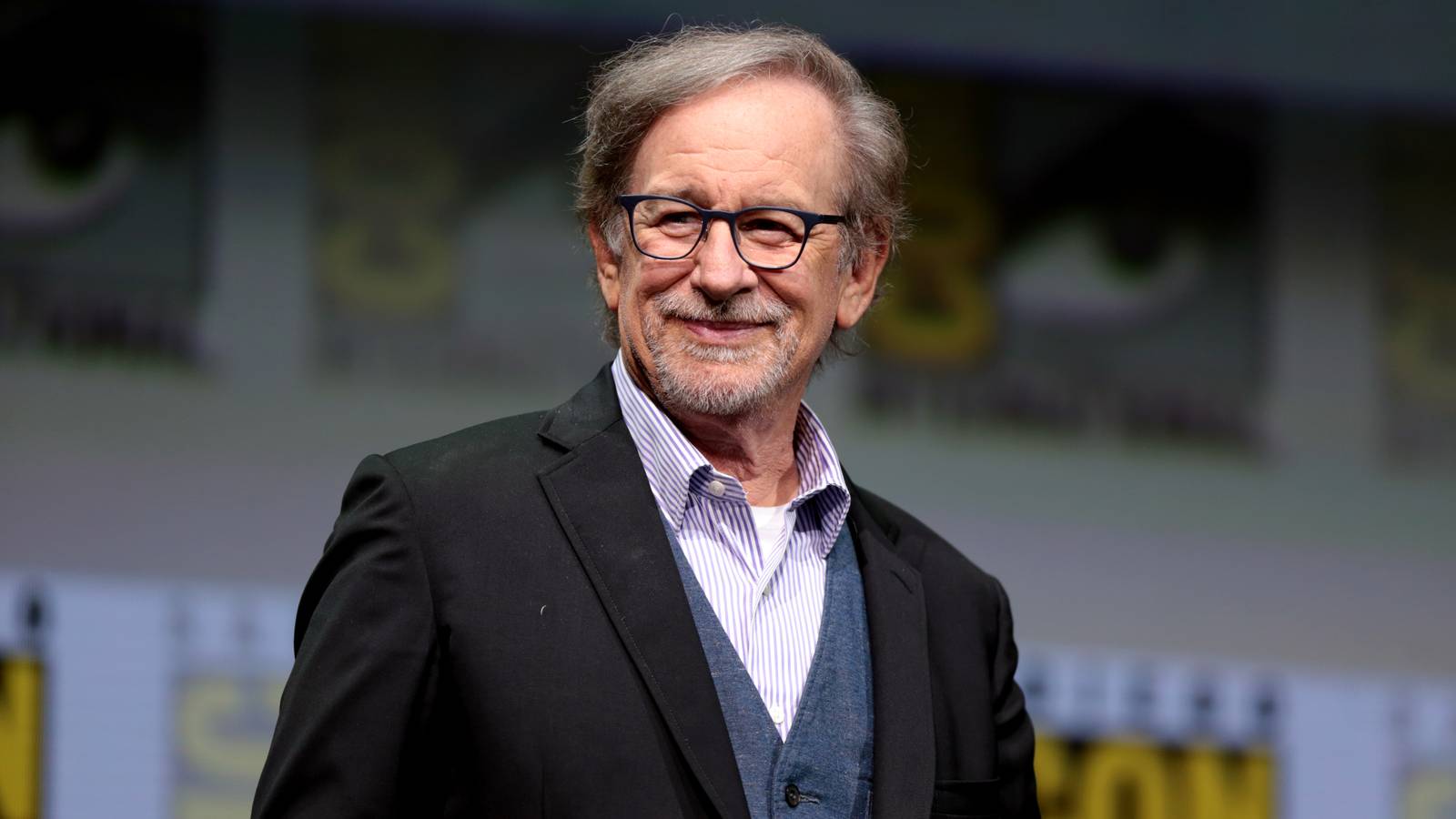
In a recent appearance on the Happy Sad Confused podcast, Steven Spielberg finally provided a definitive answer. When asked by host Joshua Horowitz if Elliott ever saw E.T. again, the director was blunt: “No.” He elaborated that while the psychic connection forged in the film allowed Elliott to dream of his friend, a physical reunion never occurred.
However, this statement creates a fascinating narrative dissonance. It directly contradicts E.T.: The Book of the Green Planet (1985), a novel penned by William Kotzwinkle—the very same author who wrote the official, authorized novelization of the original film. While Spielberg’s modern recollection suggests a permanent separation, the "officially sanctioned" literary sequel suggests a journey far more bizarre, chaotic, and ultimately, much more tangible than a dream.
The Chronology of a Botanical Space Race
To understand why this discrepancy exists, one must look back to the mid-1980s, a time when tie-in media was often treated with a different level of creative latitude.
Following the global phenomenon of E.T., the demand for more stories was insatiable. William Kotzwinkle, tasked with expanding the universe, didn’t choose the path of a traditional cinematic sequel. Instead, he penned a literary expansion that picks up exactly where the film concludes.
The Fall from Grace
The narrative of The Book of the Green Planet begins not with a triumphal return, but with a professional catastrophe. Upon arriving at his home world—a planet known as Brodo Asogi—E.T. is not greeted as a hero. Instead, he is subjected to a bureaucratic inquiry regarding his unauthorized "field trip" to Earth. His superiors, unimpressed by his interactions with humans, strip him of his status as a high-ranking plant biologist and demote him to a lowly agricultural laborer.
The Obsession
The heart of the book is defined by E.T.’s profound homesickness for Earth. Despite the alien flora and the complex social structure of the Asogians, E.T. finds himself a pariah and a dreamer. The narrative shifts into a story of longing, as E.T. spends his days spying on a maturing Elliott through the lingering psychic tether that bridges the stars.
The Botanical Mutiny
The climax of the novel is arguably one of the most surreal sequences in science fiction literature. Determined to reunite with his friend, E.T. orchestrates a daring prison break, hijacking a vessel to return to the Milky Way. The vehicle of choice? A colossal, sentient, flying turnip. This "turnip ship" carries E.T. across the cosmos, ending on a cliffhanger that implies an imminent reunion with a now-teenage Elliott, who is busy navigating the complexities of human adolescence and romance.
Worldbuilding and the Asogian Society
While the plot of the sequel often leans into the absurd, it provides a wealth of worldbuilding that remains the only "official" deep dive into E.T.’s origins.
Kotzwinkle’s work introduces readers to the Asogians, a species deeply integrated with the biology of their planet. In this vision, Brodo Asogi is a world where architecture and nature are inseparable. Residents live within giant, hollowed-out squash and communicate with flora that possesses a level of hyper-intelligence far beyond human comprehension.
The mechanics of E.T.’s psychic powers are also expanded upon. In the novel, the connection isn’t merely a spiritual bond; it is a physical, invasive technology. E.T. creates miniature, tangible "psychic replicants" of himself. These entities are projected across the universe to manifest on Earth, attempting to communicate with Elliott. The imagery is darkly comedic: these physical projections are frequently thwarted by the mundane realities of human life, such as being accidentally flushed down drains or crushed by household objects, highlighting the tragic disconnect between a cosmic being and the gritty reality of a California suburb.
The "Official" Dilemma: Can a Sequel Be Unremembered?
The existence of The Book of the Green Planet raises a significant question in the discourse of intellectual property and authorial intent. How does a project that was officially licensed and published with the blessing of the creator effectively "disappear" from the director’s own memory?
In his interview with SYFY Wire years prior, Kotzwinkle clarified that Spielberg’s involvement in the book was "brief" and limited to the initial conceptual stages. This suggests that while Spielberg approved the project, he did not treat it as a foundational text for his own personal headcanon.
This leads to two distinct possibilities:

- The Memory Hole: It is highly probable that for a director of Spielberg’s stature, who has shepherded hundreds of projects, a 1985 tie-in novel simply fell through the cracks of his creative memory. In this scenario, Spielberg is answering the question based on his internal vision of the film’s emotional arc, unaware or indifferent to the existence of the literary sequel.
- The Silent Retcon: Alternatively, one could argue that Spielberg is deliberately ignoring the text. If we interpret his "No" as a definitive statement, it effectively renders the Book of the Green Planet non-canon. From this perspective, the literary sequel is a relic of 80s merchandising—a story that, while sanctioned, does not align with the director’s current vision of the characters.
The Implications for Franchise Canon
The case of E.T. serves as a microcosm for the modern struggle with "canon." In an era where every franchise is meticulously mapped out by "story groups" and wikis, the loose, chaotic nature of the 1980s publishing landscape seems almost quaint.
The implication is that canon is often a matter of perspective. For the reader who grew up with the novel, the "turnip ship" and the tragic demotion of E.T. are core components of the character’s journey. For the casual moviegoer or the creator himself, the story ends at the forest clearing.
Furthermore, there is a third, darker interpretation: Perhaps E.T. did set out in his turnip ship, and perhaps he did reach the Milky Way, but his journey ended in failure. As the novel implies, the technology of the Asogians is organic and somewhat whimsical. If the ship was not as reliable as E.T. hoped, the vacuum of space would be an unforgiving mistress. Could the "No" from Spielberg be the result of a darker, unwritten conclusion where E.T. never makes it home to Elliott, drifting instead into the silent void?
Conclusion: A Masterpiece Left in the Soil
E.T.: The Book of the Green Planet remains a bizarre, fascinating, and largely overlooked footnote in the history of cinema. It is a testament to a time when intellectual properties were allowed to grow in strange, unexpected directions, often diverging wildly from the original source material.
Whether or not Steven Spielberg chooses to acknowledge it, the book exists as a strange artifact of the 80s. It challenges our perceptions of "official" stories and forces us to decide what constitutes the truth of a narrative: the words of the creator, or the artifacts that have been left behind for the audience to discover.
For now, the image of a sentient turnip carrying a lonely alien across the stars remains a piece of "technically canon" history—a strange, green, and leafy secret that, much like the psychic connection between the boy and the alien, refuses to fully fade away.