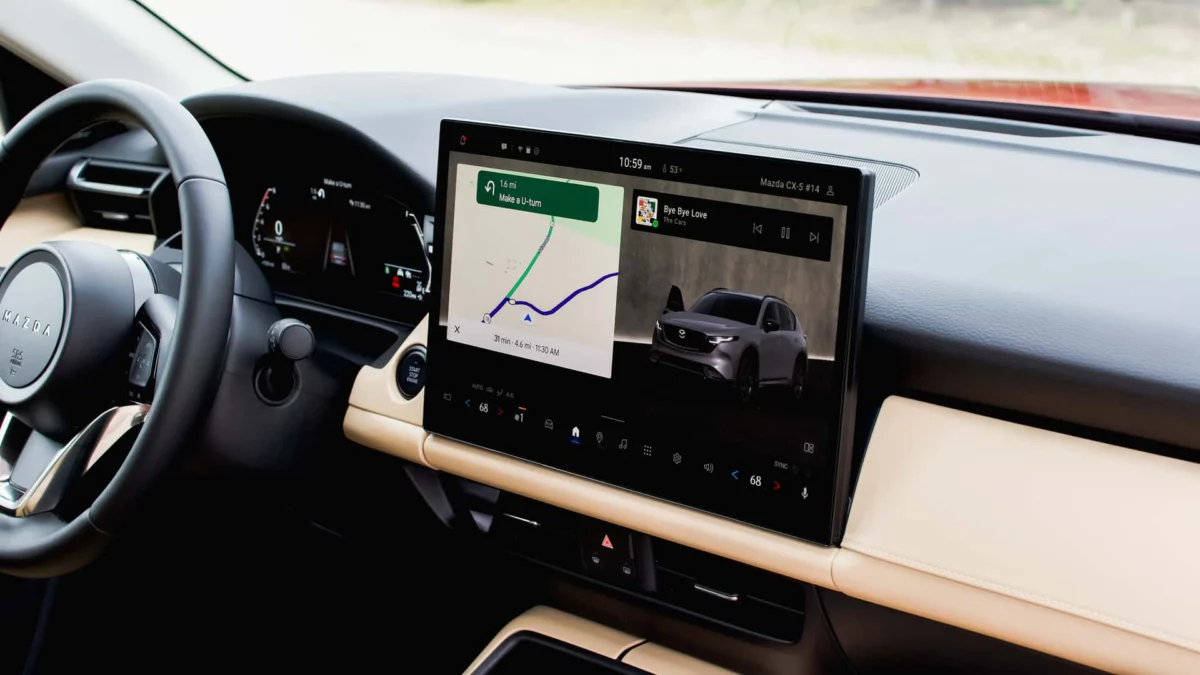
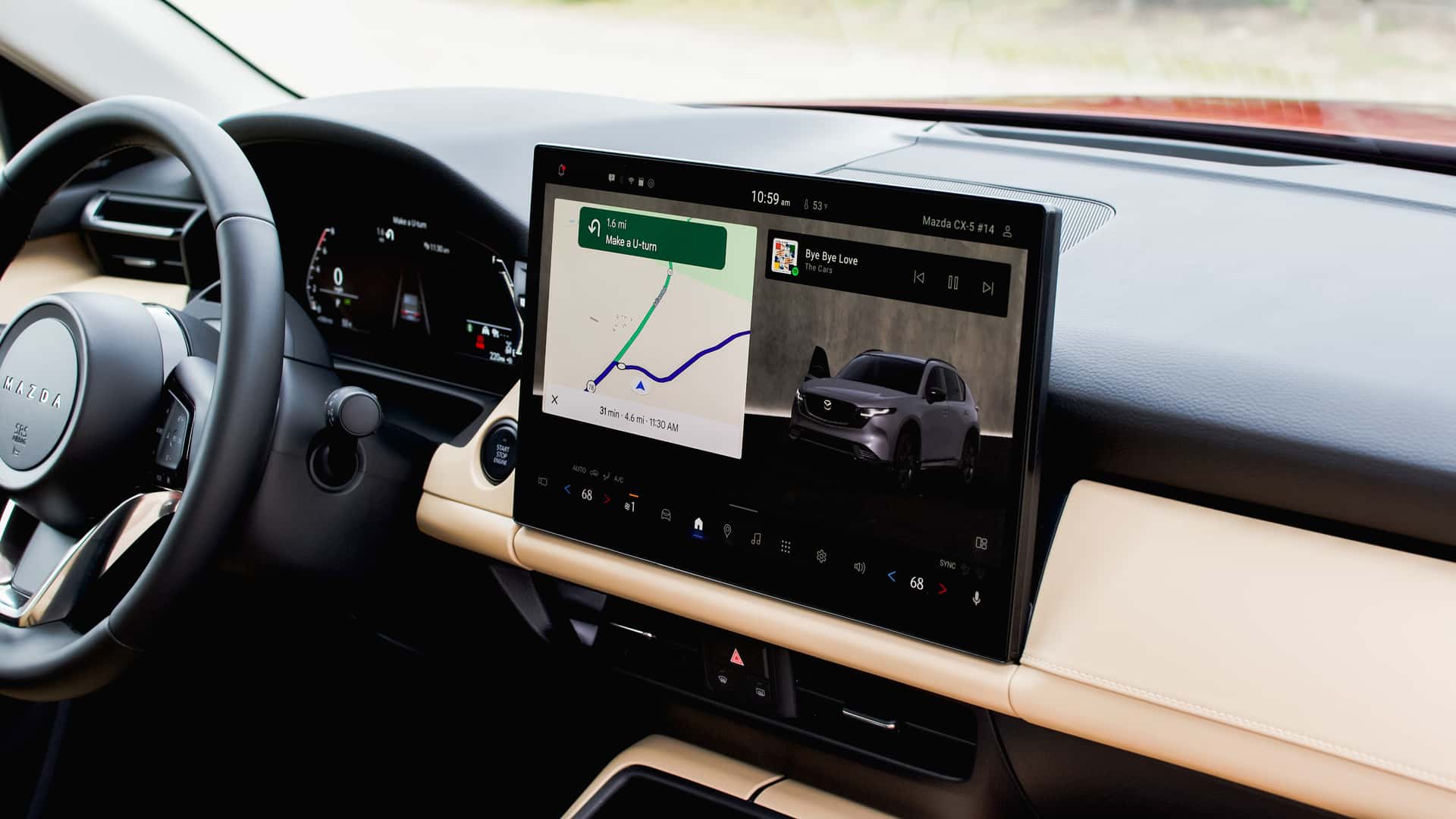
For years, Mazda stood as a bastion of traditional automotive ergonomics. While competitors were racing to turn their dashboards into giant tablet computers, the Hiroshima-based manufacturer maintained a staunch commitment to physical switchgear, tactile feedback, and the “Jinba-Ittai” philosophy—the connection between horse and rider. However, with the introduction of the latest generation CX-5, the narrative has shifted dramatically. The dashboard has been hollowed out, replaced by a massive 15.6-inch infotainment screen that has effectively rendered traditional buttons a relic of the past.
This pivot has sparked a firestorm of debate among enthusiasts and long-time owners. Is this a strategic move toward modern safety, or a concession to cost-cutting pressures in a competitive global market? As Mazda executives double down on their new direction, the industry is left to wonder: has the brand sacrificed its soul for the sake of the digital age?
The Evolution of the Mazda Interface: A Chronological Shift
To understand the current controversy, one must look at how rapidly Mazda’s philosophy has evolved. Only a few years ago, in 2019, the brand was a vocal critic of the very trend it has now adopted. During the launch of the Mazda3, the company released research highlighting the inherent dangers of touchscreens. Their data suggested that when drivers reached for a touchscreen interface, they would unintentionally apply torque to the steering wheel, causing the vehicle to drift from its lane. At that time, Mazda maintained that physical controls were the only way to ensure the driver kept their eyes on the road and their hands steady.
Fast forward to 2024 and 2025, and the landscape has changed. The new CX-5, the brand’s volume leader, serves as the definitive turning point. When the crossover debuted with its expansive display, the absence of physical buttons for climate control, audio, and vehicle settings was immediately noted. By mid-2025, official statements from Mazda North American Operations began to frame this shift not as an abandonment of their principles, but as a response to evolving customer feedback. The transition has since rippled across the lineup, extending to newer models like the 6e and CX-6e—vehicles heavily influenced by the Chinese market, where large-format displays are not just requested, but expected by consumers.
The Engineering Argument: Safety Through Simplification
Mazda’s leadership is now actively defending the transition. Koichiro Yamaguchi, the program manager for the CX-5, recently sat down with the Australian magazine Drive to articulate the logic behind the "screen-centric" design. His argument is rooted in the cognitive load placed on the driver.
“Air conditioning, you can operate with a finger, and if we have to put the physical button, that will be at the lower position,” Yamaguchi explained. “Then the driver has to look down, and there are 15 similar-looking switches. That means you rather have to look down and select the correct button—it actually requires the driver to take their eyes off the road. So rather than that, it’s better to have this control on the screen—to minimize this distraction.”
From the perspective of the design team, a large, high-definition screen allows for larger "buttons" (virtual touch targets) that are easier to hit without precision-targeting. They argue that by placing frequently used functions—like temperature and fan speed—at the base of the screen, the interface remains within the driver’s peripheral vision, theoretically reducing the time spent glancing away from traffic.
The Counter-Argument: The Irreplaceable Nature of Muscle Memory
Despite the official defense, the automotive community remains skeptical. Critics point to the concept of "muscle memory" as the primary casualty of the digital dashboard. With a physical dial or toggle, a driver learns the location and resistance of the control through repetition. Once that neural pathway is established, the driver can adjust the heat or volume without ever looking away from the windshield.
In a touchscreen environment, that tactile feedback is absent. Even if a button is large, it provides no physical "click" to confirm the action has been registered. This often forces the driver to perform a "check-glance"—a secondary look at the screen to ensure the action was successful. For many, this adds, rather than subtracts, from the total time the eyes are off the road.
Furthermore, software-based interfaces are prone to latency, freezing, or menu-diving. While a physical volume knob works instantaneously regardless of the infotainment system’s status, a touchscreen command may require navigating through multiple sub-menus, significantly increasing the duration of the distraction.
Global Influence and Market Pressures
It is impossible to discuss this change without acknowledging the role of the Chinese automotive market. The influence of the CX-6e and 6e models, which were developed with a keen eye on Asian consumer trends, cannot be overstated. In China, the "smartphone-on-wheels" aesthetic is the gold standard. A car’s perceived value is often tied directly to the size and resolution of its screen.
Mazda, a relatively small manufacturer compared to giants like Toyota or Volkswagen, must balance its heritage with the need to remain relevant in these massive, tech-hungry markets. If the company were to build two entirely different dashboards—one for the West and one for the East—the manufacturing costs would be prohibitive. Consequently, the "minimalist" approach has become the global baseline for the brand.
The Implications for Future Mazda Models
Looking ahead, the road is not set in stone. While Mazda is currently committed to this path, the leadership has left the door ajar for a potential return to traditional controls. Yamaguchi has noted that future design decisions will be heavily dependent on ongoing customer feedback. If the vocal backlash from loyalists persists, or if market research shows a drop in customer satisfaction related to the interface, the next generation of Mazda interiors could see a hybrid approach.
The industry consensus, as reflected by the Motor1 editorial team, suggests that a middle ground is the most desirable outcome. Many observers argue that keeping climate control as physical, tactile buttons while using a touchscreen for mapping and entertainment would have provided the "best of both worlds." The switchgear found in Mazda’s rear-wheel-drive SUV architecture (such as the CX-60) is widely considered to be some of the best in the industry; the loss of that tactile quality is, for many, the greatest tragedy of the new CX-5 design.
Conclusion: A Delicate Balance
Mazda finds itself at a crossroads. By embracing the 15.6-inch screen, they have effectively modernized the CX-5 to meet the aesthetic and functional demands of a globalized, tech-focused consumer base. They have successfully argued that, in a world of complex sub-menus, a large screen can—if designed correctly—minimize the need for deep-menu searching.
However, in doing so, they have challenged the very "driver-centric" ethos that made the brand a favorite among enthusiasts. The transition from the tactile satisfaction of a well-weighted dial to the flat, haptic-less surface of a screen is more than just an engineering change; it is a cultural shift.
As the brand moves forward, the success of this strategy will be measured not just in sales figures, but in the long-term loyalty of their customer base. Mazda has always prided itself on being the "driver’s brand." Whether they can maintain that identity in a world where the driver is increasingly interacting with a glass panel rather than mechanical inputs remains the central question of the next decade for the company. For now, the screen is here to stay, and the industry will be watching closely to see if this gamble results in a safer driving experience or merely a more complicated one.