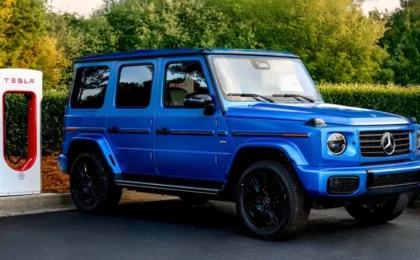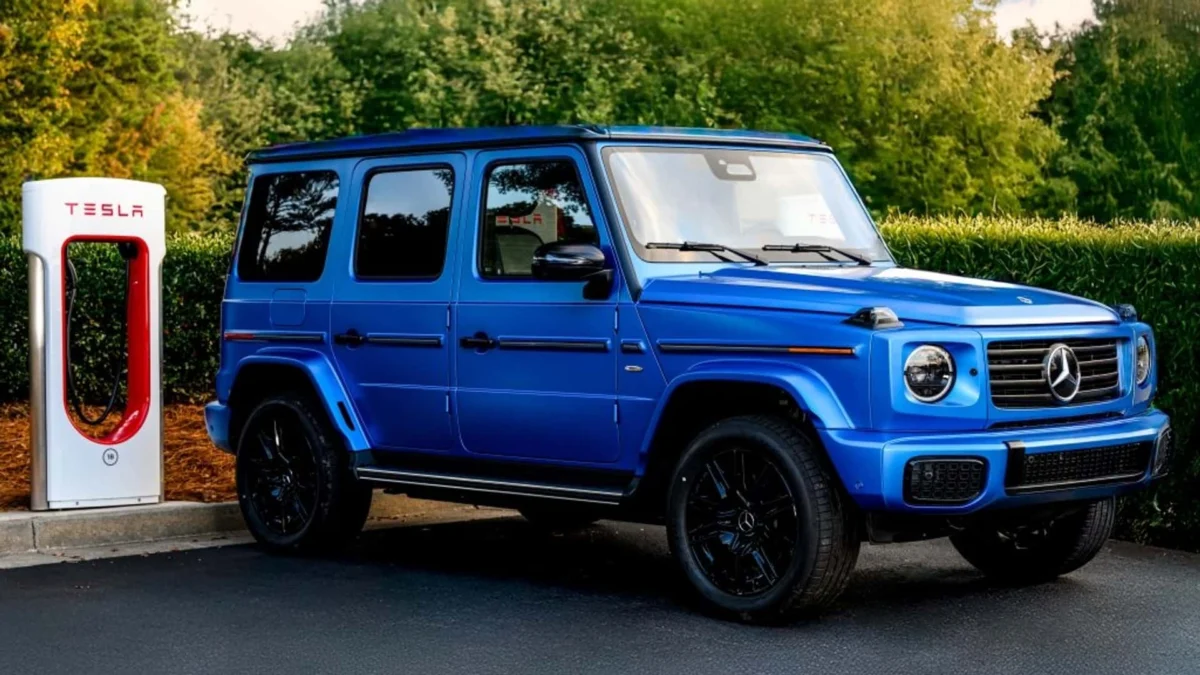
The Mercedes-Benz G-Class, an automotive archetype defined by its boxy silhouette and unwavering off-road capability, has officially entered a new chapter. As of this week, Mercedes-Benz has opened the US order books for the 2027 G 580 Electric. With a base sticker price of $165,200—inclusive of the $1,450 destination charge—the electrified "G-Wagon" continues to occupy the absolute pinnacle of the luxury SUV hierarchy. However, the most significant developments for the 2027 model year aren’t found in the leather-stitched cabin or the iconic exterior; they are hidden beneath the charging door.
In a move aimed at enhancing real-world usability and addressing the competitive pressures of the high-end electric vehicle market, Mercedes-Benz has overhauled the charging architecture of the G 580. By transitioning from the legacy single-port setup to a more versatile, dual-connector configuration, the brand is signaling a commitment to long-term ownership viability. This update, paired with marginal improvements in efficiency and range, suggests that Mercedes is focused on closing the sales gap between its electric flagship and the perennially popular combustion-powered variants.
The Evolution of the Electric G-Class: A Chronological Overview
The journey of the electric G-Class began with the ambitious promise to electrify the most rugged vehicle in the Mercedes-Benz stable without compromising its "G" DNA. When the G 580 with EQ Technology was first introduced, it was met with both critical acclaim for its engineering—notably the quad-motor setup—and skepticism regarding its efficiency in such a non-aerodynamic package.
By April 2025, market data provided a clear picture of the challenge ahead. Mercedes-Benz had moved approximately 1,450 units of the electric G 580 globally, a figure dwarfed by the 9,700 combustion-powered G-Class models sold in the same four-month window. Recognizing the need for a tactical adjustment, the company increased its customer incentives, doubling the discount on the EV from 5 percent to 10 percent in late 2024.
The announcement of the 2027 model year updates serves as the next phase in this strategy. Rather than merely relying on price incentives, the 2027 update focuses on "functional parity"—the idea that the electric G must be at least as convenient to operate as the gas-powered version. By addressing the charging bottleneck, Mercedes-Benz is attempting to make the transition to electric ownership seamless for the brand’s high-net-worth demographic, many of whom demand the latest infrastructure compatibility as a prerequisite for purchase.
Engineering the Infrastructure: The New Charging Architecture
The most critical change for the 2027 model year lies in the charging interface. The outgoing model utilized a CCS1 inlet, a standard that is rapidly being supplanted in the North American market. The 2027 G 580 ditches this in favor of a dual-port solution tucked behind a single, streamlined cover.
This new configuration features a North American Charging Standard (NACS) port for DC fast charging, allowing owners to tap directly into the Tesla Supercharger network without the need for cumbersome adapters. Alongside the NACS port, the vehicle retains a separate J1772 connector, ensuring that owners can continue to use existing Level 2 AC home and public charging infrastructure without disruption.
This hardware transition is complemented by software and thermal management refinements that have successfully shaved time off the vehicle’s charging cycle. Mercedes-Benz reports that the 2027 G 580 can now complete a 10-to-80-percent charge in 29 minutes, a three-minute improvement over the previous iteration. While the peak DC charging capacity remains capped at 200 kW, the efficiency gains suggest a more sophisticated battery management system capable of sustaining higher intake rates for longer durations.
Technical Specifications and Performance Data
Despite the updates to its charging capabilities, the G 580 remains a formidable powerhouse. Mercedes-Benz has opted to keep the mechanical drivetrain untouched, a testament to the efficacy of the original design. The vehicle continues to rely on four independent electric motors—one at each wheel—providing a level of torque vectoring that is virtually impossible to replicate with a traditional mechanical differential system.
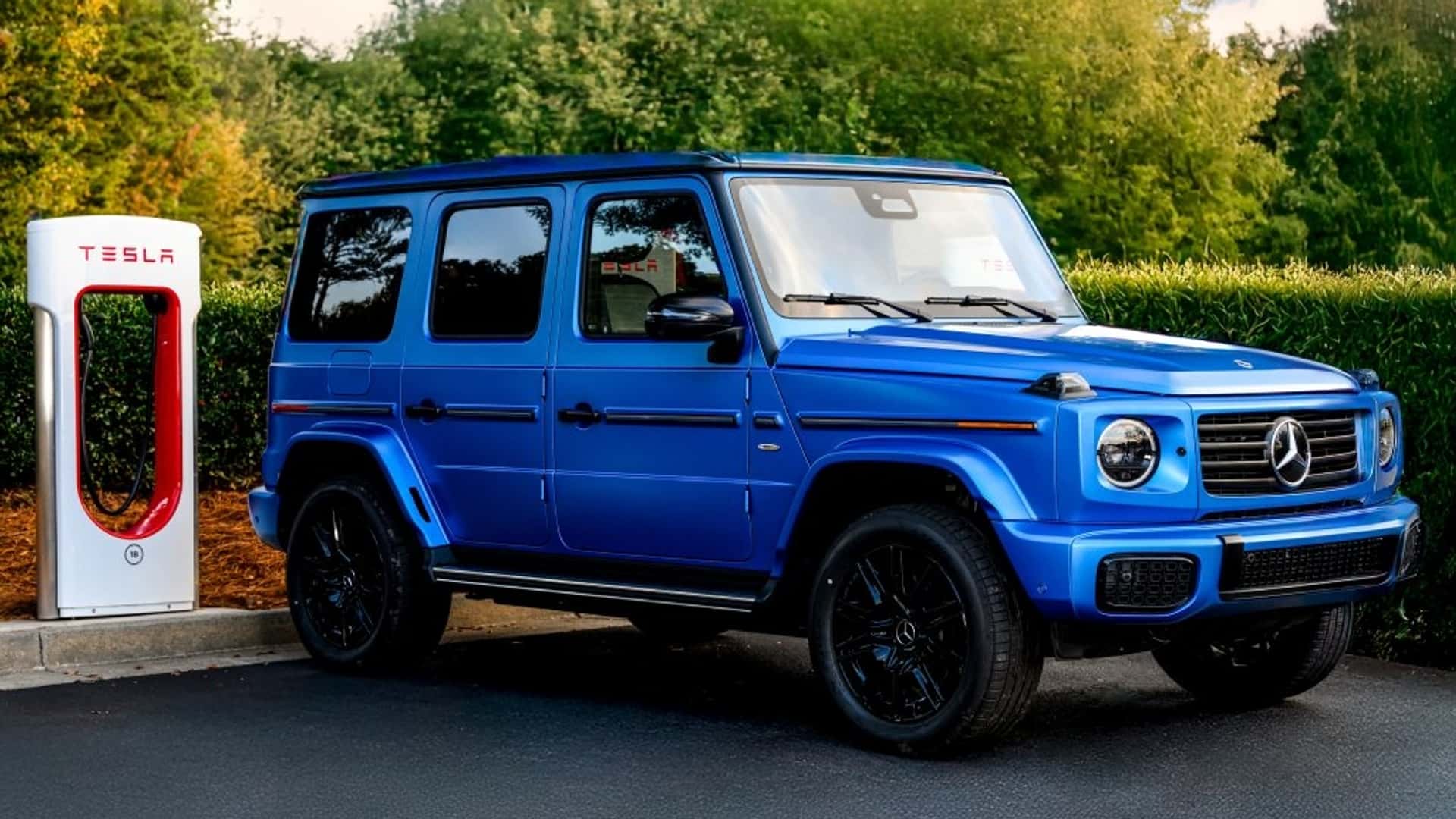
- Horsepower: 579 hp (432 kW)
- Torque: 858 lb-ft
- 0-60 MPH Acceleration: 4.6 seconds
- Top Speed: 112 mph (electronically limited)
- Battery Capacity: 117 kWh
- AC Charging (Level 2): 9.6 kW
- EPA Estimated Efficiency: 71 MPGe (up from 62 MPGe)
- EPA Estimated Range: 249 miles (up from 239 miles)
These figures confirm that the G 580 is not a vehicle built for efficiency, but for unbridled, all-terrain performance. The increase in EPA range, though modest at 10 miles, is a welcomed improvement for a vehicle that frequently faces criticism for its high drag coefficient. The shift from 62 to 71 MPGe indicates that while the "brick-like" aerodynamics of the G-Class are immutable, the powertrain’s parasitic losses have been reduced, likely through optimized inverter efficiency and thermal conditioning.
The Strategic Position of the G 580 in the Mercedes Portfolio
The G 580 sits in a complex position within the Mercedes-Benz ecosystem. It is an "EQ" branded vehicle, yet it retains the rigid, ladder-frame-based architectural heritage of the classic G-Class. As Mercedes-Benz continues to refresh its flagship SUV lineup—including the upcoming 2027 Maybach GLS 680—the G 580 serves as the tip of the spear for the brand’s electrification strategy.
However, the price point creates a significant hurdle. With a starting price of $165,200, the G 580 is a substantial investment. When one begins to explore the extensive option list—including custom interior trims, specialized off-road packages, and paint-to-sample finishes—the final price can quickly escalate. One early dealer listing for a 2027 configuration was spotted at $187,650, putting it in direct competition with ultra-luxury SUVs from rivals like Range Rover and Bentley.
The primary tension for the G 580 is the presence of the combustion-powered G 63. For many traditional buyers, the V8 rumble is as much a part of the G-Class experience as its off-road prowess. The electric variant offers a quieter, smoother, and arguably more advanced experience, yet it struggles to overcome the brand loyalty attached to the internal combustion engine. By introducing the 2027 hardware updates, Mercedes is betting that the convenience of a modern charging experience will be the tipping point for the undecided buyer.
Implications for Future Buyers and the Market
What does this mean for the future of the luxury EV market? First, it confirms that manufacturers are moving away from the "adapter era." The rapid adoption of NACS by major manufacturers, led by Tesla’s infrastructure dominance, is becoming a baseline requirement for any premium vehicle. By integrating this into the 2027 G 580, Mercedes-Benz is future-proofing its most iconic nameplate.
Second, the modest price increase of approximately $750 (from $164,550 to $165,200) relative to the significant hardware upgrades suggests that Mercedes-Benz is absorbing a portion of the manufacturing costs to drive adoption. This is a clear indicator that the company is prioritizing market share and the transition of its customer base to electric power over immediate profit margin optimization on the G 580.
Finally, the 2027 G 580 acts as a bridge. It proves that the "icon" can evolve. Whether the market will respond to these changes with the fervor required to match the sales of the combustion-powered G-Class remains to be seen. However, for the buyer who wants the status and capability of a G-Wagon but demands the zero-emissions output and instant torque of an electric drivetrain, the 2027 model is, by every measurable metric, a superior product to its predecessor.
As the automotive landscape continues its shift toward electrification, the G 580 stands as a reminder that icons don’t have to change their look to change their soul. They simply need to stay ahead of the curve, one charge at a time.