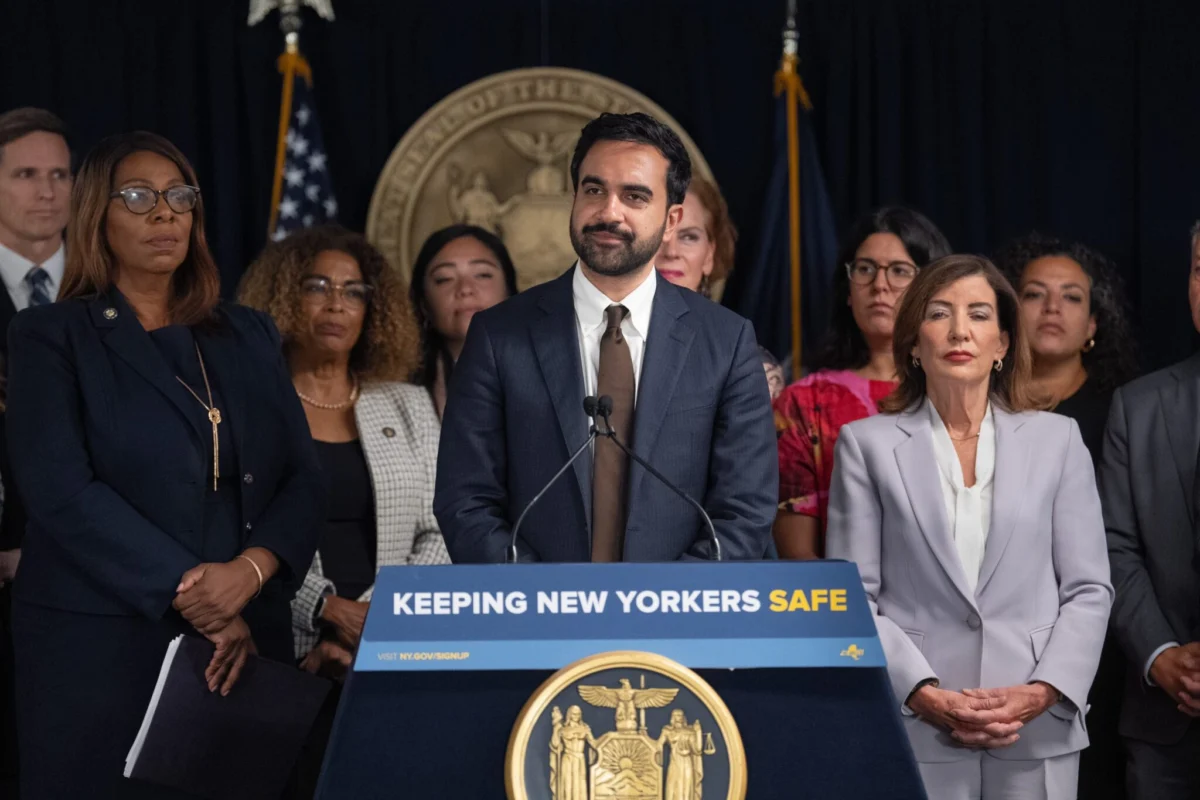
STATEN ISLAND, NY — In a significant legal setback for the administration of Mayor Zohran Mamdani, a State Supreme Court judge on Tuesday dismantled the current implementation of New York City’s controversial "pied-à-terre" tax. The ruling, delivered by Justice Wayne Ozzi, orders the city to immediately cease its current enforcement efforts, cancel thousands of notices sent to property owners, and overhaul the administrative process used to identify who is subject to the luxury surcharge.
While the ruling does not strike down the tax itself, it represents a stinging rebuke of the city’s Department of Finance (DOF) and its methodology. The decision marks a pivotal moment in the ongoing struggle between the city’s progressive leadership, which seeks to aggressively redistribute wealth to fund public services, and high-net-worth property owners who allege administrative overreach and procedural malpractice.
Main Facts: A Procedural Collapse
Justice Wayne Ozzi’s ruling centered on the "arbitrary and capricious" nature of the city’s rollout. According to the court, the Mamdani administration failed to perform its due diligence before flagging properties as secondary residences. The judge ruled that the city must review all available internal information—including income tax filings and voter registration records—to make an individual determination for each property before demanding payment or issuing warnings.
The core of the legal dispute involves the "burden of proof." Justice Ozzi found that the city’s approach—sending out notices and requiring homeowners to prove they were primary residents—was a reversal of standard legal expectations. Under the court’s order, the city must now produce the records backing its claims for every individual property it seeks to tax.
The financial stakes are immense. The pied-à-terre surcharge was a cornerstone of Mayor Mamdani’s "Tax the Rich" platform, projected to generate at least $500 million in annual revenue. This funding was earmarked for critical infrastructure, including the city’s public school system, park maintenance, and road repairs. With the rollout now in legal limbo, the city’s fiscal projections for the coming year face a potential shortfall.
Chronology: From Legislative Victory to Judicial Halt
The path to Tuesday’s ruling began with a series of aggressive policy shifts aimed at New York City’s elite real estate market.
- July 1, 2026: The pied-à-terre tax officially takes effect. The law targets high-value properties not used as primary residences: one-, two-, and three-family homes valued over $5 million, and condominiums or cooperatives valued over $1 million.
- Mid-July 2026: The Department of Finance issues approximately 17,000 notices to property owners, flagging them as potential debtors. Chaos ensues as thousands of these notices are sent to individuals who have lived in their homes as primary residents for decades.
- Late July 2026: The city admits it did not cross-reference the notices with income tax filings before mailing them. Public outcry grows as a leaked "hit list" in an Excel spreadsheet suggests the city used blunt data scraping rather than nuanced investigation.
- August 2026: Randy Mastro, a veteran attorney and former First Deputy Mayor under the Adams administration, files a lawsuit on behalf of three homeowners. Mastro, who has become a frequent legal antagonist of the Mamdani administration, argues the city violated state law and privacy rights.
- Late August 2026: Former U.S. Commerce Secretary Wilbur Ross and casino mogul Steve Wynn file a separate, broader lawsuit in federal court, challenging the constitutionality of the tax itself.
- September 2026: Justice Ozzi hears arguments in Staten Island, leading to Tuesday’s decision to throw out the current rollout.
Supporting Data: The Mechanics of the Surcharge
To understand the scale of the conflict, one must look at the specific thresholds and the data management used by the city. The surcharge is not a flat fee but a tiered tax based on the assessed value of non-primary residences.
- Residential Homes: For one- to three-family homes with a market value exceeding $5 million, the surcharge is significant, often reaching tens of thousands of dollars annually.
- Condos and Co-ops: The threshold for apartments is much lower, at $1 million, reflecting the high density of luxury units in Manhattan and parts of Brooklyn.
- The Error Margin: Of the 17,000 owners who received notices in July, the city eventually conceded that a substantial percentage—estimated by some critics to be as high as 30%—were sent in error to primary residents.
- Transparency Concerns: One of the most controversial aspects of the rollout was the city’s publication of an online database containing information on over 900,000 properties, including names and addresses. Mastro’s lawsuit alleged this was an unprecedented invasion of privacy not authorized by the state legislature.
The city’s reliance on automated data to meet its $500 million revenue goal appears to have been its undoing in the Staten Island court. Justice Ozzi’s requirement for "individual determination" effectively ends the era of "bulk-tagging" luxury properties.
Official Responses: A War of Words
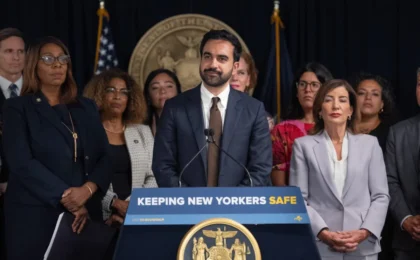
The reaction from City Hall was swift and defiant. Matt Rauschenbach, a spokesperson for Mayor Mamdani, characterized the ruling as a temporary setback in a larger class struggle.
"The pied-à-terre surcharge is about a basic principle of fairness," Rauschenbach said in a statement to Fortune. "If you can afford a luxury second home in New York City, you can afford to pay your fair share for the schools, streets, and parks that make this city work. Today’s decision is wrong, and we will invoke a stay of the injunction."
Rauschenbach emphasized that the administration intends to continue implementing the surcharge "fairly and efficiently," claiming that the wealthy are using the court system to "protect their privilege."
The Governor’s office, while maintaining a degree of distance from the administrative failures of the city, voiced support for the tax’s underlying philosophy. Jen Goodman, Director of Rapid Response for Governor Kathy Hochul, stated, "The Governor continues to believe that people who can afford a multimillion-dollar second home in New York City can afford to pay their fair share."
Conversely, the plaintiffs celebrated the ruling as a victory for the rule of law. Randy Mastro, speaking after the decision, noted that the court "recognized we were right all along." He argued that the city’s "shoot first, ask questions later" approach to taxation was a violation of basic due process.
Wilbur Ross, who is pursuing a separate constitutional challenge, expressed gratification at the speed of the ruling. "I’m grateful that he did it so quickly, because a lot of people have been on pins and needles about this whole thing," Ross said. He noted that while an appeal is certain, the ruling provides a "good start" for those challenging the city’s tax policies.
Implications: Legal Precedent and Political Fallout
The implications of Justice Ozzi’s ruling extend far beyond the 17,000 property owners currently in the city’s crosshairs.
1. The "Automatic Stay" and Immediate Future
The city is expected to file an appeal immediately, which triggers an "automatic stay" under New York law. This stay would allow the city to continue its enforcement efforts while the case moves to the Appellate Division. However, the legal cloud over the tax may discourage the Department of Finance from aggressive collection until a final verdict is reached, potentially stalling the $500 million revenue stream.
2. Procedural vs. Constitutional Challenges
It is vital to distinguish between the two legal fronts. Justice Ozzi’s ruling is procedural—it says the city is doing it wrong. The lawsuit by Wilbur Ross and Steve Wynn is constitutional—it argues the tax itself is illegal because it discriminates against non-residents (violating the Commerce Clause or the Privileges and Immunities Clause of the U.S. Constitution). If Ross wins his case, the tax is dead. If the city wins the procedural battle, they simply have to be more careful with their paperwork.
3. The Political Future of "Tax the Rich"
Mayor Mamdani’s political identity is tied to the success of these revenue-generating measures. A failure to implement the pied-à-terre tax would not only create a budget gap but also signal a weakness in the progressive movement’s ability to navigate the complexities of New York’s legal and administrative systems.
4. Impact on the Real Estate Market
The uncertainty surrounding the tax has already sent ripples through the luxury real estate market. Brokers report that prospective buyers of secondary residences are "waiting for the dust to settle" before committing to high-value purchases. If the tax survives the legal gauntlet, it could lead to a cooling of the luxury condo market; if it fails, it may trigger a relief-fueled surge in investment.
As the city moves toward an appeal, the eyes of both the "ultrawealthy" and "working New Yorkers" remain fixed on the courts. The battle over the pied-à-terre tax is no longer just about a surcharge—it is a referendum on how New York City balances its fiscal ambitions with the procedural rights of its residents.