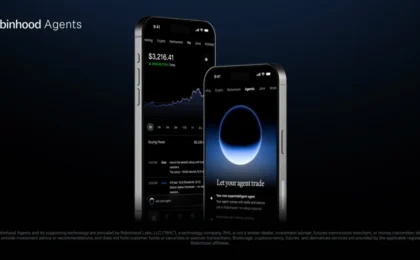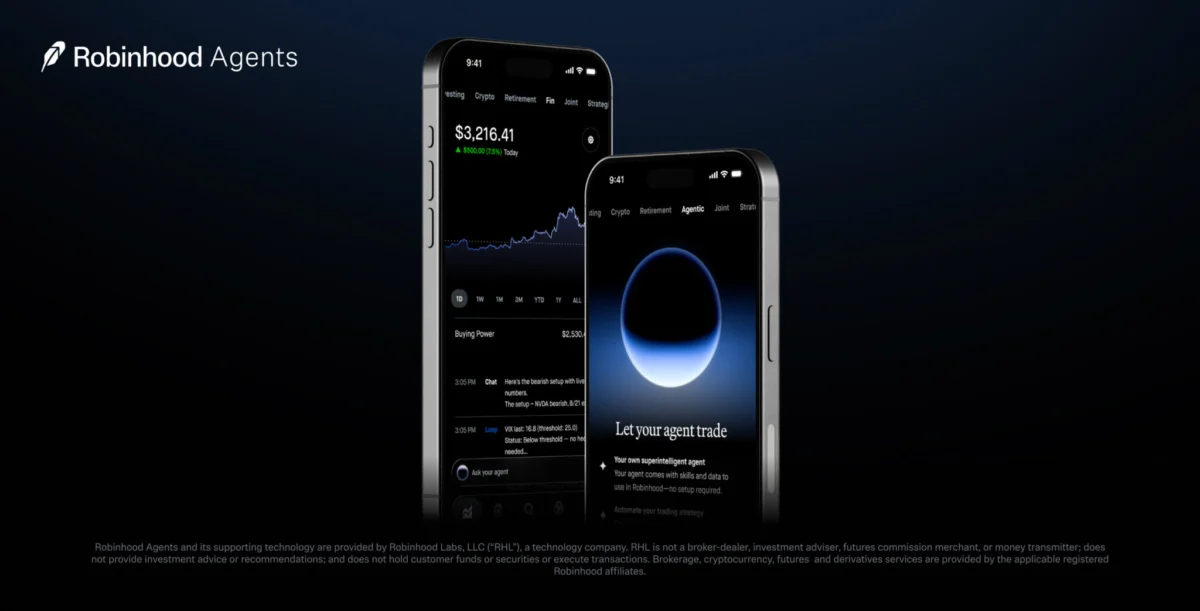
In a move that marks a definitive shift in the landscape of retail investing, Robinhood Markets Inc. has officially announced the rollout of autonomous trading agents to its entire customer base of approximately 29 million users. This initiative, powered by the latest large language models from OpenAI and Anthropic, represents the first time high-level algorithmic trading capabilities—once the exclusive domain of institutional hedge funds—have been placed directly into the hands of the general public through a non-technical interface.
The deployment signifies more than just a new feature; it is a fundamental reconfiguration of the relationship between retail investors and the capital markets. By allowing users to delegate research, strategy formulation, and trade execution to sophisticated AI "agents," Robinhood is betting on a future where the "active trader" is no longer a human staring at candles on a screen, but a strategist overseeing a fleet of digital proxies.
Main Facts: A New Era of "Agentic" Investing
Starting this week, every Robinhood customer will gain access to a suite of AI agents. Unlike previous iterations of "robo-advisors," which typically offered static, diversified portfolios based on risk tolerance, these new agents are "agentic." This means they can take open-ended instructions in plain English, reason through complex financial data, and execute multi-step actions autonomously.
The Power Behind the Agents
Robinhood has partnered with the two leading titans of the AI industry to provide the "brains" for these agents. Users are given the agency to select their preferred model, including:
- OpenAI’s GPT-6 Series: Specifically the "Luna" and "Sol" variants, optimized for different balances of speed and reasoning depth.
- Anthropic’s Opus 4.8: A model known for its rigorous adherence to safety protocols and complex logical deduction.
Functionality and "Loops"
The agents are designed to handle a spectrum of tasks. At the simplest level, a user can command, "Buy $200 of Ford stock if it dips below its 50-day moving average." However, the true power lies in "Loops." These are continuous strategies where an agent can be instructed to monitor market sentiment on social media, cross-reference it with unusual options activity, and execute trades while the user is asleep. This 24/7 market presence effectively eliminates the "time-zone disadvantage" for retail traders.
Guardrails and Control
To mitigate the risks of autonomous trading, Robinhood has implemented several layers of protection:
- Dedicated Agent Accounts: Users must move specific amounts of capital into a sub-account that the agent can access, ensuring the agent cannot drain a user’s entire life savings.
- Trading Limits: Hard caps on trade size and frequency can be set by the user.
- Human-in-the-Loop (HITL): Users can toggle a setting requiring the agent to send a push notification for final approval before any trade is finalized.
Chronology: From Technical Beta to Mass Rollout
The path to this week’s massive rollout was paved by a strategic, phased approach intended to test the infrastructure of agentic trading.
- May 2026: Robinhood released its Model Context Protocol (MCP) tool. This was a technical release aimed at developers and "quant-lite" retail users. It allowed those with coding knowledge to hook up their own external AI agents to Robinhood’s API. This served as the "stress test" for the platform’s ability to handle high-frequency, AI-driven orders.
- Summer 2026: During this period, the company observed over 150,000 technical users adopting the MCP tool. This beta group provided the data necessary to refine the user interface for a non-technical audience.
- September 2026: Internal data revealed that these early-adopter agents were already transacting nearly 30 million times a day, signaling a massive appetite for automated execution.
- October 2026 (The HOOD Summit): Robinhood officially announced the general availability of "Robinhood Agents" to its 29 million customers, removing the technical barriers and integrating the models directly into the mobile and web applications.
Supporting Data: The Scale of the Shift
The sheer volume of activity recorded during the beta phase suggests that the retail market is ready for a paradigm shift. According to Robinhood’s internal metrics, the 150,000 users who utilized the technical MCP tool accounted for a disproportionate amount of platform activity.
| Metric | Pre-Rollout (Beta) | Projected (Post-Rollout) |
|---|---|---|
| Active Agentic Accounts | 150,000 | 29,000,000 (Available) |
| Daily Transactions by AI | 30 Million | Estimated 500 Million+ |
| Model Options | Custom API | GPT-6 Luna/Sol, Opus 4.8 |
| Data Integration | Manual | Native (Unusual Whales, Token Terminal) |
Furthermore, the cost structure is designed to encourage adoption. While Robinhood plans to charge standard token rates (the cost of "compute" from OpenAI and Anthropic) for the more advanced models, the GPT-6 Luna model will be offered for free through the end of the year. This "freemium" strategy is likely to onboard millions of users who were previously hesitant to pay for advanced trading tools.
To bolster the agents’ decision-making, Robinhood is providing free, limited-time access to high-tier data providers. This includes Unusual Whales, which tracks institutional options flow, and Token Terminal, which provides on-chain fundamental data for cryptocurrency markets. By feeding this "Wall Street grade" data into the AI agents, Robinhood is effectively giving retail traders the same inputs used by professional quantitative analysts.
Official Responses: Democratization vs. Responsibility
The leadership at Robinhood views this rollout as the fulfillment of the company’s founding mission.
"Ownership doesn’t work without markets, and markets don’t work without traders," said Vlad Tenev, CEO of Robinhood, in an official statement. "We’re making Robinhood the best place in the world for active traders by delivering tools once reserved for hedge funds, big banks, and quant firms. This is about leveling the playing field."
However, the democratization of such powerful tools brings significant legal and ethical questions. When asked about the liability of an AI agent making a poor financial decision, Robinhood executives have maintained a firm stance: The agent is a tool, not an advisor.
The company’s legal position is that hosting an agent does not constitute providing financial advice. In their view, if a user instructs an agent to execute a strategy, the legal responsibility rests with the user. "The situation is akin to a customer asking a friend for an opinion or doing research on the internet," a spokesperson noted. However, legal experts suggest this may be tested in court if an AI "hallucination"—a known issue where models invent facts—leads to significant financial loss for a user.
Implications: A New Market Volatility?
The mass release of trading agents has the potential to alter market dynamics in ways that regulators are only beginning to contemplate.
1. The "Flash Mob" Effect
One of the most significant concerns is the potential for "emergent behavior." If 5 million Robinhood agents are all running on GPT-6, and the model identifies a specific technical pattern or news headline as a "strong buy," the resulting surge in volume could cause massive price spikes or "flash crashes." Unlike human traders, who might hesitate, AI agents execute in milliseconds.
2. The End of the "Retail Lag"
Traditionally, retail investors are the last to react to news. With agents monitoring feeds 24/7, the gap between institutional and retail reaction times will shrink to near zero. This could lead to a more efficient market, but it also increases the "noise" and volatility in intraday trading.
3. The Competitive Arms Race
Robinhood’s move puts immense pressure on traditional brokerages. While firms like Charles Schwab and Fidelity have historically prioritized stability and human-led research, they may be forced to accelerate their own AI roadmaps to prevent an exodus of younger, tech-savvy investors. Currently, competitors like Coinbase, eToro, and Public allow for API-based agent connections, but none have yet integrated a "one-click" AI agent for the masses.
4. Regulatory Scrutiny
The SEC and FINRA are likely to monitor this rollout closely. The primary concern will be whether these agents violate "best interest" regulations or if they facilitate market manipulation. If a group of malicious actors coordinates thousands of agents to "pump" a low-liquidity stock, the line between "democratized trading" and "organized manipulation" becomes dangerously thin.
Conclusion: The Future of Wealth Accumulation
As Robinhood Agents begin placing billions of trades a year, the very definition of "investing" is being rewritten. We are entering an era where the primary skill of a successful investor may not be stock picking, but "prompt engineering" and "agent management."
While the risks of volatility and legal ambiguity are real, the potential for wealth accumulation among those who previously lacked the time or expertise to trade actively is unprecedented. Whether this leads to a more equitable financial system or a chaotic, algorithmically-driven market remains the most important question for the next decade of finance. For now, the 29 million customers of Robinhood have just been handed the keys to a digital trading floor, and the markets will never be the same.