CROW AGENCY, Montana — The wind-swept ridges and rolling grasslands of southeastern Montana, known to the world as the site of the Battle of the Little Bighorn but to the Lakota, Northern Cheyenne, and Arapaho as the Battle of Greasy Grass, served this week as a living monument to survival. As the 150th anniversary of the historic engagement arrived, hundreds of tribal members gathered to commemorate a victory that remains one of the most symbolically charged events in the history of the American West.
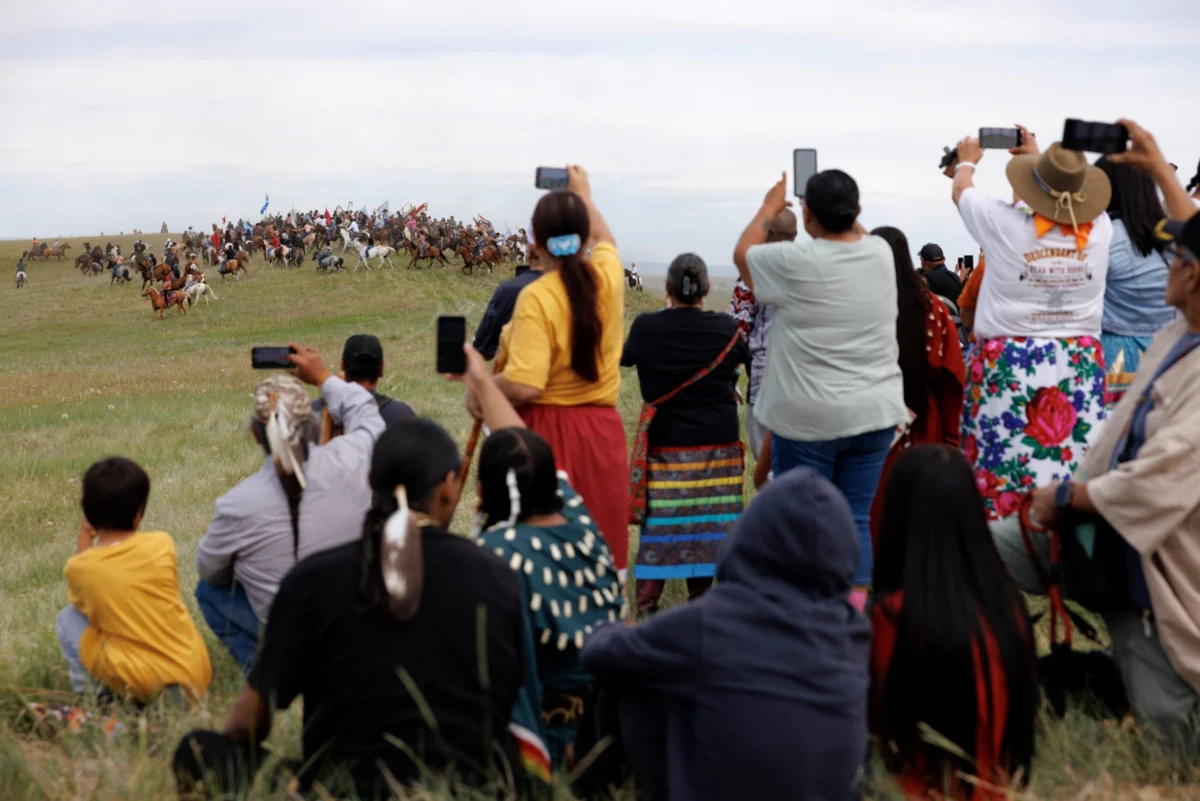
The commemoration, marked by massive horse rides, traditional song, and the pitching of a sprawling tepee camp, was not merely a historical look-back. For the descendants of those who fought on June 25–26, 1876, the gathering is a powerful assertion of continued existence.
"Today I am celebrating the victory of our people, celebrating my life as a human being and my spot on this earth," said William Good Bird, a traditional singer from the Spirit Lake Dakota Nation. As he woke the camp with the resonance of his drum and song, his message was clear: "We’re still here."
Main Facts: A Convergence of Culture and Memory
The 150th anniversary of the Battle of Greasy Grass brings together allied tribes from across the Great Plains to the banks of the Little Bighorn River. The event is characterized by several key activities:
- Horse Rides of Remembrance: Riders from the Cheyenne River Reservation in South Dakota and other tribal lands traveled hundreds of miles on horseback to reach the Crow Agency area, mirroring the mobility and equestrian prowess of their ancestors.
- Battle Reenactments: Unlike many historical reenactments that rely on Western military records, these demonstrations are choreographed based on Northern Cheyenne oral histories, focusing on the tactical maneuvers and horsemanship of the Native warriors.
- Cultural Renewal: At the Standing Rock Sioux Reservation in North Dakota, the anniversary is being marked by oskáte—traditional celebrations involving horse races, victory songs, and tribal dances designed to pass the legacy to younger generations.
- The Camp of Nations: Dozens of tepees now line the riverbanks, housing families from the Dakotas to Washington state, creating a space for the sharing of oral histories that have never appeared in standard American textbooks.
The battle itself saw the Seventh Cavalry of the U.S. Army, led by Lt. Col. George Armstrong Custer, suffer a crushing defeat at the hands of Lakota, Northern Cheyenne, and Arapaho warriors. Custer and more than 200 of his men were killed in an engagement that stunned a nation then celebrating its centennial.
Chronology: From Sacred Treaties to the Slick Grass
The road to the Little Bighorn was paved with broken promises and the lure of precious metals. To understand the 1876 conflict, historians point to a series of escalating tensions driven by westward expansion.
1868 – 1874: The Broken Peace
Following the Treaty of Fort Laramie in 1868, the Black Hills were recognized as part of the Great Sioux Reservation, set aside for the exclusive use of the Lakota people. However, in 1874, an expedition led by Custer confirmed the discovery of gold in the Black Hills. This discovery triggered a massive influx of white miners and settlers, violating the treaty and prompting the federal government to attempt to purchase the land. When the tribes refused to sell their sacred Paha Sapa, the U.S. military launched a campaign to force "non-treaty" bands onto reservations.
Spring 1876: The Gathering of Tribes
By the spring of 1876, thousands of Lakota and Cheyenne had gathered under the spiritual leadership of Sitting Bull. They moved toward the Bighorn Mountains to hunt and hold their annual Sun Dance. During this time, Sitting Bull had a vision of "soldiers falling into his camp like grasshoppers," a prophecy that bolstered the resolve of the warriors.
June 25, 1876: The Battle of Greasy Grass
Custer, leading the Seventh Cavalry, divided his forces into three battalions. Underestimating the size of the Native village—which stretched for miles along the river—Custer attempted a multi-pronged attack. The hilly, broken terrain made communication between his units impossible. Native warriors, led by figures like Crazy Horse and Gall, quickly overwhelmed Custer’s immediate command on what is now known as "Last Stand Hill." The grass, slick with summer heat and moisture, gave the battle its Native name: Greasy Grass.
1877 – 1890: The Bitter Aftermath
While the battle was a decisive tactical victory for the tribes, it prompted a massive military retaliation from the U.S. government. Within a year, Crazy Horse had surrendered and was subsequently killed at Fort Robinson. By 1881, Sitting Bull returned from exile in Canada to surrender due to the starvation of his people following the near-extinction of the buffalo. The era of resistance effectively ended with the Wounded Knee Massacre in 1890, shortly after Sitting Bull was killed by agency police.
Supporting Data: The Scale of the Engagement
The Battle of Little Bighorn remains one of the most studied military engagements in world history due to the disparity in forces and the total nature of the defeat.
- Force Strength: Estimates suggest the Native village contained between 7,000 and 10,000 people, with approximately 1,500 to 2,500 warriors. Custer’s Seventh Cavalry consisted of approximately 600 soldiers and scouts.
- Casualties: The U.S. Army suffered 268 dead and 55 wounded. Native casualties are estimated to be much lower, ranging from 31 to 100 warriors killed, though exact numbers remain a subject of debate among historians.
- The "Boy General": George Armstrong Custer was a polarizing figure even in his own time. While often remembered for his "Last Stand," biographer T.J. Stiles notes that Custer was a distinguished Civil War officer who struggled with the administrative and management side of military leadership in the West. Interestingly, historian Dakota Goodhouse notes that Custer was fluent in Lakota and Arikara sign language, a detail often lost in the caricature of the "Indian fighter."
Official Responses and Perspectives: A Clash of Narratives
The 150th anniversary highlights a profound divide in how American history is perceived. As the United States prepares to celebrate the 250th anniversary of the Declaration of Independence, many Native Americans view these milestones through a lens of survival rather than celebration.
The Voice of the Descendants
Jon Eagle Sr., a former Standing Rock tribal historic preservation officer, emphasizes that the Native narrative of the battle differs significantly from the "surrender" stories found in history books.
"Our people say that [Sitting Bull] looked at his son Crow Foot and said, ‘My boy, if you live, you can never be a man in this world because you can never own a gun or a pony,’" Eagle said. "He understood that things were going to change for his children… It’s an opportunity for us to share with the generations coming behind us that they’re descendants of a very powerful nation."
The Call for Language Preservation
For Jim Real Bird, a Crow tribal member and reenactment coordinator, the preservation of the story is inextricably linked to the preservation of Indigenous languages. "All the other things that are Native American don’t mean nothing if you don’t know your language," Real Bird stated, emphasizing that the reenactments use traditional commands and songs to keep the culture vibrant.
A Reevaluation of Custer
Modern historians are increasingly looking at Custer not as a tragic hero or a simple villain, but as a man out of time. T.J. Stiles describes him as someone who "whenever he got into the frying pan, he immediately started looking for the fire." His flamboyant style and refusal to adhere to the chain of command contributed to the tactical isolation that led to his death.
Implications: Sovereignty and the Future
The gathering at Greasy Grass serves as a reminder of the enduring sovereignty of Native nations. The implications of this anniversary reach far beyond a simple memorial service; they touch upon modern issues of land rights, cultural identity, and historical justice.
Cultural Renewal as Resistance
For many attendees, the week-long camp is a form of spiritual "refueling." Theresa Long Turkey of the Lower Brule Sioux Tribe described the gathering as a personal renewal. This sentiment underscores the idea that for Indigenous communities, remembering the Battle of Greasy Grass is an act of reclaiming a narrative that was nearly erased by a century of boarding schools and forced assimilation.
The "Still Here" Movement
The recurring theme of the 150th anniversary is the phrase "We are still here." This serves as a direct rebuttal to the 19th-century "Vanishing Red Man" theory, which suggested that Native cultures would inevitably disappear in the face of modernity. By maintaining horse traditions, oral histories, and tribal gatherings, these nations demonstrate that they are not relics of the past but contemporary societies with a deep connection to their environment.
Educational Shifts
The prominence of oral history in this year’s commemorations reflects a broader movement to decolonize American history. As families share stories of ancestors like "Striped Face," who fought despite being wounded, the historical record is enriched with perspectives that prioritize Indigenous bravery and tactical brilliance over the traditional focus on Custer’s "martyrdom."
As the sun sets over the Little Bighorn River, the silhouettes of hundreds of riders on the ridges serve as a haunting and beautiful reminder. One hundred and fifty years after the smoke cleared from the Greasy Grass, the songs of the Lakota, Cheyenne, and Arapaho continue to echo through the coulees—a testament to a victory that, for them, has never truly ended.