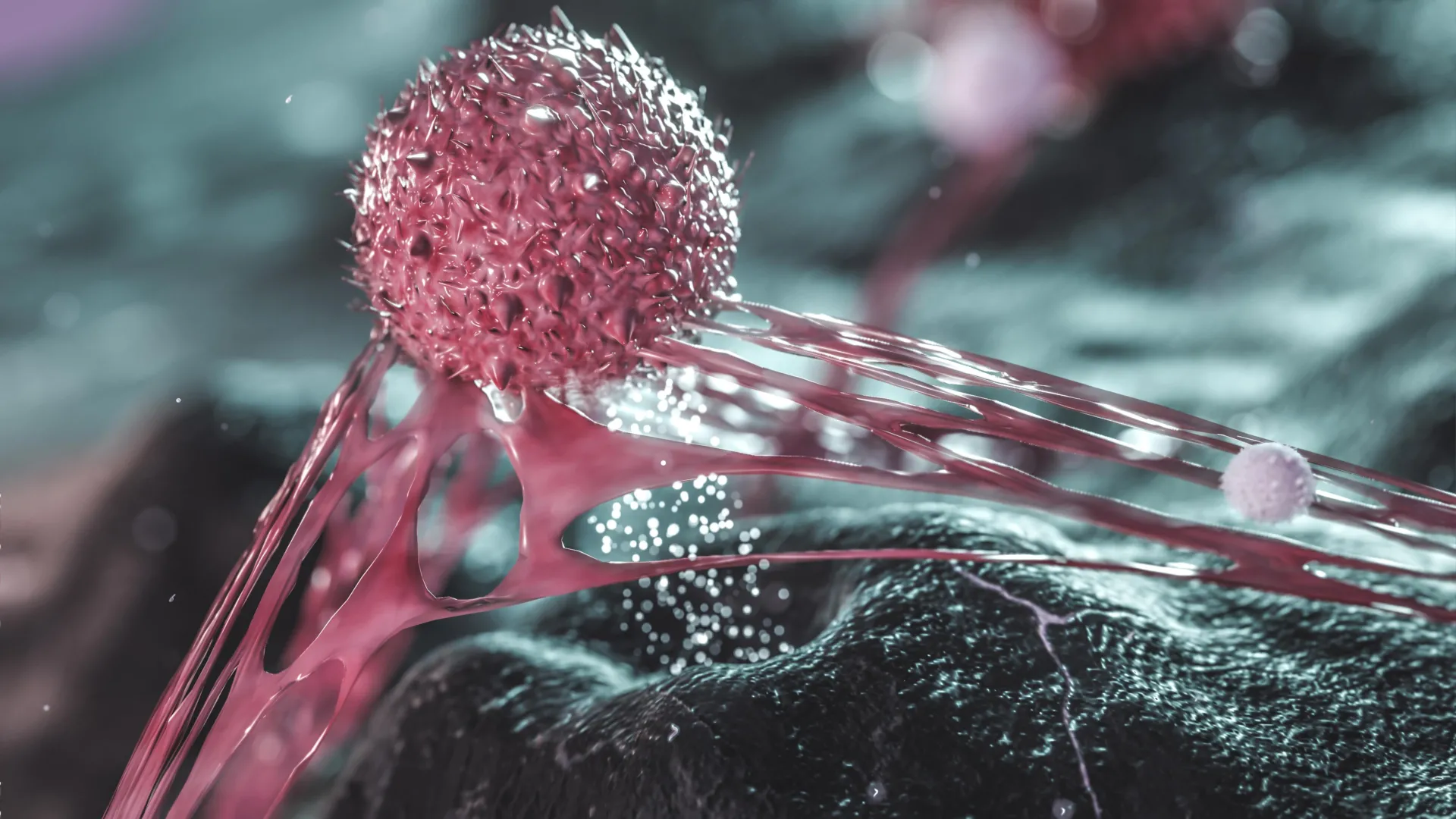
In a significant leap forward for oncology, an international team of researchers has unveiled a high-resolution, "cellular-level" map of breast tumors, exposing the hidden architecture that allows cancer to evade treatment and return long after therapy concludes. The study, published in the prestigious journal Genome Medicine, reveals that breast tumors are not monolithic masses of rapidly dividing cells, but rather complex, stratified landscapes containing "dormant" pockets protected by a ring of specialized support cells.
This discovery, led by the Medical Research Council (MRC) Laboratory of Medical Sciences (LMS), Imperial College London, and the UCL Genetics Institute, challenges the traditional focus of cancer treatment. For decades, chemotherapy and radiotherapy have primarily targeted fast-growing, aggressive cells. This new research suggests that to truly eliminate breast cancer and prevent relapse, medicine must pivot to address these "quiescent" or dormant cells—the survivalists of the tumor world—and the protective "neighborhoods" that sustain them.
The Landscape of Complexity: Main Facts and Findings
Breast cancer has long been understood as a heterogeneous disease, but this study provides the most granular view yet of how that diversity is organized spatially. By utilizing single-cell RNA sequencing and spatial transcriptomics, the research team successfully mapped the gene expression of individual cells while simultaneously pinning their precise locations within the tumor architecture.
The researchers identified distinct regions characterized by two radically different cellular behaviors:
- Proliferative Niches: High-energy areas filled with rapidly dividing cancer cells. These are the primary targets of conventional chemotherapy.
- Quiescent Niches: "Quiet" regions where cancer cells have entered a state of dormancy, effectively pressing "pause" on their growth cycle.
The study’s most alarming finding is that these quiescent cells are not distributed randomly. Instead, they are frequently surrounded by a protective cordon of CXCL10-positive macrophages—a specific type of immune cell—and myofibroblastic cancer-associated fibroblasts. These support cells appear to act as a biological "shield," creating a microenvironment that may insulate dormant cancer cells from the reach of therapeutic agents and the surveillance of the body’s own immune system.
The Chronology of Discovery: A Computational Breakthrough
The journey to this mapping project began with the recognition that while we had vast amounts of publicly available genomic data on breast cancer, we lacked a spatial understanding of how these cells interact.
- Initial Data Integration: The team began by aggregating vast datasets of breast tumor genetic profiles, searching for markers of cell-cycle arrest.
- Constructing the Map: Dr. Maria Secrier’s computational biology team at UCL developed algorithms to overlay gene expression data with spatial coordinates. This allowed them to visualize not just what the cells were, but who their neighbors were.
- Validation of Resistance: By analyzing these maps, the researchers noted that the genetic signatures associated with "therapy resistance" were present in the tumor long before any treatment was administered. This contradicts the long-held belief that resistance is always an evolutionary response to treatment; in many cases, the "fortress" is built before the battle begins.
- Cross-Type Consistency: Surprisingly, this pattern of dormancy was not limited to indolent or slow-growing breast cancers. The team identified these shielded, quiescent clusters in highly aggressive tumor types as well, suggesting a universal survival strategy employed by breast cancer across various clinical presentations.
Supporting Data: The Science of Hibernation
To understand why these cells are so dangerous, researchers draw a parallel to the natural world. Much like a bear entering hibernation to survive a harsh winter, cancer cells enter a "quiescent" state when their environment becomes stressful. As a tumor expands, it often outgrows its blood supply, leading to nutrient deprivation and oxygen starvation (hypoxia).
The Survival Mechanism
When a cell detects these stressors, it enters a reversible state of dormancy. While in this state, the cell ceases the rapid division that makes it vulnerable to chemotherapy. It effectively "hides" in plain sight. When the tumor is later "cleared" by treatment, the environment changes, and these dormant cells can "wake up," re-entering the cell cycle to drive a recurrence.
The Role of the "Shield"
The study’s spatial analysis revealed that these cells are almost always found in the company of specific fibroblasts and macrophages. The researchers hypothesize two potential drivers for this:
- Instruction: The support cells may be actively signaling the cancer cells to remain dormant, preventing them from entering the vulnerable proliferative phase.
- Physical Barrier: The density of these supporting cells may physically prevent drugs or T-cells from penetrating the deeper, quiescent layers of the tumor.
Official Responses: Insights from the Lead Investigators
The researchers emphasize that this is a fundamental shift in how we view the tumor as an ecosystem.
Dr. Alexis Barr, head of the Cell Cycle Control group at the LMS and co-lead author, underscores the urgency of this research. "Quiescent cancer cells are very dangerous," she says. "These cells can hide from chemotherapy and then remain in this dormant quiescent state in the tumor, and then later reactivate to drive proliferation. If we want to achieve long-term control of peoples’ tumors and prevent tumor relapse, we have to focus on these dormant, quiescent cancer cells."
Dr. Maria Secrier, who led the computational biology efforts at UCL, highlights the clinical potential of these findings. "The cancer cells are really encapsulated within these areas of macrophages and fibroblasts that we think act as shields," she explains. "But we don’t yet know the direction of cause and effect: whether the surrounding cells push cancer cells into dormancy or if the cancer cells attract or alter their surroundings. It’s very likely coming from both sides."
Both researchers agree that the current "one-size-fits-all" approach to chemotherapy is inadequate for the complex architecture of a tumor.
Implications for Future Cancer Therapy
The implications for clinical practice are profound. If a tumor contains two distinct regions—one growing and one dormant—it is highly unlikely that a single drug will be effective against both.
Moving Toward "Combination" Precision
The study points toward a future where patients might receive "dual-action" therapies. A potential treatment protocol could involve:
- Phase 1: An agent designed to "wake up" the dormant cells, forcing them to re-enter the cell cycle.
- Phase 2: A traditional chemotherapy or immunotherapy treatment that targets those newly active cells.
Targeting the "Niche"
Alternatively, researchers are looking at the possibility of targeting the support cells themselves. If the macrophages and fibroblasts are providing the "shield," then disrupting these support structures could effectively "strip" the dormant cells of their protection, making them vulnerable to the body’s natural immune response or standard medical interventions.
The researchers identified increased activity in the complement pathway—a critical component of the innate immune system—within these dormant niches. This discovery provides a specific, druggable target. By modulating this pathway, scientists might be able to sensitize these quiescent regions, rendering them unable to maintain their dormant, resistant state.
A Path to Long-Term Control
While the work remains at the preclinical stage, the mapping project provides a blueprint for what comes next. By understanding the "geography" of the tumor, clinicians could one day use spatial profiling to customize drug combinations based on the specific architectural makeup of an individual’s tumor.
"Different parts of the tumor will likely respond to different drugs," Dr. Secrier notes. "If we understand what drug combinations we can use to target both the proliferative and the dormant areas, potentially that could be more successful than current therapies."
The study, funded by the UKRI Future Leaders Fellowship, the Medical Research Council, and the Biotechnology and Biological Sciences Research Council, serves as a sobering reminder of the resilience of cancer. Yet, it also provides a clear, map-led path toward a future where "long-term control" of the disease is a reality rather than an aspiration. By finally exposing the hidden shields protecting the most elusive cells, researchers have provided the scientific community with its most promising target yet in the fight against breast cancer recurrence.