In an era where the film industry is grappling with the rapid, often contentious integration of generative artificial intelligence, director Duncan Jones has drawn a sharp, emphatic line in the sand. Regarding his latest feature, the highly anticipated adaptation of the cult classic comic Rogue Trooper, Jones is categorical: “There’s AI—the film has no AI.”
This declaration is not merely a technical footnote; it is the cornerstone of the film’s production philosophy. As Rogue Trooper prepares for its world premiere at the prestigious Annecy International Animation Film Festival on June 22, the creative team behind the project—Jones and producer Stuart Fenegan—are pulling back the curtain on how they managed to craft a high-fidelity, photorealistic animated epic at an independent budget, all while championing human craftsmanship.
A Stance Against the Machine: The SAG-AFTRA Context
The subject of artificial intelligence remains a flashpoint in Hollywood, particularly following the seismic labor disputes that shuttered the industry in 2023. For Fenegan and Jones, the timing of their production was both a logistical hurdle and a serendipitous opportunity.
“We were actually really fortunate, for want of a better word, that when we were shooting, it was at the time when the SAG strike was happening,” Fenegan explains. “Obviously, a big point of contention at that point was concerns for actors about AI. Being a British movie, we were able to shoot under Equity, and contractually, there are no AI performances in our movie at all.”
The strike, which saw A-list talent sidelined from major studio projects, created a unique window for the Rogue Trooper team. With many of the industry’s most sought-after voices suddenly available, Fenegan and Jones were able to assemble a stellar cast, including Aneurin Barnard, Jack Lowden, Hayley Atwell, Daryl McCormack, Reece Shearsmith, Sean Bean, Diane Morgan, Matt Berry, and Jemaine Clement.
“It was like, ‘Hey, have a look at this animatic. Do you want to come and play in this crazy different way of doing an animated movie with Duncan Jones?’” Fenegan recalls. The response from the talent was near-unanimous: “Hell yes.”
Chronology of a Four-Year Odyssey
The journey to bring Rogue Trooper to the screen has been a four-year labor of love. Based on the iconic 2000 AD comic series created by Gerry Finley-Day and Dave Gibbons, the project was designed to be a "British indie" take on a massive sci-fi concept.

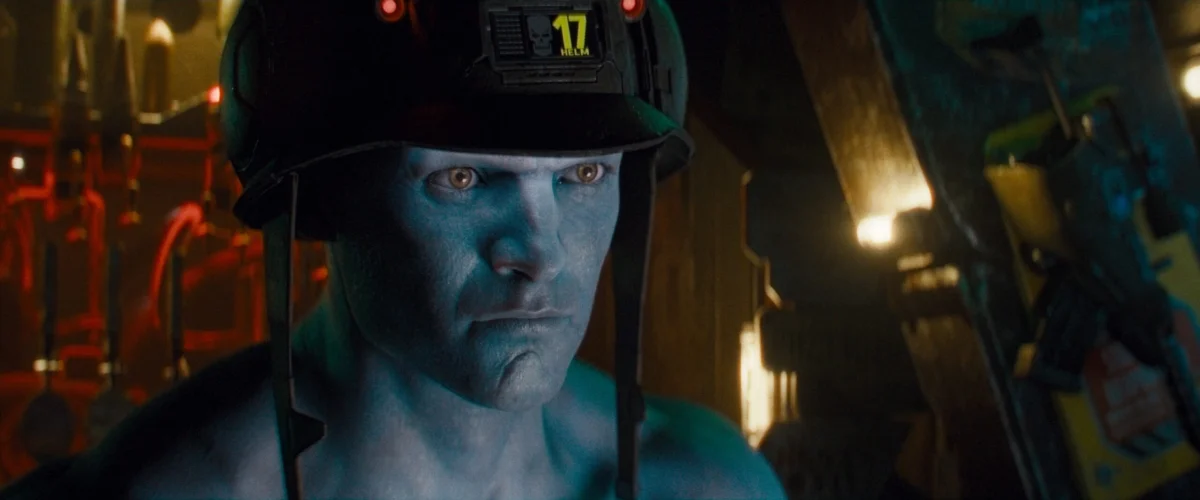
The story follows 19, a "Genetic Infantryman" and the sole survivor of an invasion force on a remote, hostile planet. To exact revenge on the traitor who betrayed his squad, 19 carries the digitized personalities of his three fallen brothers-in-arms within his gun, his helmet, and his backpack.
The Developmental Timeline:
- The Conceptual Phase: Drawing on lessons from the 2016 film Warcraft, Jones and Fenegan sought to streamline production. Jones wrote the script and recorded every line of dialogue for every character to create a comprehensive animatic, allowing the team to iterate on the narrative long before formal animation began.
- The Technical Pivot (Year 2): Initially, the team aimed to produce the entire film within Unreal Engine. However, after two years of development, they realized that version 5.3 lacked the specific artistic tools required for their vision. They opted for a hybrid pipeline: using traditional animation software like Maya for character work, then re-rendering the final product within Unreal Engine.
- The Production Window: The physical shooting of the film was remarkably efficient, taking place over just two weeks in a "black box" studio. The team captured 16 pages of script per day, focusing exclusively on facial performance and voice.
- The Premiere: After years of refinement, the film is set to debut at Annecy on June 22, signaling the start of its search for distribution.
Behind the Lens: A Hybrid Production Pipeline
One of the most compelling aspects of the Rogue Trooper production is the deliberate omission of full-body motion capture. By opting to record only the faces and voices of the actors, the team bypassed the exorbitant costs associated with processing massive amounts of mo-cap data.
“We weren’t recording mo-cap of their bodies,” Jones explains. “We were only recording their faces and their voices. We had an area blocked out, so we kind of knew what the environment was supposed to be, but we were only using that as a reference for witness cameras.”
This "hybrid" approach allowed the team to hand-animate the bodies later, giving them greater artistic control while simultaneously reducing the financial strain. As Fenegan notes, the efficiency of focusing solely on the "human performance of the face and the voice" was a major factor in bringing what would typically be a $60 million-plus studio project down to an independent, sustainable budget.
Artistic Fidelity and the ‘2000 AD’ Legacy
For Duncan Jones, the project is more than just a job; it is a fan’s dream. He views 2000 AD as being on the same tier as Marvel or DC in terms of world-building and narrative depth. He cites Dave Gibbons’ War Machine as a primary visual touchstone for the film.
“One of the interesting things about 2000 AD is they were very brave with the artists that they used and the styles that they were willing to engage in,” says Jones. The production team leaned into this, recruiting artists who had worked on the original comics to handle concept and design work.
“The fidelity of it came from the fact that everyone who was doing the artistic work on it had a real love of the material,” Jones adds. This devotion to the source material is a direct counter-argument to the common criticism that big-budget adaptations often lose the soul of the original work.

Implications for the Future of Indie Animation
As the film moves toward its premiere, the team faces the daunting task of finding a distributor. Unlike studio-backed films, Rogue Trooper is currently working with CAA to navigate the market. The success of this film could provide a blueprint for other independent creators looking to compete with major studios.
Jones, however, is not looking too far ahead. His focus remains squarely on getting the film in front of an audience. “We’ve put so much effort into this and spent so much time on it, we really just want to make sure that we get this film in front of an audience,” he says. “As an indie film, that’s the scary thing… we just need to find a way to make sure that this film gets as many eyeballs as possible.”
The "old triangle" of filmmaking—speed, quality, and cost—was the defining challenge for the project. Jones admits they chose to sacrifice speed, taking four years to complete the film, to ensure the quality remained high while keeping the costs manageable.
A Stand for Human Artistry
Ultimately, Rogue Trooper serves as a case study in how to leverage modern technology without surrendering the creative process to algorithms. By choosing to rely on human performances, hand-animation, and a dedicated team of fans-turned-creators, Duncan Jones has crafted a film that feels both technologically advanced and deeply personal.
In a climate where the industry is fearful of being replaced by cold, calculated AI, the Rogue Trooper team has demonstrated that the "bespoke" approach is not just a viable alternative, but perhaps a superior one. By holding onto the human element—the "real love of the material"—Jones and Fenegan have created something that they hope will resonate with audiences as much as the source material resonated with them.
As the industry turns its eyes toward the Annecy festival, Rogue Trooper stands as a testament to the fact that when it comes to storytelling, there is no substitute for the human touch.