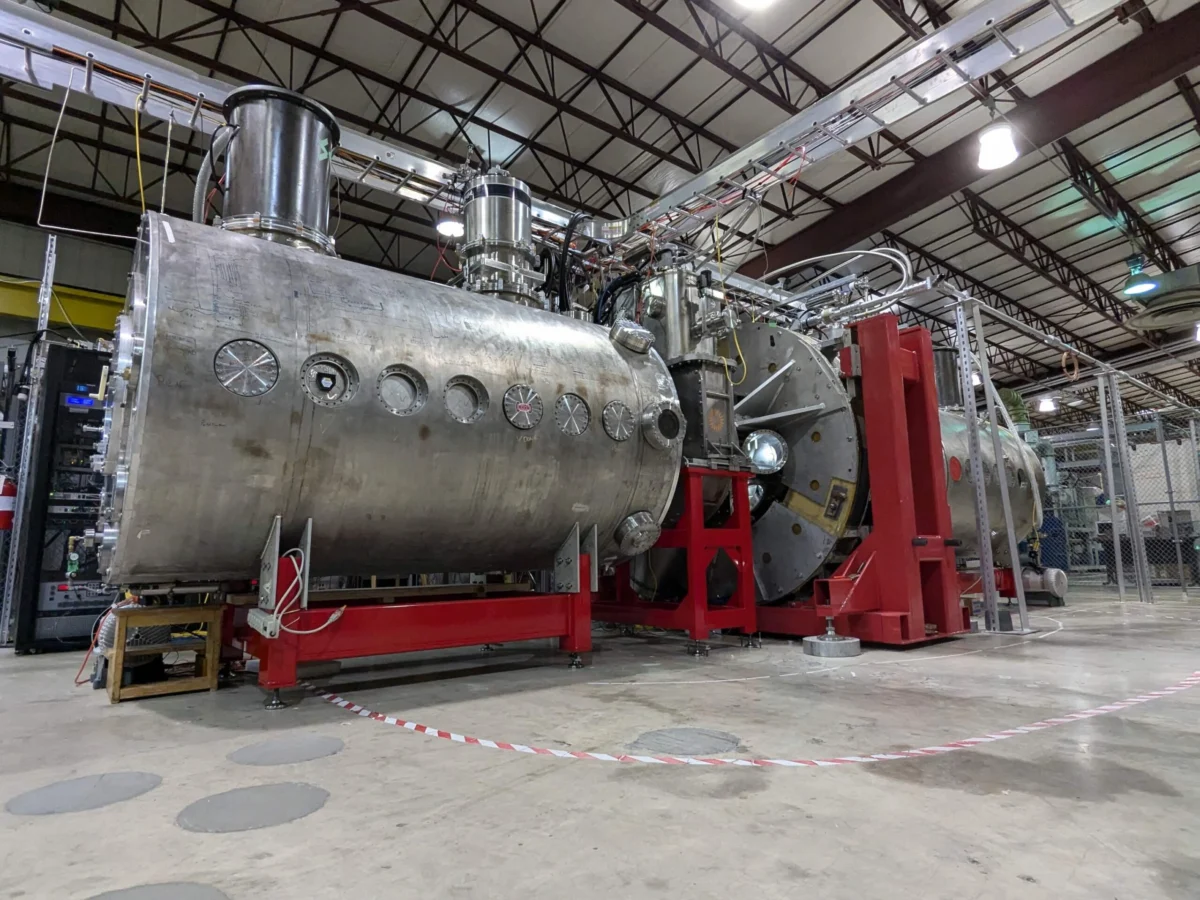
In a transformation that feels plucked from the pages of industrial lore, the historic Oscar Mayer factory in Madison, Wisconsin—a site long synonymous with the American processed meat industry—is set to become the cradle of the next energy revolution. Realta Fusion, a high-profile startup born from the laboratories of the University of Wisconsin-Madison, has officially selected the decommissioned facility as the home for "Forge," its ambitious research and development center.
The move marks a pivotal moment for the fusion industry. As the world scrambles to meet the insatiable power demands of artificial intelligence, data centers, and total grid electrification, Realta Fusion is positioning itself to be more than just a participant in the race; it aims to be a leader. With a target to generate its first plasma by 2029, the company is betting that its unique, direct-to-electricity conversion technology will provide the breakthrough necessary to bring commercial fusion power to the masses.
The Evolution of the Forge: A Chronology of Progress
The selection of the Madison site was not a hasty decision, but the culmination of a two-year, nationwide search. Realta’s leadership evaluated various locations, weighing the benefits of proximity to existing national laboratories and coastal tech hubs against the logistical and political realities of building a multi-megawatt-scale research facility.
- 2024: Realta Fusion gains significant momentum following a record-breaking magnet strength achievement at the University of Wisconsin-Madison’s WHAM (Wisconsin High-temperature-superconductor Axisymmetric Mirror) experiment. This success provided the technical proof-of-concept needed to scale operations.
- 2025: Throughout the year, Realta scouts locations across the United States. While many fusion companies gravitated toward traditional hubs like California or Massachusetts, Realta remained anchored by its deep Wisconsin roots.
- 2026 (June): The company hits a major milestone, demonstrating the ability to convert energy from fusion reactions directly into electricity. This technical leap, a potential "holy grail" for the industry, significantly de-risks the path toward a commercial-scale power plant.
- 2026 (April): Wisconsin legislators, recognizing the potential for economic and technological leadership, pass a landmark sales tax exemption for the fusion industry. This bipartisan legislative victory serves as the final catalyst for Realta’s decision.
- 2027–2029: The renovation of the Oscar Mayer site begins. The facility will be retrofitted to house the Forge reactor, with the explicit goal of achieving "first plasma" by the end of the decade.
The Wisconsin Advantage: Why the Midwest?
While many startups in the deep-tech sector feel compelled to relocate to Silicon Valley or the Boston-Cambridge corridor, Realta Fusion’s decision to stay in Madison is a testament to the "Midwestern Renaissance" in climate technology.
"Wisconsin really decided they want to throw their weight behind fusion," says Kieran Furlong, co-founder and CEO of Realta Fusion. The decision is rooted in a rare convergence of infrastructure, policy, and human capital.
Infrastructure and Talent
The Oscar Mayer site offers more than just square footage; it provides the robust electrical infrastructure necessary for high-energy physics experiments—a rare find in modern commercial real estate. Furthermore, the proximity to the University of Wisconsin-Madison provides an endless pipeline of elite plasma physicists and engineers. With neighboring companies like Shine Technologies already establishing a foothold in the region, Madison is quietly evolving into a specialized cluster for nuclear and fusion innovation.
The Legislative Firewall
Perhaps the most critical factor in Realta’s decision was the state’s aggressive commitment to the industry. The $55 million incentive package is multifaceted:
- Sales Tax Exemption: The centerpiece of the deal, this measure alone saves Realta an estimated $37.5 million, providing immediate capital liquidity.
- Enterprise Zone Credits: $15 million in state-level tax credits designed to incentivize long-term job creation and local infrastructure investment.
- City Support: A $2.8 million tax increment financing (TIF) package from the city of Madison, underscoring local municipal support.
This bipartisan support is a sharp contrast to the political volatility often associated with energy projects in other states. By creating a regulatory and tax environment that explicitly favors fusion, Wisconsin has effectively "de-risked" the state for investors.
Implications for the Global Energy Market
The fusion sector is currently experiencing a gold-rush era. In 2026 alone, fusion-focused startups secured over $1.5 billion in venture capital. This influx of capital is driven by a singular, urgent necessity: the electrification of the global economy.
The AI Energy Paradox
The proliferation of AI data centers has created a massive, unforeseen demand on the national power grid. Traditional renewables, while vital, face intermittency issues that make them difficult to scale for the "always-on" requirements of high-performance computing. Fusion, which offers a compact, baseload-capable, and carbon-free power source, is increasingly viewed as the only viable solution to the looming energy deficit.
A New Model for Industrial Policy
Realta’s decision highlights a shift in how states compete for the "industries of the future." Rather than relying solely on generic corporate subsidies, Wisconsin has acted as a "state champion." By creating a collaborative ecosystem where government, academia, and private industry are aligned, the state is insulating its high-tech firms from the boom-and-bust cycles that often plague startups in less supportive environments.
As Furlong notes, "It’s also advantageous to be the state champion. We get the attention of people who matter, who can help us, who want to see Realta succeed and want to see Wisconsin be a major hub for fusion."
Conclusion: A Blueprint for the Future
The transformation of a former sausage factory into a fusion research facility is more than a clever headline; it is a symbol of a changing economic landscape. As Realta Fusion moves into the Forge, it carries the weight of a state’s ambition and the hope of a global energy market.
If successful, the project will prove that the path to the future of energy does not necessarily lie in the traditional coastal technology corridors, but in regions that provide the right mix of institutional support, academic depth, and industrial infrastructure. For Wisconsin, the gamble on fusion is an investment in long-term relevance. For the world, the success of Forge in 2029 could represent the moment that the promise of near-limitless, clean energy finally shifted from the theoretical to the tangible.
As the industry watches with bated breath, one thing is certain: the eyes of the global energy community are now firmly fixed on Madison. In the coming years, the silence of the old factory floor will be replaced by the hum of the world’s most advanced energy experiments—a transition from the sustenance of the past to the power of the future.