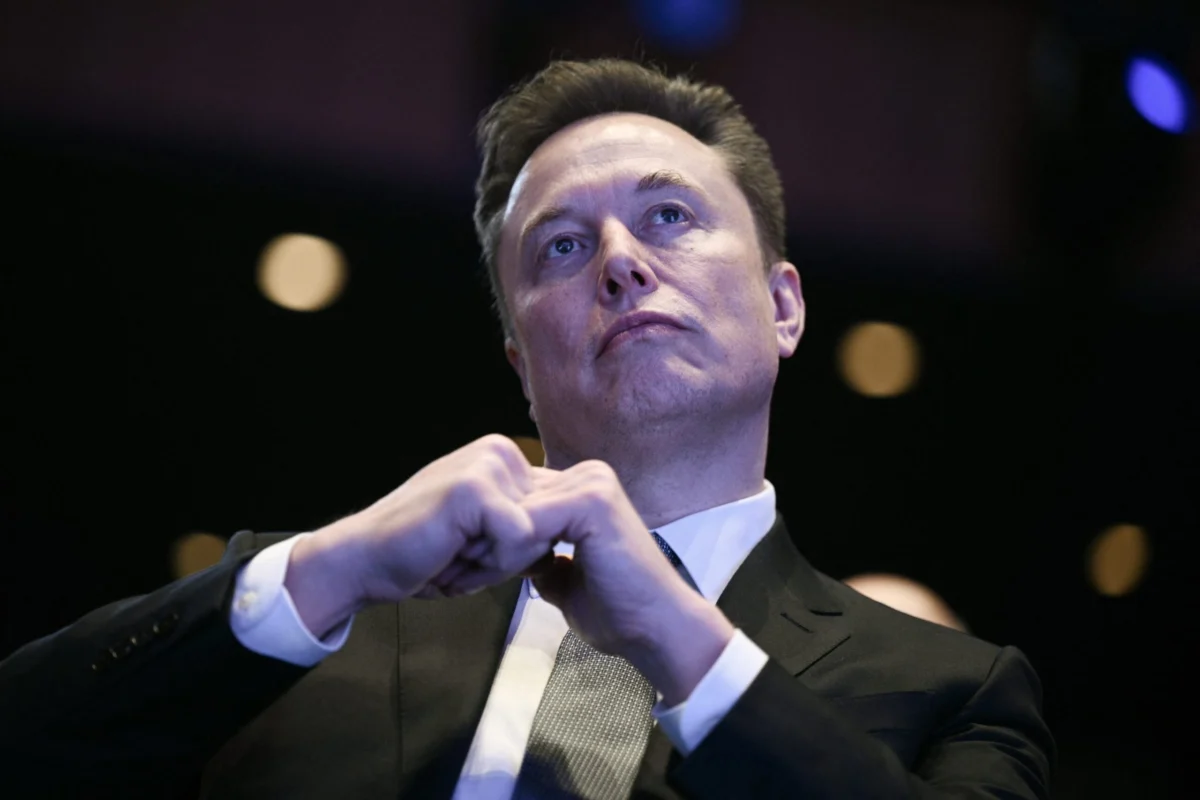
The landscape of global finance underwent a seismic shift on Friday as Elon Musk achieved two milestones previously thought to be the stuff of science fiction. With the initial public offering (IPO) of his aerospace juggernaut, SpaceX, Musk not only orchestrated the largest market debut in corporate history but also officially became the world’s first-ever trillionaire.
The dual achievement marks a definitive turning point in modern capitalism, signaling the transition from the "Billionaire Era" to an age of "Trillionaire Governance." As SpaceX shares began trading on the Nasdaq under the ticker symbol SPCX, the financial world watched in a mix of awe and apprehension, grappling with the implications of a single individual wielding a fortune that exceeds the Gross Domestic Product (GDP) of several G20 nations.
Main Facts: A Day of Financial Superlatives
On Friday morning, SpaceX transitioned from a private titan to a public entity, pricing its initial shares at $150. The demand was instantaneous and overwhelming. By midday, the stock had surged to $171 per share, a move that sent the company’s valuation—and Musk’s personal net worth—into the stratosphere.
Musk’s wealth is primarily derived from his majority stakes in two era-defining companies: Tesla, the electric vehicle pioneer, and SpaceX, the leader in private space exploration and satellite internet. With the SPCX IPO, the combined valuation of his holdings pushed his personal balance sheet past the $1 trillion mark.
To put this figure in perspective, a trillion dollars is $1,000 billion. It is a figure so vast that it presents entirely new challenges for market stability, tax legislation, and wealth management. At this scale, Musk’s financial decisions are no longer mere personal choices; they are macroeconomic events capable of swaying global markets and influencing geopolitical stability.
Chronology: From an El Segundo Warehouse to the Nasdaq Bell
The journey to the trillion-dollar mark was far from a guaranteed success. During his appearance at the Nasdaq exchange on Friday, Musk reflected on the humble and often precarious beginnings of the venture that made him the wealthiest individual in recorded history.
The Early Risks (2002–2008)
SpaceX was founded in 2002 in a modest warehouse in El Segundo, California. At the time, the idea of a private company reaching orbit was dismissed by most industry experts. Musk himself admitted on Friday that he originally expected the company to fail. Between 2006 and 2008, SpaceX suffered three consecutive launch failures of the Falcon 1 rocket. The company was reportedly days away from bankruptcy before its fourth flight finally reached orbit, securing a lifeline contract from NASA.
The Growth Phase (2010–2023)
Over the next decade, SpaceX revolutionized the industry by perfecting reusable rocket technology. The Falcon 9 became the workhorse of the global satellite industry, while the development of the Starlink satellite constellation provided a recurring revenue stream that transformed the company’s valuation. By the time the IPO was announced, SpaceX had achieved a near-monopoly on high-mass orbital launches.
The IPO and Trillionaire Status (The Present)
The decision to take SpaceX public was met with immense anticipation. The IPO was structured to be the largest in history, surpassing previous records held by tech giants and state-owned oil companies. When the opening bell rang on Friday, the "little company that started in a warehouse" had become the centerpiece of the global financial system.
"It’s certainly hard to believe," Musk told the crowd at Nasdaq. "If people had told me this was going to happen, I would’ve said, ‘Man, you must be smoking some really good crack.’"
Supporting Data: The Magnitude of a Trillion-Dollar Portfolio
The transition from billionaire to trillionaire is not merely a change in zeros; it is a change in the fundamental nature of wealth. Financial analysts have begun dissecting the "Musk Math" to understand the sheer scale of his current holdings.
The 1% Rule
T.L. Turnipseed, head of estate and tax planning at Alta Trust Company, highlights the staggering stakes of minor fluctuations at this level. "At a trillion dollars, a 1% inefficiency is roughly $10 billion," Turnipseed noted. To put that in context, a single percentage point of Musk’s wealth is equivalent to the entire market capitalization of many mid-cap S&P 500 companies.
Market Impact and Concentration
Musk’s wealth is heavily concentrated in his own enterprises. While this has led to his astronomical gains, it creates a unique "concentration risk." Unlike traditional investors who can diversify into various sectors, Musk’s fortune is inextricably tied to the performance of Tesla and SpaceX.
- SpaceX (SPCX): Trading at $171/share by midday Friday.
- Tesla (TSLA): Remains a cornerstone of his portfolio, though its volatility now has a magnified effect on his trillionaire status.
The Liquidity Paradox
One of the most misunderstood aspects of Musk’s wealth is its liquidity. While his balance sheet shows $1 trillion, the vast majority of that is held in stock. Evan Mills, an associate financial advisor at Scholar Advising, points out that "having a trillion dollars on a balance sheet doesn’t mean being extremely liquid." If Musk were to attempt to liquidate a significant portion of his holdings to "cash out," the act of selling would likely trigger a massive sell-off by other investors, potentially devaluing his own remaining shares in a self-fulfilling prophecy of market decline.
Official Responses: Wealth Advisors on the "Unmanageable" Fortune
The financial services industry is currently scrambling to define how one manages a trillion-dollar client. The consensus among elite wealth managers is that traditional models are woefully inadequate.
The Need for a New Architecture
Jake Falcon, CEO of Falcon Wealth Advisors, told Fortune that the current infrastructure of wealth management is not prepared for this milestone. "I would guess there are zero wealth advisors qualified to handle $1 trillion," Falcon stated. He suggested that managing Musk would require a "new type of family office" that operates more like a sovereign wealth fund than a private advisory firm. This office would need to align perfectly with Musk’s high-risk, high-reward philosophy while maintaining the backbone to provide objective, often critical, advice.
Private Enterprise Governance
T.L. Turnipseed argues that for a trillionaire, the central question shifts from "can we grow the money" to "can we preserve control and purpose." He suggests that Musk requires "private enterprise governance" rather than simple investment management. This involves a resilient architecture of trusts and legal frameworks designed to:
- Address Scrutiny: Every transaction is monitored by the SEC, retail investors, and global media.
- Mitigate Litigation: A trillionaire is the ultimate target for legal action.
- Ensure Succession: Planning for a future where the visionary leader is no longer at the helm.
The Scrutiny Factor
Evan Mills emphasizes that Musk’s celebrity status compounds the financial risks. "Every single movement that gets made is going to be scrutinized," Mills said. He noted that the public perception of a trillionaire’s moves can drive "fear into retail investors and institutional investors," creating a volatility loop that is difficult to manage through traditional hedging.
Implications: The Risks and Rewards of a One-Man Economy
The emergence of the first trillionaire carries profound implications for the future of the global economy, the space industry, and the concept of corporate governance.
The "Key Man" Risk and Succession
The most significant risk identified by advisors is the "longevity of Elon Musk himself." Both Tesla and SpaceX are valued based on Musk’s personal vision and perceived genius. This creates a "succession crisis" that is unparalleled in corporate history. If Musk were to step down or become incapacitated, the trillion-dollar valuation could evaporate as investors lose confidence in the "Musk Premium." Succession planning at this level is not just about choosing a new CEO; it is about preserving a culture that is currently inseparable from one man.
Debt as a Strategic Tool
Because of the liquidity trap mentioned earlier, debt becomes the primary tool for a trillionaire. Instead of selling shares and paying capital gains taxes, a trillionaire borrows against their stock. However, this introduces "margin risk." If the stock price of SpaceX or Tesla were to drop significantly, Musk could face margin calls that would force him to sell shares, further depressing the price.
Philanthropy and Geopolitics
With $1 trillion, Musk has the power to fund entire social or scientific movements. Whether it is the colonization of Mars or the overhaul of global telecommunications, his private capital now rivals the spending power of sovereign nations. This raises questions about accountability: Should a single individual have more influence over the future of humanity’s spacefaring status than elected governments?
Conclusion: A New Chapter in Economic History
The SpaceX IPO and Musk’s subsequent rise to trillionaire status represent more than just a successful day of trading; they represent the arrival of a new economic reality. As the gap between billionaires and trillionaires widens, the financial world must adapt to a scale where "small" inefficiencies cost billions and a single person’s tweet can shift the wealth of a nation.
For Musk, the "little company from El Segundo" has achieved the impossible. For the rest of the world, the challenge is now learning how to navigate a global economy where one man holds the keys to the stars—and a trillion-dollar share of the Earth.