MUSCAT, Oman — The Persian Gulf has once again become the theater for a volatile geopolitical standoff that threatens to upend global energy markets and shatter a fragile ceasefire. Despite a recently signed Memorandum of Understanding (MOU) intended to halt hostilities between the United States and the Islamic Republic of Iran, the Strait of Hormuz has devolved into a zone of "on-again, off-again" maritime warfare. As both nations jockey for control over the world’s most vital oil transit chokepoint, a new diplomatic proposal from Oman suggests a "Solomon-like" division of the waterway to prevent a return to all-out war.
Main Facts: A Waterway Divided
The current crisis centers on the fundamental disagreement over who governs the transit of the Strait of Hormuz. Iran maintains that the narrow waterway falls under its sovereign jurisdiction, insisting that all commercial traffic must receive explicit authorization from Tehran. Conversely, the United States and its allies assert that the strait constitutes international waters under the principle of "transit passage," essential for global commerce.
On Saturday, this ideological clash escalated into physical violence. Iranian forces declared the strait "closed" for the second time in recent weeks, subsequently claiming a successful strike on a commercial vessel that was allegedly using an "unauthorized route." This move was seen by Western observers as a direct provocation and a violation of the spirit of the month-old ceasefire.
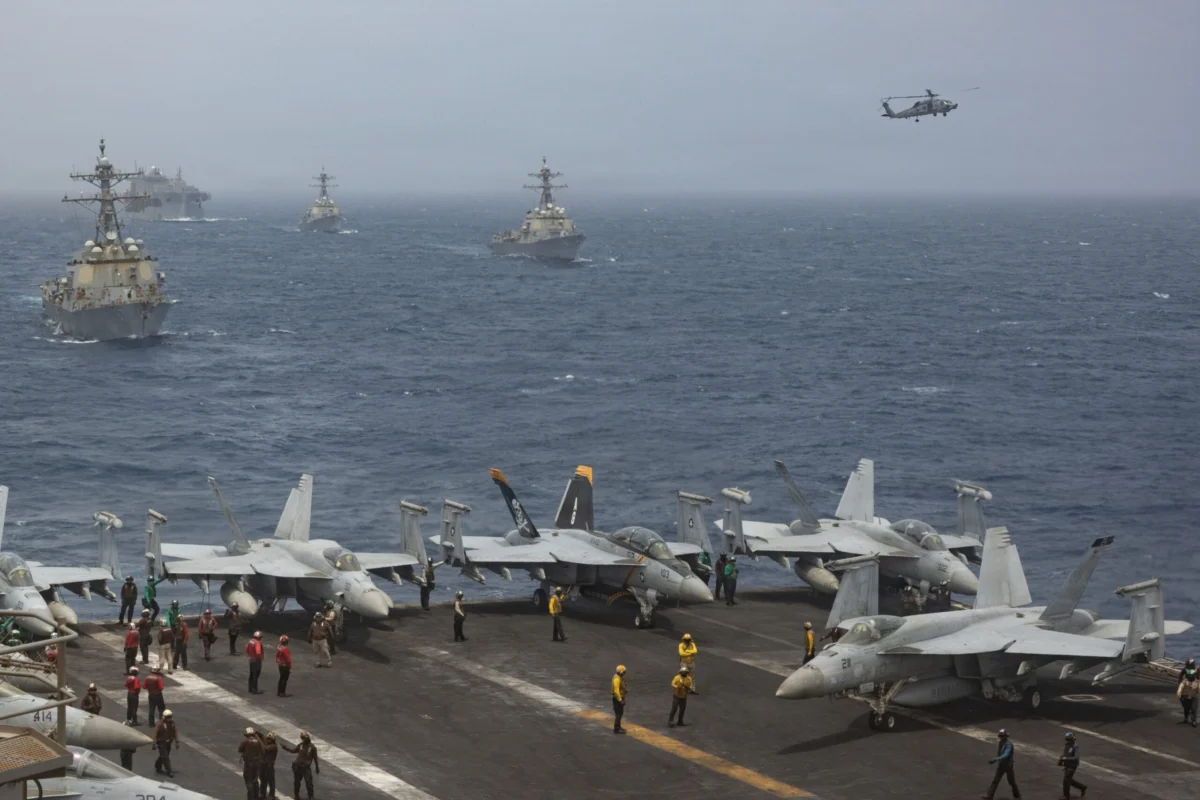
The U.S. response was swift and kinetic. U.S. Central Command (CENTCOM) confirmed that it conducted a series of retaliatory airstrikes against Iranian launch sites used for drone and missile operations. Simultaneously, the U.S. Navy continued its mission of escorting commercial tankers through an "alternate route" that hugs the Omani coastline, effectively bypassing the Iranian-patrolled northern sectors of the strait.
The stalemate has reached a critical juncture where neither side appears willing to blink. For Tehran, the ability to shutter the strait remains its ultimate "nuclear option" in economic terms—a lever capable of triggering a global oil shock. For Washington, allowing Iran to dictate the terms of passage would represent a historic defeat for the principle of freedom of navigation and a relinquishing of regional influence.
Chronology of Escalation: From Ceasefire to Combat
The path to the current deadlock began with the signing of a Memorandum of Understanding last month, a document many hoped would end a period of intense U.S.-Iranian naval warfare. However, the peace has proven to be an illusion, characterized more by "bargaining through fire" than by genuine de-escalation.
- June 2026: Following weeks of intense bombardment and naval skirmishes, the U.S. and Iran signed an MOU to establish a ceasefire. While the agreement halted large-scale strikes on mainland targets, it left the legal status of the Strait of Hormuz ambiguous.
- Late June – Early July: Iran began reasserting its "authority" over the northern shipping lanes. Tehran started issuing warnings to vessels, demanding they use an "approved route" along the Iranian coast, which would subject them to Iranian inspections and potential tolls.
- July 5-9: Several commercial vessels reported being shadowed by Iranian Revolutionary Guard Corps (IRGC) fast attack craft. The U.S. Navy responded by increasing its presence, establishing a de facto protected corridor along the Omani coast.
- Saturday morning, July 11: Iran officially declared the Strait of Hormuz closed to "unauthorized" traffic. Shortly thereafter, reports emerged of a missile or drone strike hitting a vessel in the southern portion of the strait.
- Saturday evening, July 11: U.S. aircraft and unmanned platforms targeted IRGC infrastructure in Southern Iran. Simultaneously, the Omani Foreign Ministry convened an emergency meeting with Iranian diplomats in Muscat to present a new "dual-corridor" peace plan.
Supporting Data: The Economic and Military Stakes
The Strait of Hormuz is not merely a geographic point; it is the jugular vein of the global economy. Approximately 21 million barrels of oil pass through the strait daily, representing roughly 21% of global petroleum liquid consumption. Furthermore, one-third of the world’s liquefied natural gas (LNG) transits this narrow passage.
The Geography of the Stalemate
The strait is only 21 miles wide at its narrowest point, with shipping lanes in either direction being only two miles wide, separated by a two-mile buffer zone. Because these lanes fall within the territorial waters of Iran and Oman, the legal interpretation of "transit passage" is the only thing preventing a coastal state from legally closing the gates.
Military Attrition
While the U.S. military has successfully intercepted the vast majority of Iranian drones and missiles aimed at tankers, the cost of defense is rising.
- Insurance Premiums: Maritime insurance for "War Risk" in the Persian Gulf has surged by an estimated 400% since the start of the year.
- Resource Depletion: Consuming nations, particularly in Europe and East Asia, have been forced to tap into their Strategic Petroleum Reserves (SPR) to offset the volatility, a practice that analysts warn is unsustainable in the long term.
The "Solomon" Proposal
Oman’s draft proposal, as reported by CNN, seeks to formalize the current physical reality into a legal framework:
- The Southern Corridor: Passing through Omani territorial waters, this route would remain entirely under international standards of free navigation, protected by the U.S. and its partners.
- The Northern Corridor: Passing through Iranian waters, this route would require Tehran’s prior approval for transit. While no tolls would be officially sanctioned under the current draft, it would allow Iran the "sovereignty" it craves over its immediate coastline.
Official Responses: Rhetoric and Diplomacy
The official messaging from both capitals reflects a deepening divide, even as their diplomats meet in the quiet halls of Muscat.
The United States Perspective:
U.S. Central Command issued a scathing statement via social media, placing the blame for the renewed violence squarely on Tehran. "Iran was provided yet another opportunity to demonstrate adherence to the Memorandum of Understanding… but has again failed," the statement read. "In response, the United States is imposing a heavy cost by continuing to degrade Iran’s ability to attack civilian mariners and commercial ships."
Top officials in the Biden administration have been even more explicit, demanding that Tehran issue a public, unconditional statement that the strait is open to all traffic. However, Washington is also aware that its own domestic clock is ticking, with mid-term elections approaching and gas prices becoming a central campaign issue.
The Iranian Perspective:
Tehran has not backed down. The Iranian Foreign Ministry has framed its actions as a legitimate exercise of coastal defense against "foreign provocateurs." During the meeting in Muscat on Saturday, Iranian officials reportedly told their Omani counterparts that they would not tolerate the U.S. Navy acting as the "policeman" of the Gulf. For Iran, the Strait is its most effective tool for sanctions relief—if the world wants oil, it must deal with Tehran on Tehran’s terms.
The Omani Role:
Oman continues to play its traditional role as the "Switzerland of the Middle East." While the Omani Foreign Ministry did not respond to formal requests for comment, the state news agency confirmed that talks are continuing at "technical and political levels." The Omani goal is to prevent a miscalculation that could lead to a regional conflagration that would inevitably engulf the Sultanate.
Implications: The Path Forward
The current status quo is a "fragile equilibrium" that most experts believe cannot last beyond the next few months. There are three primary paths forward:
1. The Diplomatic "Split"
If the Omani proposal is accepted, it would represent a significant compromise. Iran would gain a face-saving measure by controlling "their" side of the strait, while the U.S. would secure a guaranteed, albeit narrower, lane for global commerce. However, shipping companies and insurers remain skeptical. "No corridor can truly be open until insurance companies deem it safe," noted one industry analyst. "A guarantee on paper doesn’t stop a rogue drone."
2. The Economic "Grind"
Dan Alamariu, chief geopolitical strategist at Alpine Macro, suggests that if diplomacy fails, the U.S. may pivot back to a "maximum pressure" campaign. This would involve a naval blockade to "grind Iran down economically" by preventing their own oil exports until they agree to the MOU’s terms. Alamariu calls this the "path of least resistance," as it avoids a full-scale ground invasion while exerting extreme pressure on Tehran’s already fragile economy.
3. Escalation to Force
There is a growing concern that the U.S. is positioning itself to "pry open" the strait by military force. This would involve a sustained campaign to destroy Iran’s coastal battery sites, drone factories, and naval bases. While this would temporarily clear the path for tankers, it would almost certainly trigger a wider regional war involving proxies in Lebanon, Iraq, and Yemen.
The Domestic Factor
Both leaderships are facing internal pressures. The U.S. administration must keep oil flowing to stabilize the economy before the midterms. Iran’s leadership is dealing with domestic unrest and a crippled economy. This mutual vulnerability, ironically, may be the only thing pushing them toward a deal. As Alamariu noted, "The current strikes and counter-strikes are a way to bargain… both the U.S. and Iran are trying to establish greater leverage."
The coming 1-2 months will be decisive. Whether the "Solomon" solution of a divided strait can satisfy both the eagle and the lion remains to be seen, but for the global economy, the stakes could not be higher. Until a definitive agreement is reached, the world remains one missile strike away from an energy crisis that could redefine the decade.