
In the opening months of 2026, the global financial markets witnessed a seismic shift that sent shockwaves through the tech sector. Traders at Jefferies, in a display of cynical prescience, coined the term "SaaSmageddon." The phenomenon triggered a staggering $2 trillion wipeout across enterprise software stocks—a correction fueled by a singular, chilling hypothesis: If artificial intelligence (AI) agents can execute the workflows that once required human-operated software seats, the traditional "per-seat" subscription model is effectively dead.
The math was simple and, for many investors, terrifying. If a corporation previously required 100 CRM licenses to manage a sales team, but can now achieve superior output with 10 AI agents, the company’s software expenditure—and the software provider’s recurring revenue—faces a 90% haircut. For a few volatile months, Wall Street operated under a "sell first, ask questions later" mandate, indiscriminately punishing both high-quality businesses and fragile legacy models alike.
The Anatomy of the Collapse: A Chronology of the 2026 Panic
The "SaaSmageddon" was not merely a market correction; it was a fundamental reassessment of the value proposition inherent in the Software-as-a-Service (SaaS) industry.

- Early 2026 (The Initial Shock): As AI agent capabilities reached a critical inflection point, analysts began downgrading firms with low switching costs and repeatable, mechanical workflows. Companies like HubSpot, Atlassian, and ZoomInfo became the "textbook cases" for the bear thesis. Their tools were easily replaceable by automated agents, and they lacked the "data moats" required to insulate themselves from disruption.
- Spring 2026 (The Capitulation): The indiscriminate selling reached its zenith. Investors began dumping any ticker with a "subscription-based" label, ignoring balance sheets and growth trajectories. The market essentially priced in the total obsolescence of the SaaS business model.
- Summer 2026 (The Divergence): By mid-year, a distinct bifurcation emerged. While the "at-risk" cohort remained depressed, a group of resilient leaders began to recover. These companies, rather than hiding from the disruption, pivoted their messaging and product suites to become the infrastructure upon which the AI revolution would be built. By August 24, 2026, these "SaaSmageddon survivors" were not just rebounding—they were hitting new growth milestones.
The Survivors: Turning Disruption into Growth
The five companies that broke the downward trend—CrowdStrike, Palo Alto Networks, Axon Enterprise, Snowflake, and Rubrik—all share a common strategic thread: they successfully hijacked the AI narrative. They positioned their platforms as the essential governance, security, and intelligence layers required for the safe deployment of AI, turning a perceived threat into their primary growth driver.
1. CrowdStrike: The Security Sentinel
CrowdStrike (CRWD) was initially one of the hardest hit, with shares falling to $85.68 as the market applied the "SaaSmageddon" logic to its subscription-based security platform. However, CEO George Kurtz masterfully reframed the threat. He argued that AI creates "greenfield attack surfaces"—new vulnerabilities in cloud environments, GPU clusters, and agentic workloads that did not exist previously. Enterprises now need more security, not less, to operate AI safely. The market responded, pushing the stock up 63% year-to-date by late August.
2. Palo Alto Networks: The Platform Play
Palo Alto Networks (PANW) serves as the primary example of how bundling creates resilience. As AI accelerates attack timelines from months to minutes, large enterprises have gravitated toward consolidated, integrated security platforms rather than managing a fragmented array of niche point solutions. This strategic shift resulted in a 90% year-to-date rally, significantly outpacing its peers.
3. Axon Enterprise: The Public-Safety Wild Card
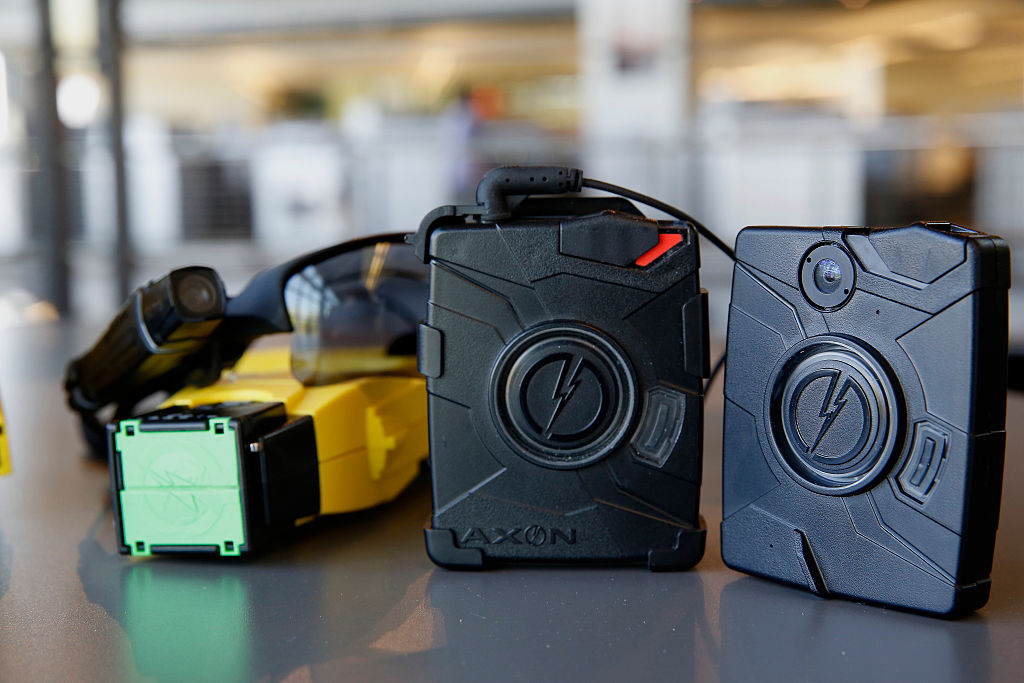
Axon’s (AXON) journey proves that the survivor pattern is not limited to traditional cybersecurity. By integrating "AI Era Plan" tools—such as automated incident reporting and redaction—into its hardware, Axon transformed from a body-camera manufacturer into a critical software hub for law enforcement. Its success in raising per-officer revenue from $99 in 2017 to $569 today demonstrates the immense pricing power unlocked by AI utility.
4. Snowflake: The Governance Layer
The bearish thesis for Snowflake (SNOW) was that enterprises would bypass data warehouses entirely by querying data directly through LLMs. Instead, Snowflake pivoted to become the "governance layer" for AI agents. By providing a secure, managed environment for AI to interact with proprietary data, Snowflake has seen a surge in adoption of its Cortex AI solution. The company’s ability to stabilize net revenue retention at 126% has vindicated the decision to prioritize data control over raw storage.
5. Rubrik: The Anthropic Integration
As the smallest of the group, Rubrik (RBRK) suffered the most extreme volatility. However, its deep integration with Anthropic’s Claude—specifically for vulnerability detection—has provided a clear, actionable growth narrative. By evolving from a "backup vendor" into a security and AI operations firm, Rubrik has successfully transitioned from GAAP losses to positive EBITDA and free cash flow, earning a series of aggressive price-target upgrades from major investment banks.
Supporting Data and Market Performance
The following table summarizes the status of these survivors as of August 24, 2026, illustrating the dramatic recovery from their 52-week lows.
| Ticker | Share Price | Market Value | % Off 52-Week Low | YTD Return |
|---|---|---|---|---|
| CRWD | $190.68 | $194.1B | 122.5% | 62.7% |
| PANW | $350.90 | $285.3B | 151.4% | 90.5% |
| AXON | $597.59 | $48.5B | 76.3% | 5.2% |
| SNOW | $322.78 | $111.98B | 172.8% | 47.2% |
| RBRK | $98.04 | $20.2B | 132.5% | 28.2% |
Official Perspectives and Strategic Shifts
The common theme among the leadership teams of these five companies is a rejection of the "subscription stagnation" narrative.
- Nikesh Arora (Palo Alto Networks): Has been vocal about the necessity of platform consolidation in an era of "frontier AI," where the speed of threats outpaces manual security intervention.
- George Kurtz (CrowdStrike): Explicitly linked the adoption of Anthropic’s models to an acceleration in enterprise cybersecurity spending, effectively creating a symbiotic relationship between AI development and security demand.
- Bipul Sinha (Rubrik): Continues to steer the firm away from the "backup" label, emphasizing that in an AI-driven economy, the primary asset is not just data, but the "identity" and "access control" of the agents managing that data.
Implications for the Future of Enterprise Software
The "SaaSmageddon" episode of 2026 will be remembered as the moment the software industry finally grew up. The era of blind, across-the-board subscription growth is over. Moving forward, software companies face a binary outcome: they must either evolve into essential infrastructure that enables the AI revolution—providing security, governance, or critical operational utility—or risk total disintermediation by autonomous agents.
The control group—firms like HubSpot and Atlassian—continues to struggle, proving that "good" software is no longer a sustainable competitive advantage in a world where AI can replicate, or render obsolete, standard business workflows.
For investors, the lesson is clear: the threat of AI agents was never a myth, but it was an oversimplification. The market initially assumed all software was a commodity. It now understands that the winners of the next decade will be the "platform builders" who ensure that, in a world of autonomous AI, the human enterprise remains secure, governed, and efficient. The survivors of SaaSmageddon didn’t just weather the storm; they built the lighthouse.