In the landscape of modern existential inquiry, few cultural touchstones have captured the collective psyche quite like the 2022 cinematic phenomenon Everything Everywhere All at Once. At its core, the film is a chaotic, kaleidoscopic journey through a multiverse where mundane tax audits collide with cosmic stakes. However, beyond the frenetic editing and absurdist humor lies a profound philosophical question that has resonated with audiences worldwide: If life is fundamentally meaningless, how do we construct a reality that feels worth living?
For those navigating the complexities of their own existence, this cinematic exploration of parallel lives is finding a practical, grounded partner in the world of "Life Design"—a methodology popularized by Stanford University educators Bill Burnett and Dave Evans. By synthesizing the existential dread of the multiverse with the structured, iterative principles of design thinking, individuals are discovering that they are not trapped in a single, unchangeable timeline.
The Existential Catalyst: Everything Everywhere All at Once
The plot of Everything Everywhere All at Once follows Evelyn Wang, an exhausted laundromat owner struggling with a crumbling marriage, a strained relationship with her daughter, and the crushing weight of an IRS audit. When she is thrust into a multiverse-spanning conflict against the nihilistic antagonist Jobu Tupaki, Evelyn is forced to confront the infinite versions of herself—lives where she succeeded, failed, or walked entirely different paths.
The film serves as a mirror for the contemporary experience of information overload and existential fatigue. For many, the "nihilistic nadir" experienced by the protagonist—the realization that nothing inherently matters—is not a sign of defeat, but a starting point. It provides a blank slate upon which one can write their own values. As the film’s narrative shifts from the madness of the multiverse to the quiet, redemptive power of kindness and personal agency, it offers a compelling argument: if the universe is truly vast and uncaring, then the responsibility to create meaning belongs entirely to us.
The Mechanics of Change: Applying Design Thinking to Life
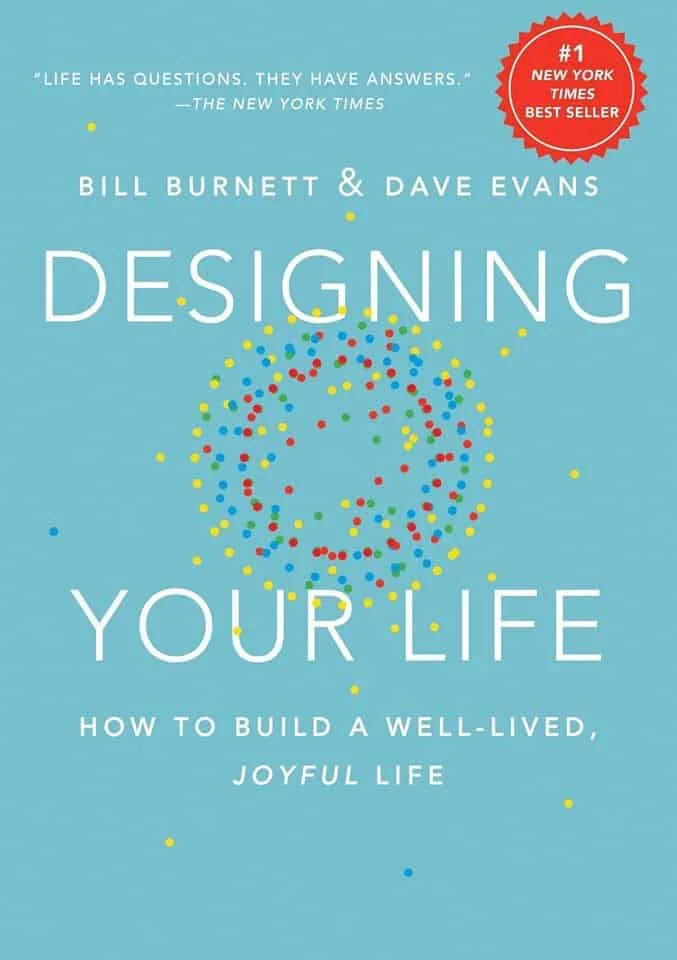
If the film provides the philosophical "why," the book Designing Your Life by Bill Burnett and Dave Evans provides the "how." Born out of a popular Stanford course, the book challenges the traditional, often rigid approach to career and life planning.
Burnett, executive director of the Stanford Design Program, and Evans, co-director of the Stanford Life Design Lab, argue that life is not a linear problem to be solved, but a design project to be iterated. The central thesis is that a "well-designed life" is one characterized by coherence—the alignment of who you are, what you believe, and what you actually do.
The Five Core Disciplines of Life Design
To achieve this alignment, the authors propose five core mindsets that shift an individual from passive resignation to active creation:
- Be Curious: Embrace the unknown and view every setback as an opportunity for data collection.
- Try Stuff: Shift from thinking to doing. Prototyping a life change is more effective than theorizing about it.
- Reframe Problems: When you feel stuck, it is often because you are looking at the problem through the wrong lens.
- Know It’s a Process: Success is not a destination; it is the result of continuous, small-scale iterations.
- Ask for Help: Radical collaboration is essential. Designing a life is a team sport, not a solitary pursuit.
Chronology of a Paradigm Shift
The convergence of these ideas—the cinematic exploration of infinite possibilities and the practical application of design thinking—has created a unique momentum for personal development in the 2020s.
- Spring 2022: As global audiences engaged with the release of Everything Everywhere All at Once, the film became a shorthand for navigating the "multiverse" of modern career paths and lifestyle choices.
- Summer 2022: A surge in interest in literature regarding life-purpose and career design reached a peak, with Designing Your Life re-entering the discourse for those looking to translate the movie’s abstract themes into actionable, real-world plans.
- Late 2022 – Present: A growing community of "life designers" has begun utilizing the "Odyssey Plan" method, a structured exercise requiring individuals to map out three distinct five-year trajectories. This has moved from academic halls into the mainstream, as individuals look for ways to reconcile their personal mission statements with the realities of their day-to-day work.
Supporting Data: The Odyssey Plan
The "Odyssey Plan" is perhaps the most potent tool in the life designer’s kit. It forces the individual to visualize three versions of their future, effectively treating one’s life as a branching path in a multiverse.
- The Current Path: This is the trajectory you are currently on. It represents the "status quo," refined and optimized. For a writer, this might mean doubling down on a specific blog or platform, refining its design, and stripping away unnecessary distractions to reach a state of pure, purposeful output.
- The Pivot Path: This plan assumes your current career path disappears tomorrow. If your primary source of income or identity vanished, what would you do? This exercise is designed to uncover latent passions—perhaps moving into hospice care, storytelling, or community service—that are often buried under the weight of current professional obligations.
- The "Wildcard" Path: This is the pipe dream. If money and social judgment were no object, what would you create? For some, this might mean returning to school for art, launching a creative project like a graphic novel, or engaging in a hobby that was previously dismissed as "unproductive."
Implications for the Individual and Society
The implications of adopting this framework are profound. By viewing our lives as a series of prototypes rather than a fixed destiny, we reduce the anxiety associated with "choosing the wrong path." If the first iteration of your career doesn’t lead to a sense of coherence, you are not a failure; you are simply in the early stages of a design process.
However, the transition is not without its challenges. The authors of Designing Your Life admit that the process can feel counter-intuitive. In a society that rewards the "hustle" and a singular, unwavering vision of success, the freedom to explore multiple versions of oneself can feel radical or even indulgent. Furthermore, the lack of resources—such as a comprehensive index in the book itself—highlights a recurring issue: even the best design-thinking tools are sometimes presented in formats that are difficult to navigate, underscoring the irony that even the most "designed" products can have flaws.
Official Perspective and Critical Reception
Critics of the life design movement often point to the potential for "paradox of choice," where having too many options leads to paralysis. Yet, proponents argue that the constraint of the three-plan limit prevents this by forcing decision-making.
From an educational standpoint, the Stanford Life Design Lab reports that students who engage in these exercises show a significantly higher rate of career satisfaction and a decrease in anxiety regarding the future. The data suggests that when individuals take the time to draft their "Lifeview" and "Workview"—short, reflective statements on what they believe constitutes a good life and good work—they are better equipped to navigate the chaos of the modern job market.
Conclusion: Crafting Your Own Timeline
The message of both Everything Everywhere All at Once and Designing Your Life is surprisingly consistent: you are the author of your own reality. Whether you are inspired by a film about parallel universes or a Stanford course about career mapping, the takeaway is identical.
If you feel trapped by your current reality, it is time to stop waiting for the universe to hand you a new one. By practicing curiosity, reframing your obstacles, and committing to the "prototyping" of your future, you can begin to align your beliefs with your actions. In a world that often feels like it is moving in too many directions at once, the most rebellious and effective thing you can do is to slow down, design your own path, and choose the version of yourself you want to live into.
The multiverse is real—it is the set of all the lives you haven’t lived yet. The question is no longer whether you have options, but which ones you are brave enough to design.