By Robert Farley
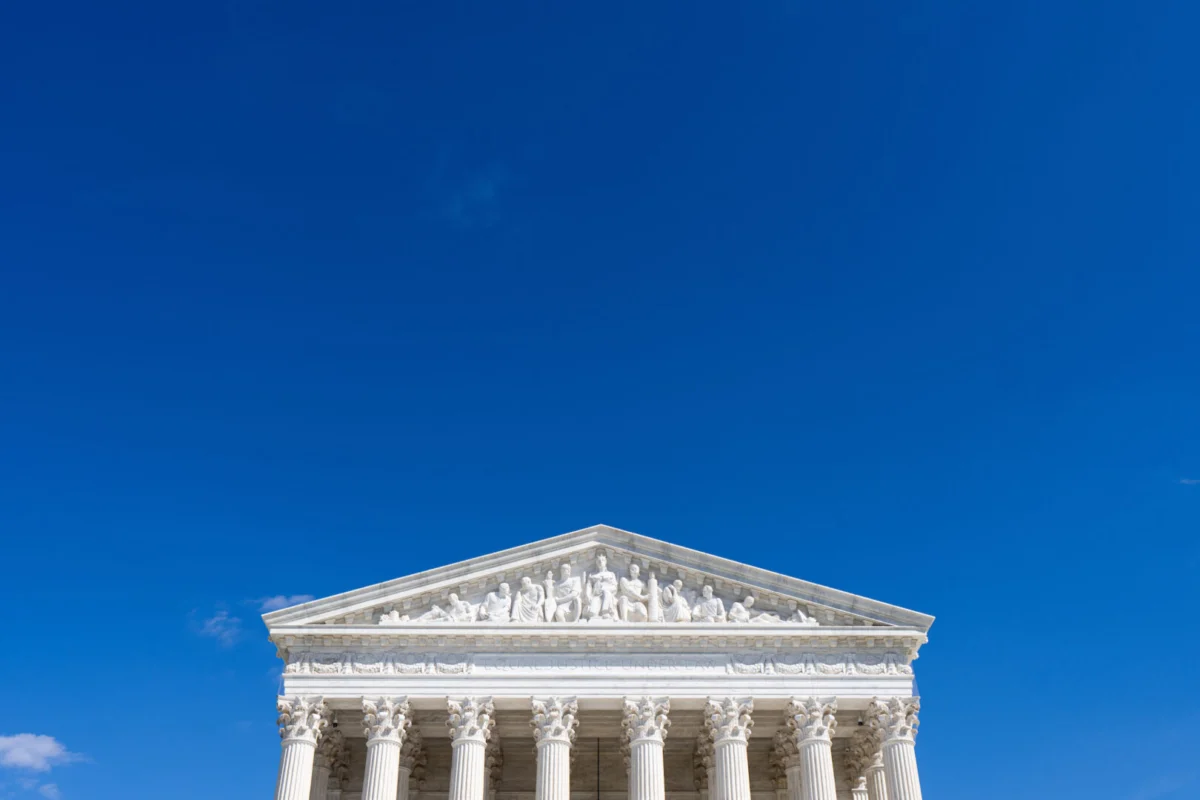
ANALYSIS – The United States Supreme Court recently delivered a resounding affirmation of birthright citizenship, striking down an executive order by former President Donald Trump that sought to redefine the foundational principle. In the wake of this pivotal ruling, Trump immediately urged Congress to take legislative action to end birthright citizenship, dismissing the necessity of what he termed a "long and unwieldy" constitutional amendment. However, a near-unanimous chorus of constitutional and immigration law experts, alongside prominent Republican figures who oppose birthright citizenship, fundamentally disagrees with the former president’s assessment.
These legal scholars contend that the Supreme Court’s majority opinion, which broadly interpreted the 14th Amendment’s Citizenship Clause as granting citizenship to nearly everyone born within the nation’s borders with only highly specific exceptions, unequivocally indicates that a constitutional amendment is now the sole viable avenue for altering this bedrock principle. The ruling, they argue, has closed the door on statutory changes to birthright citizenship.
The Immediate Aftermath: A Clash of Interpretations
On June 30, shortly after the Supreme Court’s definitive ruling in Trump v. Barbara, former President Trump took to Truth Social to voice his displeasure and lay out his proposed path forward. "The Supreme Court upheld Birthright Citizenship, which is too bad for our Country, but we can easily make it up in Congress through Legislation, with the support of the President, that has now been determined during this process. No long and unwieldy Constitutional Amendment is necessary! Congress should start TODAY to work on ending expensive and unfair to our Country, Birthright Citizenship. They will have my Complete and Total Support!" he wrote.
Trump’s frustration with the complexity of constitutional amendments is understandable; they present a formidable barrier. Amending the U.S. Constitution requires a two-thirds majority vote in both the House of Representatives and the Senate, followed by ratification by three-fourths of the states. This arduous process has historically ensured that only changes with broad and sustained national consensus become part of the nation’s foundational document.
However, the consensus among constitutional scholars, legal experts, and even some key Republican proponents of ending birthright citizenship is that the Supreme Court’s decision has now made this very "long and unwieldy" process the only legitimate path to achieve their goal.
Chronology: The Executive Order’s Brief Life and Demise
The journey to the Supreme Court began on the first day of former President Trump’s second term, when he issued an executive order aimed at significantly curtailing birthright citizenship. The order sought to deny U.S. citizenship to children born within the United States to parents who were either in the country unlawfully or present legally but on temporary visas. This move was a direct challenge to the prevailing interpretation of the 14th Amendment and a fulfillment of a campaign promise.
However, the executive order never came into effect. Almost immediately upon its issuance, lower federal courts intervened, blocking its implementation through injunctions. These courts consistently ruled that the executive order exceeded presidential authority and was likely unconstitutional, setting the stage for a high-stakes legal battle that ultimately reached the nation’s highest court. The case, Trump v. Barbara, presented the Supreme Court with the opportunity to definitively interpret the scope of the 14th Amendment’s Citizenship Clause in the modern era.
Supporting Data: The 14th Amendment and its Enduring Legacy
The heart of the debate lies in the text and historical interpretation of the 14th Amendment, ratified in 1868 in the aftermath of the Civil War. Its opening sentence, known as the Citizenship Clause, declares: "All persons born or naturalized in the United States, and subject to the jurisdiction thereof, are citizens of the United States and of the State wherein they reside."
This clause was primarily intended to overturn the Supreme Court’s infamous 1857 Dred Scott v. Sandford decision, which denied citizenship to enslaved and formerly enslaved African Americans. It aimed to establish a clear and expansive definition of national citizenship, ensuring that newly freed slaves would be recognized as full citizens.
A crucial phrase within this clause is "subject to the jurisdiction thereof." For decades, those advocating for a narrower interpretation of birthright citizenship have focused on this phrase, arguing that it excludes individuals whose parents are not fully "subject to" U.S. law, such as those unlawfully present or on temporary diplomatic visas. However, the Supreme Court largely settled this interpretation over a century ago in the landmark 1898 case United States v. Wong Kim Ark. In that case, the Court held that the 14th Amendment granted birthright citizenship to a child born in the United States to Chinese immigrant parents who were not U.S. citizens and were ineligible for naturalization under existing laws. The Court clarified that "subject to the jurisdiction thereof" primarily excludes foreign diplomats and invading armies, not individuals merely present without authorization.
In Trump v. Barbara, the majority opinion reaffirmed this long-standing interpretation. Chief Justice John G. Roberts Jr., writing for the majority, underscored the historical and foundational importance of the Citizenship Clause: "Citizenship, then and now, was the right to have rights — to freely participate in our political community. The Framers of the Fourteenth Amendment extended that promise to ‘every free-born person in this land.’ … We keep that promise today."
Roberts’ opinion explicitly stated that this promise "includes children born of parents unlawfully or temporarily present in the United States." He concluded unequivocally: "Under the Constitution, they are citizens at birth." This expansive interpretation leaves little room for legislative maneuver, according to most legal experts.
Official Responses: Unpacking the Supreme Court’s Ruling and Political Reactions
The Supreme Court’s 6-3 decision striking down Trump’s executive order was a decisive blow to efforts to unilaterally change birthright citizenship. While the majority opinion was clear, the nuances of the individual justices’ positions are critical to understanding the political and legal landscape moving forward.
Chief Justice Roberts, joined by Justices Sonia Sotomayor, Elena Kagan, Neil Gorsuch, and Ketanji Brown Jackson, formed the majority. Their opinion anchored birthright citizenship firmly in the text and history of the 14th Amendment, reiterating the principle established in Wong Kim Ark. The five justices affirmed that the Citizenship Clause is a fundamental constitutional guarantee that cannot be altered by executive fiat or simple legislation.
Justice Brett M. Kavanaugh, while concurring with the majority’s decision to strike down Trump’s executive order, offered a separate opinion that has become a focal point for those seeking a legislative path. Kavanaugh wrote that he disagreed that Trump’s order violated the 14th Amendment per se. Instead, he suggested that Congress alone possesses the authority to "enact new legislation establishing exceptions to birthright citizenship for children born to foreign citizens unlawfully or temporarily in the country." This subtle distinction, though not shared by the majority, has been seized upon by some as a potential opening.
The three dissenting justices—Clarence Thomas, Samuel Alito, and Amy Coney Barrett—did not explicitly state that Congress could legislate changes to birthright citizenship in their dissenting opinions, though their overall stance was against the broad interpretation of the Citizenship Clause. Their dissent generally aligned with a narrower historical reading of the 14th Amendment, one that might exclude children of non-citizens.
Garrett Epps, a professor of practice at the University of Oregon School of Law and a respected constitutional expert, was emphatic in his assessment. "Trump is grasping at straws," Epps told this publication via email. "There is no language in the majority opinion in Barbara that suggests Congress could change the birthright citizenship rule of the Fourteenth Amendment by statute."
Epps further elaborated on the isolation of Kavanaugh’s view: "Although three justices voted against the majority opinion, Kavanaugh’s was ‘the only voice of the nine that raises that possibility’ of reversing birthright citizenship through legislative action." He stressed, "Nothing — nothing — in the majority opinion suggests that Congress has the power to limit or abolish birthright citizenship… As of today, there are five votes on this court to hold that the Citizenship Clause establishes a clear constitutional rule that cannot be overturned by act of Congress, any more than the Equal Protection or Due Process Clauses could be."
Muzaffar Chishti, a lawyer and senior fellow at the Migration Policy Institute and director of its office at the New York University School of Law, echoed Epps’s sentiment. "He lost this one plain and simple!" Chishti stated. "Unfortunately for the President, the majority of Justices (5-4) did not support his position. The majority, in an extraordinarily strong opinion by the Chief Justice, ruled that only a constitutional amendment can reinterpret the current understanding of the 14th amendment: that every child (with the minor exceptions of children born to diplomats and enemy aliens) are citizens at birth. So, the only way that can now be changed after today’s decision is either a constitutional amendment or by the Supreme Court overruling today’s decision."
Jorge Loweree of the American Immigration Council concurred, stating, "The Supreme Court did not say Congress can end birthright citizenship through legislation. The majority held that the Citizenship Clause of the Fourteenth Amendment protects citizenship for nearly everyone born in the United States, relying on more than a century of precedent. While several dissenting Justices argued that the Clause should be interpreted more narrowly, those views did not prevail." He added, "If Congress enacted a statute that conflicted with the Court’s interpretation of the Fourteenth Amendment, it would face immediate constitutional challenges. Unless the Supreme Court changes its interpretation in a future case, Congress cannot override the Constitution by statute."
Even prominent Republicans who advocate for ending birthright citizenship acknowledge the legal reality. Florida Governor Ron DeSantis, a lawyer himself and a vocal opponent of birthright citizenship, wrote on X (formerly Twitter): "This was not a decision on procedural grounds (ie, POTUS can’t do this through executive order but Congress could legislate it); it is a substantive decision that says the 14th amendment requires citizenship for those born to, among others, birth tourists or those unlawfully present in the country. Will need either a constitutional amendment or a future court to overrule this."
Similarly, Senator Mike Lee of Utah, another lawyer and Republican opponent of current birthright citizenship rules, saw the decision as a clear call to pursue "the long fight" for a constitutional amendment. On X, Lee posted: "Neither the Founding Fathers, nor the authors of the 14th Amendment, nor the millions of Americans who fought and died for their country through the ages intended to establish a nation whose citizenship could so easily be purchased, whether through birth tourism of China’s communist party members or a vast border invasion enabled by faithless presidents. This is the cheap and cheated citizenship the Supreme Court upholds today. The long fight for a constitutional amendment begins now. We must explicitly exclude foreign nationals who break our laws, violate our borders, or exploit loopholes to make their families American citizens."
Implications: Legal, Political, and Societal Ramifications
The Supreme Court’s ruling in Trump v. Barbara has profound implications across legal, political, and societal spheres. Legally, it solidifies over a century of precedent regarding the 14th Amendment’s Citizenship Clause, making it unequivocally clear that birthright citizenship, as currently understood, is a constitutional right. This means that any attempt by Congress to pass legislation that narrows this definition would face immediate and almost certainly successful constitutional challenges in the courts.
The process of amending the Constitution is notoriously difficult. Since its ratification in 1788, only 27 amendments have been successfully adopted, with the vast majority occurring in the nation’s early history or after periods of immense social upheaval. The last amendment to be ratified took over 200 years. Garnering a two-thirds majority in both chambers of a deeply polarized Congress, followed by ratification by 38 states, presents an almost insurmountable hurdle for an issue as contentious as birthright citizenship. This reality fundamentally undercuts the former president’s call for a quick legislative fix.
Despite the constitutional clarity, the political implications are significant. The debate over birthright citizenship remains a potent rallying cry for segments of the Republican base. While a constitutional amendment is a long shot, the issue itself is unlikely to fade from political discourse.
Andrew Arthur, a resident fellow in law and policy at the Center for Immigration Studies, an organization advocating for lower immigration, suggested that Congress still has "any number of actions" it could take to address concerns related to immigration, even if not directly ending birthright citizenship. These include restricting the nonimmigrant entry of pregnant women, cracking down on "birth tourism," or limiting the ability of birthright citizens to petition for family members to be admitted to the U.S. Birth tourism refers to the practice of pregnant women traveling to the U.S. on tourism visas specifically to give birth on U.S. soil, thereby securing U.S. citizenship for their children.
"Not to say that any of those are good or bad ideas (except for cracking down on birthright tourism, which most agree with) — but they are steps Congress could take," Arthur noted. While there’s no direct government data on the exact scope of birth tourism, estimates from the Center for Immigration Studies suggest it could account for over 20,000 births annually. It is already illegal for those who purposely enable it, and there have been high-profile arrests of individuals running such operations.
Michelle Mittelstadt, director of communications for the Migration Policy Institute, agreed that there are "means, short of tampering with the Constitution, to tackle what is without doubt immigration fraud and a misuse of the immigration system," specifically referring to cracking down on birth tourism. She pointed out that even the Trump administration had taken some steps in this direction.
However, Samuel Breidbart, counsel in the Democracy Program at the Brennan Center for Justice, cautioned against interpreting any of these indirect measures as a pathway to fundamentally altering birthright citizenship. "There are five votes that said firmly, unequivocally that birthright citizenship is part of the Constitution, and that’s the law," Breidbart said. "Now, is it true that a 5-4 outcome might be an invitation to the conservative legal movement to keep trying? I’m sure that’s how they’re thinking about this. I’m sure that they’re thinking that they can pursue future litigation. … But right now the law is as it has always been, that there’s birthright citizenship for all who are born here, and we require a constitutional amendment to change that. What the court did yesterday did not open the door to Congress legislating."
Evelyn Cruz, a professor and director of the immigration clinic at Arizona State University’s law school, critically assessed Justice Kavanaugh’s suggestion that Congress could legislate exceptions. She believes his stance "stands on thin ice" legally. Yet, she highlighted its potential political utility: "Whether Justice Kavanaugh’s suggestion is legally sound or not, the fact that he has opened the door to a potential way for Congress to delineate access to birthright citizenship, even if the legislation is later ruled unconstitutional, leaves the birthright citizenship issue viable for political purposes," despite the court’s otherwise unequivocal decision.
In essence, the Supreme Court has drawn a clear line in the sand. While the political debate over birthright citizenship is far from over, and indirect measures to curb certain immigration practices may be pursued, the constitutional definition of birthright citizenship remains firmly entrenched. Any fundamental change, as the highest court and the vast majority of legal experts have affirmed, will require the formidable undertaking of amending the U.S. Constitution itself. The "long fight" for such an amendment, as Senator Lee articulated, now officially begins.
Lori Robertson and Justine Weng contributed to this article.