WASHINGTON D.C. — The global energy landscape and the stability of the American domestic economy are currently balanced on a knife’s edge as a fresh cycle of military escalation in the Middle East sends shockwaves through global markets. Following a weekend of intensified U.S. military strikes against Iranian targets, crude oil futures have surged, and American motorists are facing a rapid and painful spike in prices at the pump.
The current crisis, which marks one of the most significant military engagements in the region in recent years, has forced economists and policymakers to reconsider the trajectory of the U.S. economy. As the "hot phase" of the conflict persists, the primary concern has shifted from the tactical success of military operations to the "economic gravity" now pulling at the wallets of American families.
Main Facts: A Convergence of Conflict and Cost
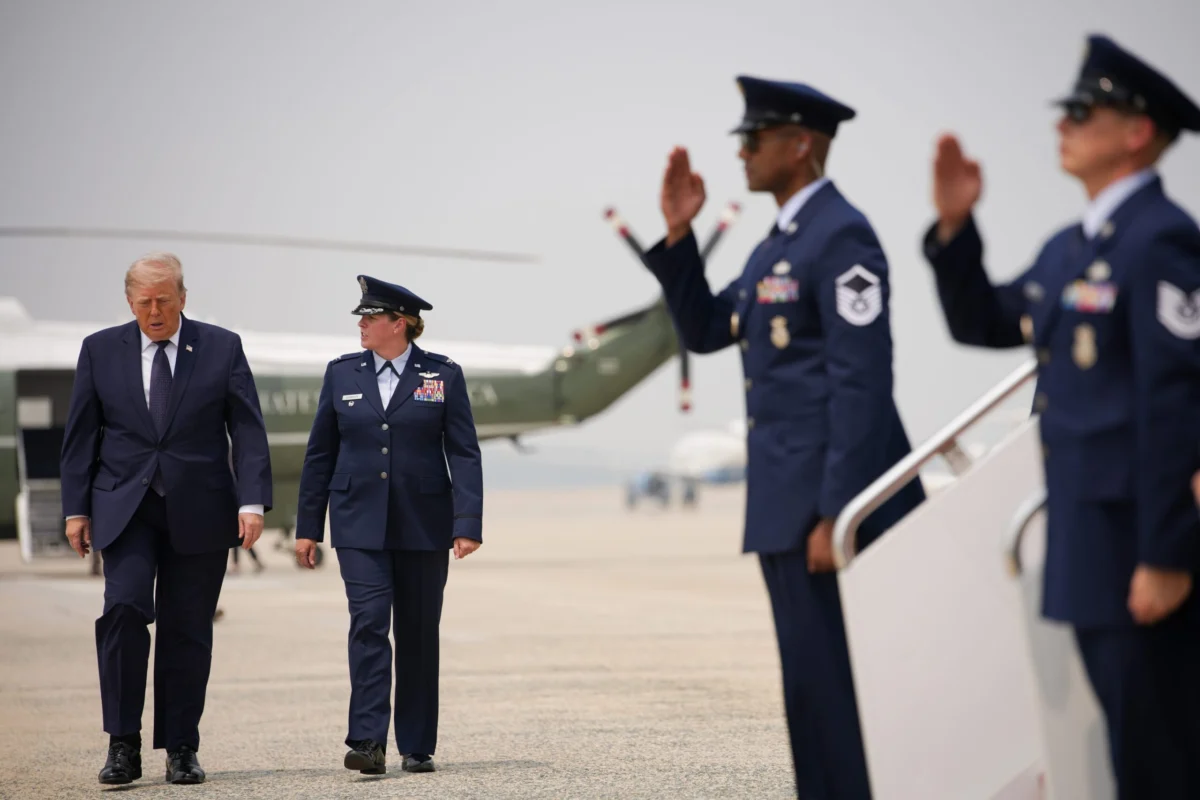
The immediate catalyst for the current market volatility is a series of retaliatory strikes authorized by President Trump over the weekend. These actions were described by the administration as a direct response to the deaths of three American soldiers killed in recent engagements. While the White House has framed the strikes as a matter of national honor and deterrence, the collateral damage is being felt thousands of miles away in the form of energy inflation.
As of this morning, the national average for a gallon of regular gasoline has breached the $4.00 benchmark, according to data from the American Automobile Association (AAA). This represents a staggering increase from just $3.14 per gallon only one month ago. The speed of this ascent has caught many consumers off guard, particularly as it follows a period of "sticky" inflation that has already depleted the discretionary income of many middle- and lower-income households.
In the commodities market, Brent Crude—the global benchmark—is hovering around $88 per barrel, having retreated slightly from an overnight peak of $91. However, the cooling of the spot price offers little comfort to analysts. Data from the CME Group indicates that crude oil futures for the next three months have climbed by approximately 1.5%, with prices expected to remain above $80 well into the future. Current market projections suggest that oil may not return to the $70 range until December 2027, signaling a long-term "higher-for-longer" energy environment.
Chronology of Escalation: From Skirmish to Standoff
The path to the current crisis began several weeks ago with a series of localized skirmishes in the Middle East, which gradually drew in U.S. assets stationed in the region. The situation reached a boiling point last week when three American service members were killed in an attack attributed to Iranian-backed elements.
- Mid-June 2026: Tensions began to simmer as maritime security in the Persian Gulf deteriorated. Reports of "harassment" of commercial tankers near the Strait of Hormuz led to a 5% increase in insurance premiums for shipping.
- Early July 2026: A series of drone and rocket attacks targeted U.S. regional outposts. While initial damage was minimal, the rhetoric from both Washington and Tehran intensified.
- July 15–17, 2026: The fatal encounter occurred, resulting in the deaths of three U.S. soldiers. President Trump immediately vowed a "disproportionate" response, stating the U.S. would no longer tolerate threats to its personnel.
- July 18–19, 2026 (The Weekend Strikes): The U.S. launched a wave of strikes against Iranian infrastructure and command centers. President Trump took to social media and official briefings to state these actions were "in honor" of the fallen soldiers.
- July 20, 2026 (Present): Oil markets reacted to the strikes with a sharp upward gap. The Strait of Hormuz, which handles roughly 20% of the world’s petroleum liquids, has become a "no-go" zone for many commercial vessels, effectively throttling supply.
Supporting Data: The Arithmetic of a Squeeze
The economic impact of the conflict is best understood through the lens of consumer behavior and market expectations. Paul Donovan, Chief Economist at UBS Global Wealth Management, has been vocal about the precarious position of the American consumer.
In a briefing to clients, Donovan introduced the "Wile E. Coyote scenario." This refers to the classic cartoon character who runs off a cliff but remains suspended in mid-air for a few moments before gravity takes hold. Donovan argues that U.S. households are currently in that suspended state.
"While oil costs are rapidly being passed to consumers, the response is to cut monthly savings rather than non-oil consumption," Donovan noted. This shift in behavior explains why retail sales have not yet plummeted, but it also highlights a ticking time bomb. According to UBS analysis, the current rate of savings depletion is unsustainable. If oil prices remain elevated, the "economic gravity" of high costs will eventually force a sharp reduction in overall consumer spending, potentially triggering a broader slowdown.
The data from AAA further illustrates the velocity of the price hikes:
- Current National Average: $4.00/gallon
- Yesterday: $3.98/gallon
- One Week Ago: $3.87/gallon
- One Month Ago: $3.14/gallon
This 27% increase in just thirty days represents one of the most aggressive month-over-month jumps in recent history. Simultaneously, the futures market suggests no immediate relief. The "backwardation" usually seen in oil markets—where future prices are lower than current prices—is being replaced by a stubborn floor. Investors are betting that the geopolitical risk premium will remain embedded in the price of crude for at least the next 18 to 24 months.
Official Responses: Strategy vs. Stability
The official response to the crisis has been divided between the military-political complex and the financial regulators.
President Trump has maintained a defiant stance, insisting that the U.S. maintains total control over the strategic waterways, including the Strait of Hormuz. Despite reports of shipping companies rerouting vessels around the Cape of Good Hope—adding weeks to transit times and millions to fuel costs—the administration has downplayed the supply chain disruptions, focusing instead on the necessity of the military strikes.
On the financial front, the burden falls on Federal Reserve Chairman Kevin Warsh. The Fed is currently navigating a treacherous path; it seeks to bring inflation down to its 2% target, but the energy shock acts as a "cost-push" inflationary force that interest rate hikes have little power to combat.
Jan Hatzius, Chief U.S. Economist at Goldman Sachs, highlighted the dilemma facing the central bank. Hatzius noted that while Gulf exports could theoretically rebound quickly if the escalation subsides, the risk of "tanker warfare" and hits to Middle Eastern infrastructure could easily push oil into the $100+ range.
Hatzius suggests that Chairman Warsh will need to be much more explicit in his communications. "To keep control of the narrative and prevent financial conditions from overshooting, we think Chairman Warsh will have little choice but to explain the committee’s economic outlook and reaction function in much greater detail," Hatzius wrote. The market is looking for assurance that the Fed will not overreact to a temporary energy spike while also ensuring that inflation expectations do not become unanchored.
Implications: The Long Shadow of $100 Oil
The implications of this escalation extend far beyond the gas pump. If the conflict becomes a war of attrition, the global economy faces several structural risks.
1. The Erosion of the Consumer Buffer:
For the past two years, U.S. households have been described as "resilient." However, that resilience was built on a foundation of pandemic-era savings and a strong labor market. As Donovan suggested, those savings are now being diverted to pay for basic mobility. When the "Coyote" finally looks down, the resulting drop in discretionary spending—on travel, dining, and retail—could tip the U.S. into a technical recession.
2. Geopolitical Realignment of Energy:
The reluctance of ships to travel through the Strait of Hormuz is forcing a permanent rethink of energy logistics. If Iran continues to leverage its position near the Strait, we may see an accelerated push for domestic production and alternative energy sources, but these are long-term solutions for a short-term crisis. In the interim, the world remains tethered to a volatile region.
3. The Inflationary Feedback Loop:
Energy is a "tax" on everything. Higher fuel costs lead to higher shipping costs for groceries, consumer electronics, and construction materials. If the Fed’s 2% inflation target was already looking optimistic for 2027, a sustained period of $90-$100 oil makes that goal nearly impossible without significant economic pain.
As the U.S. continues its military operations "in honor" of its fallen, the domestic front is preparing for a different kind of battle—one fought in the grocery aisles and at the gas stations. The coming weeks will determine if the U.S. economy can find a ledge to grab onto, or if the "economic gravity" Paul Donovan warns of will lead to a hard landing for the American consumer.