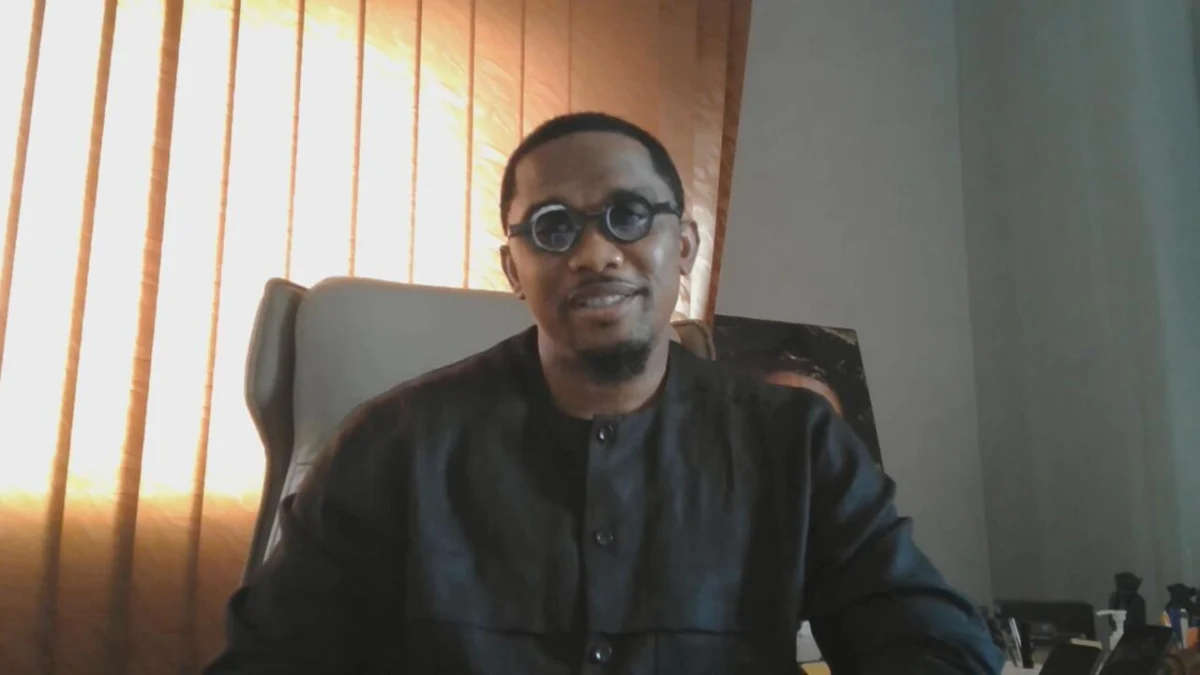
In a landscape defined by shifting alliances and intense geopolitical friction, the future of world football hangs in the balance. As FIFA President Gianni Infantino gears up for a pivotal re-election bid, the global football community finds itself starkly divided. At the center of this firestorm is football legend and current president of the Cameroonian Football Federation (FECAFOOT), Samuel Eto’o, who has emerged as a staunch, vocal defender of the incumbent FIFA leadership.
In an exclusive interview with FRANCE 24, Eto’o laid bare the ideological chasm separating the Confederation of African Football (CAF) from its counterparts in Europe and North America. While Western confederations grapple with a sense of disillusionment over governance and fiscal strategy, Eto’o insists that for African football, the priorities—and the loyalties—are entirely different.
The Core of the Controversy: A FIFA in Flux
The friction surrounding Gianni Infantino stems from a series of high-stakes strategic maneuvers that have alienated significant portions of the global football establishment. Most notably, Infantino’s previously floated proposal to invite private equity into the World Cup structure sparked a firestorm of criticism. While the project was eventually abandoned following massive public and institutional outcry, the damage to his reputation in the eyes of UEFA and other Western bodies proved significant.
For many European and North American stakeholders, these initiatives represented a dangerous commodification of the sport’s crown jewel. However, for Eto’o and his African colleagues, the narrative is not one of betrayal, but of pragmatism. The African continent, often marginalized in global sporting economics, views the current FIFA administration as an ally that has finally recognized the unique struggles of developing football nations.
Chronology: From Reformer to Lightning Rod
- The Early Years: Gianni Infantino ascended to the FIFA presidency in 2016, promising to clean up the organization following the massive corruption scandals that toppled Sepp Blatter. Initially, he enjoyed broad, cross-continental support.
- The Expansion Era: Infantino’s push to expand the World Cup to 48 teams was a strategic masterstroke for African and Asian nations, providing more slots and, consequently, more development funding.
- The Investment Crisis: In recent years, the push for private investment into the World Cup sparked a rift. UEFA, led by Aleksander Čeferin, signaled a clear break, calling for a more traditional, member-association-led governance model.
- The CAF Unanimity: Despite the international backlash, the 54 member nations of the Confederation of African Football have maintained a near-unanimous front in support of the FIFA president.
- The Upcoming Congress: With the re-election congress looming, the battle for the 211-vote majority has become a game of regional blocs, with Africa serving as the primary firewall against European opposition.
Supporting Data: Why Africa Stands With Infantino
The divergence in opinion between Europe and Africa is not merely political—it is economic. Eto’o emphasizes that the budgetary realities in Africa are fundamentally different from those in the Global North.
"We don’t face the same challenges as those in Europe or South America," Eto’o noted during the interview. "Our budgets are limited, yet we are expected to perform just as well as those major footballing nations. We can’t broach this issue from the same point of view."
For Eto’o, support for Infantino is a matter of tangible results. Under the current FIFA administration, developmental grants have increased, and the professionalization of local leagues has become a priority. While European critics focus on the "purity" of the sport’s structure, African leaders are focused on survival and infrastructure. Eto’o’s argument is that Infantino is the first FIFA president to treat African federations as equal partners rather than mere peripheral members.
Official Responses and Personal Allegiances
The discourse surrounding the re-election has turned increasingly personal. While some, such as former Congolese Football Federation president Constant Omari, have accused African leaders of being "morally corrupt" and suggested that Infantino maintains leverage over them through compromising information, Eto’o remains undeterred.
He categorically rejects the notion that the African support is coerced. "I haven’t yet heard a single exchange that was given under some form of threat," Eto’o stated. Instead, he characterizes his relationship with Infantino as familial. "In my heart, President Gianni has become, well beyond the world of football, a brother, a big brother, a friend. Someone we’ve supported, with whom we have built things together."
Eto’o has gone a step further, vowing to actively campaign among his 53 counterparts to ensure a unanimous African vote for Infantino. "I will vote for Gianni Infantino… because of everything he has brought to African football," he reiterated, emphasizing that for the first time, the continent is moving as a singular, unified voting bloc.
Implications for Global Football Governance
The implications of this divide are profound. If Africa succeeds in re-electing Infantino against the explicit wishes of the European confederation, the power dynamic within FIFA will undergo a permanent shift.
1. The Erosion of the "European Hegemony"
For decades, European football has dictated the agenda for the global game. By acting as a kingmaker for the FIFA presidency, Africa is signaling that the era of Western-dominated football politics is waning. This, however, risks a fracturing of the international calendar, with potential threats of UEFA breakaway leagues or deeper administrative boycotts.
2. Governance vs. Development
The conflict highlights a fundamental philosophical question: Should FIFA’s primary mandate be the preservation of traditional governance and ethics, or the aggressive pursuit of developmental equity for poorer nations? Eto’o’s position suggests that the latter is a prerequisite for the former. Without the financial support provided by Infantino’s current initiatives, the "ethics" championed by Europe remain, in his view, a luxury that African football cannot afford.
3. The Future of CAF Leadership
While Eto’o has pledged his support for Infantino, he has distanced himself from immediate aspirations to lead the continental body. Addressing reports regarding the upcoming vacancy at the CAF presidency—following Patrice Motsepe’s announcement that he will not seek a second term in 2029—Eto’o remained focused on Cameroon. "I’m very happy at the Cameroonian Football Federation," he stated, highlighting his commitment to the local development of the sport, including the success of the Lionnes Indomptables.
Domestic Success and Internal Tensions
Beyond the global stage, Eto’o’s tenure at FECAFOOT has not been without its own internal hurdles. He has navigated high-profile tensions with the Cameroonian Sports Minister, Narcisse Mouelle Kombi, and faced scrutiny over the administration of player wages.
Yet, Eto’o points to the performance of the national teams as the ultimate vindication of his policies. The historic performance of the women’s national team in the 2026 Women’s Africa Cup of Nations serves as his primary evidence. By fostering an environment of stability, he argues, he has allowed the players to focus on what matters: the game. "We have worked properly with the calm needed for a football team, and the result speaks for itself," he said.
Conclusion: The Road to the Congress
As the date for the FIFA Congress approaches, the tension between the "old guard" of European football and the "new guard" represented by Eto’o and his allies will only intensify. Whether Infantino wins or loses, the rift has already changed the landscape of the sport.
For Samuel Eto’o, the mission is clear: he is not just casting a ballot; he is casting a vote for a vision of football that prioritizes the growth of the African game above the approval of Brussels or Zurich. As he prepares to lead the campaign for his "big brother" Gianni, the eyes of the world remain fixed on Africa—the continent that now holds the keys to the future of the world’s most popular sport.