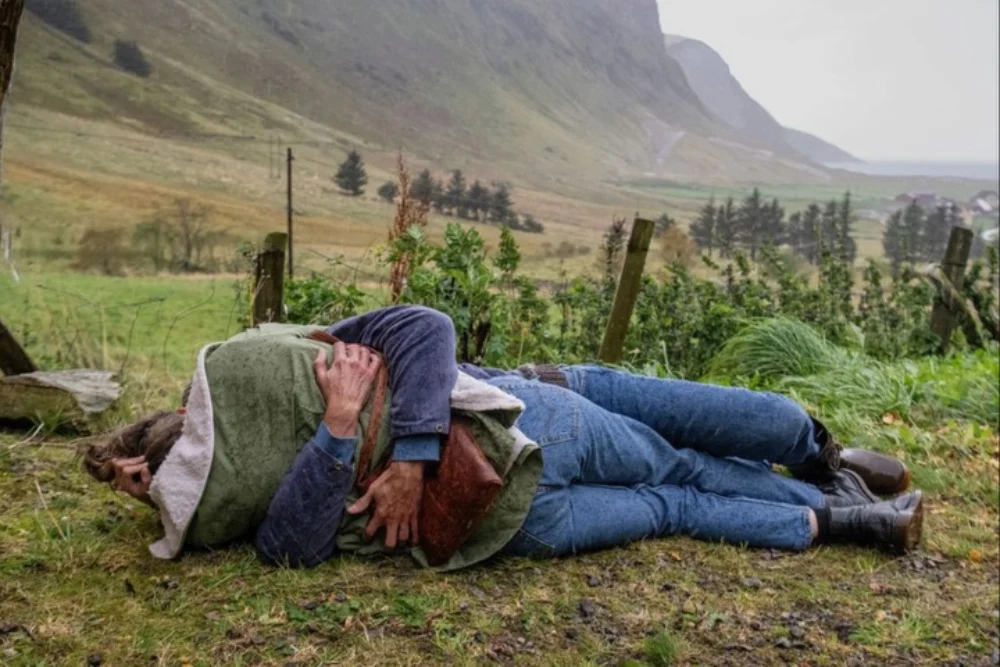
The Norwegian International Film Festival in Haugesund serves as a grand stage for the Nordic film industry, but this year, the spotlight is focused on an intimate, haunting, and deeply human portrait. Beloved, the latest feature from acclaimed director Erik Poppe, has opened the festival, marking a significant departure for a filmmaker long associated with sweeping, high-stakes historical dramas. The film, which adapts a screenplay penned nearly two decades ago by the 2023 Nobel Prize laureate in Literature, Jon Fosse, is a testament to the enduring power of minimalist storytelling in a world increasingly dominated by spectacle.
The Genesis of a Masterpiece: From Page to Screen
The path of Beloved to the silver screen is a story of patience and profound artistic intuition. While the global literary world scrambled to claim Jon Fosse’s bibliography following his Nobel victory last year, Erik Poppe had already been sitting on a treasure for nearly twenty years.
"It’s a project that has been on my desk for many, many years," Poppe tells Variety. "Jon Fosse wrote it almost 20 years ago. After he received the Nobel Prize in Literature, it felt like the whole world wanted to read it. But I always knew it was a powerful piece of work."
Unlike many of Fosse’s world-renowned novels and plays, Beloved was written with a singular, cinematic purpose. It was not a literary work being adapted; it was a screenplay designed from its inception to live on film. This distinction is critical to understanding the film’s unique texture. Fosse, known for his sparse, rhythmic, and deeply existential prose, stripped away the artifice of traditional dialogue, leaving "space between the lines" for the director to fill. For Poppe, this provided an unparalleled canvas.
A Chronicle of Human Estrangement
Beloved centers on the fragile architecture of a relationship between a couple, Asle and Gerd, whose lives are anchored in a remote, windswept coastal town in Norway. The narrative arc—deceptively simple—tracks their meeting, the arrival of their child, and the inevitable, crushing weight of their growing estrangement.
Asle is a man drawn to the sea, a siren call that pulls him away from the domestic hearth, while Gerd remains in the village, caught in the stasis of their fading connection. The film, starring Leo Magnus de la Nuez and Kristi-Helene Gjørver Engeberg, is a meditation on the language of love—and the silence that follows when that language is forgotten.
The film is produced by the powerhouse duo of Paradox and SF Production, with global sales being handled by Reinvent Yellow Sales. While the scale of the production is intentionally small, the emotional stakes are gargantuan.
The Director’s Pivot: Moving from Epics to Intimacy
Erik Poppe is a titan of Norwegian cinema, having commanded the screen with large-scale, high-budget productions such as The King’s Choice (2016), the harrowing Utøya: July 22 (2018), The Emigrants (2021), and his recent exploration of history, Quisling: The Final Days. Given this resume, some might wonder why Poppe chose to pivot toward a claustrophobic, three-person drama.
"Looking at the world as it is right now, I needed to hold onto some sense of hope—or at least something more human," Poppe explains. "I wanted to explore the relationship between two people, as well as between a father and son, because it’s a story of daily life I can relate to."
Poppe reveals that the film is rooted in his own autobiography. "I was raised by two parents who were almost exactly like these two," he shares. "Except, it was my mother who left and my sister and I stayed home with my father. The film is about the language these two used to share, which is disappearing; it’s about where they are and what they’re longing for."
The Landscape as a Protagonist
In Beloved, the Norwegian landscape is not merely a backdrop; it is a central character. Poppe spent months scouting locations, searching for a setting that could embody the "mythical" quality required to ground Fosse’s ethereal writing.
"I spent a lot of time figuring out where to shoot this film. It’s almost like a mythical landscape, a mythical part of Norway. It’s the fourth character in the film," says Poppe. The resulting imagery—misty, melancholic, and vast—acts as a mirror for the internal isolation of the characters. The environment exerts a pressure on the couple, highlighting their insecurities and the physical distance that eventually leads to their emotional dissolution.
Methodologies of Truth: The Poppe Approach
Despite the small cast, Poppe maintained his rigorous standards for actor preparation. He insists on a lengthy rehearsal period—often eight to twelve weeks—before a single frame is shot. This time is not spent solely on lines, but on forging a "truthful, honest relationship" between the actors.
"If I can establish a truthful, honest relationship with my actors, I can push them quite far," he notes. This dedication to psychological depth ensures that when the film’s "darker side" emerges, it feels earned rather than forced. The audience, accustomed to the conventional beats of romantic dramas, is reportedly being caught off-guard by the film’s refusal to provide a sentimental resolution.
The "Fosse Effect" and the Future of Adaptation
The success of Beloved at the festival, and the anticipation surrounding its general release, raises questions about the future of Jon Fosse’s works on screen. As a Nobel laureate, Fosse’s stature is currently unrivaled in the literary world. Poppe, however, believes that filmmakers should approach Fosse with a specific type of reverence.
"I’m quite sure more movies will be made from his novels," Poppe predicts. "As a filmmaker, he’s opening up the space between the dialogue for me to fill in. His style is so simple yet deep. You connect with it, understand it, and it hits you right in the stomach. His novels are short, but when you read them, it feels like Dostoyevsky. I find it extraordinary."
Poppe’s ability to interpret this "Dostoyevsky-like" depth without over-explaining it is perhaps the film’s greatest triumph. He recognizes that Fosse’s power lies in the unspoken. In an era of cinema often characterized by rapid-fire dialogue and relentless pacing, Beloved offers an invitation to sit in the silence.
Implications for the Industry
The warm reception of Beloved at Haugesund sends a clear message to the film industry: audiences are craving authenticity. "We’ve all seen how well they perform in the cinemas, surprisingly enough," Poppe notes. "People long for something honest and truthful that they can just dive into."
By focusing on a story that explores the complexities of long-term partnership, the limitations of language, and the residual trauma of abandonment, Poppe has crafted a film that feels universal despite its specific, localized setting. The success of this collaboration between a seasoned director and a Nobel laureate proves that even in a digital age, the most profound cinematic experiences are often those that return to the fundamental human condition.
As Beloved moves from the festival circuit into wider distribution, it stands as a marker of where high-concept literature meets the emotive power of visual media. It is a brave, quiet, and devastating work that confirms that while the world may change, the human need for stories that "hit you right in the stomach" remains unchanged. For Erik Poppe, the film is a homecoming of sorts—a return to the small, complex, and deeply relatable stories that first inspired him to pick up a camera.