
By Editorial Staff
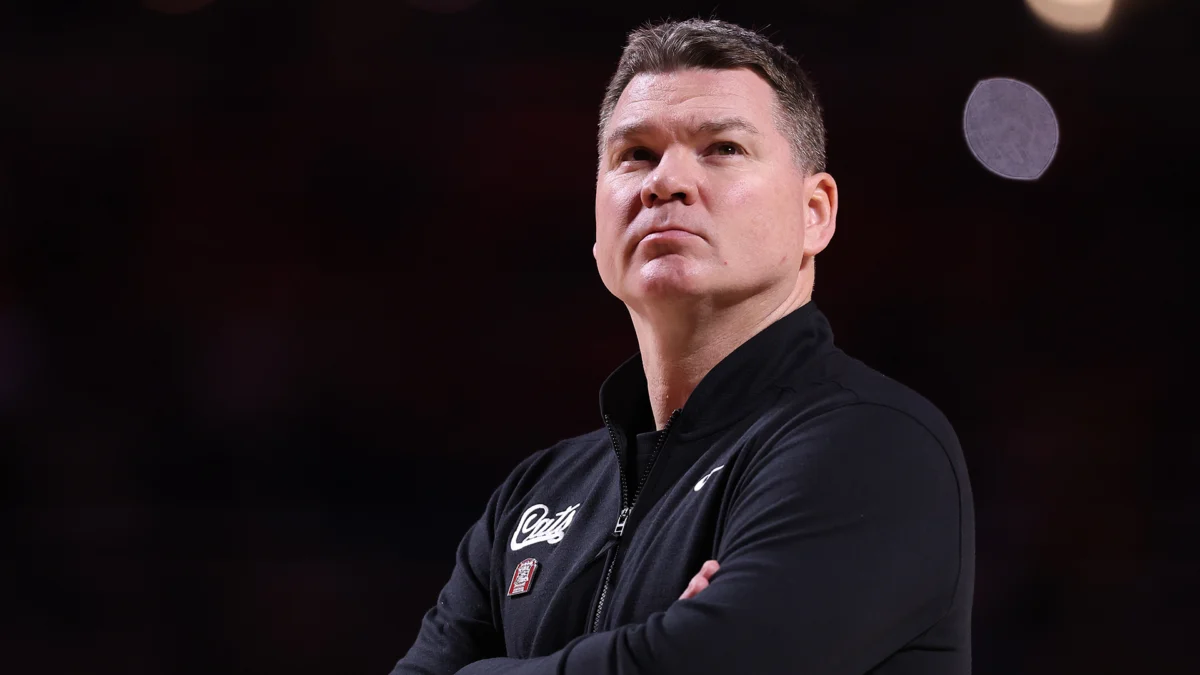
In the modern landscape of collegiate athletics, the traditional media day—a scheduled carousel of optimistic roster outlooks and tactical preview questions—has been fundamentally altered. When Arizona head coach Tommy Lloyd sat down at the T-Mobile Center during Big 12 Media Days, the expectation was a routine discussion regarding his high-profile recruits, his team’s transition into a new conference, and the tactical evolution of the Wildcats.
Instead, the conversation took a sharp, legalistic turn. While the sport should be focused on the upcoming season’s tip-off, the primary narrative surrounding college basketball has become one of litigation, injunctions, and the eroding authority of the NCAA. The catalyst for this pivot? Not a star recruit or a coaching departure, but the lingering ghost of the "Diego Pavia case" and a growing sense among coaches that the governing body is no longer interested in stability, but rather in leveraging instability to secure a federal legislative agenda.
The Chronology of Compliance and Contradiction
To understand the current state of "chaos" in college basketball, one must trace the timeline of the NCAA’s shifting stance on eligibility. Two years ago, the NCAA faced a significant legal hurdle involving Diego Pavia, the former Vanderbilt quarterback. Pavia challenged the NCAA’s rule that counted his junior college seasons against his Division I eligibility, arguing that the restriction violated the Sherman Antitrust Act by improperly stifling his career and earning potential.
Pavia won. Following an injunction that allowed him to continue his collegiate career, the NCAA acted with relative speed and pragmatism. The NCAA Division I Board of Directors issued a blanket waiver, granting an extra year of eligibility to former JUCO and non-NCAA school transfers in similar situations. The rationale was clear: to avoid an uneven playing field, a universal policy was the most logical path forward.
Fast forward to the present. The current season is mere days away, and the landscape is defined by a patchwork of judicial rulings. Instead of issuing a similar blanket waiver for athletes impacted by the five-year-eligibility-period rule—specifically those who graduated high school in 2022—the NCAA has chosen a strategy of aggressive litigation. The governing body is currently challenging five-year-eligibility cases in courts across the nation, creating a scenario where a player’s eligibility depends entirely on the jurisdiction of their school and the specific ruling of a local judge.
Supporting Data: The Cost of Inconsistency
The inconsistencies are not merely academic; they are visceral and damaging to the fabric of the game. According to coach Tommy Lloyd, there are at least 22 players in the Big 12 alone who would qualify for a fifth year of eligibility if the NCAA’s rule changes had been applied with the same grace and consistency shown in the aftermath of the Pavia case.
The case of RJ Godfrey, an Arizona forward, illustrates the absurdity of the current situation. Godfrey, a 2022 high school graduate, spent three years at Clemson and one at Georgia. He graduated in four years and sought a fifth year at Arizona. While a Georgia judge initially granted him an injunction to play, the Georgia Court of Appeals subsequently granted the NCAA a stay.
"I get it’s complicated—but you can’t tell me it’s right that a true 5-for-5 candidate that’s younger than some of these European players is ineligible," Lloyd remarked.
The comparison is particularly biting. International players who spent years playing professional, high-level basketball abroad—without enrolling in a university—are often granted eligibility, while domestic students who pursued the traditional four-year degree path are being penalized for their academic efficiency. This creates a perverse incentive structure: had these players redshirted or delayed their graduation, they might have retained their eligibility. Instead, they are being punished for completing their degrees on time.
Lloyd’s Theory: The Strategic Use of Chaos
When asked why the NCAA, which previously favored blanket waivers to avoid competitive inequality, has now opted to "dig its heels in," Lloyd offered a candid assessment: the chaos is intentional.
"I think my theory is this thing has gotten so political," Lloyd explained. "I think the NCAA doesn’t mind the ‘chaos’ right now because it can help drive the case for them to promote the [Protect] College Sports Act, which I’m sure we need."
This hypothesis posits that the NCAA is effectively weaponizing the current legal uncertainty. By allowing a chaotic environment where judges and injunctions determine rosters, the NCAA strengthens its argument to federal lawmakers that college sports is in a state of crisis that only a federal law can solve. The proposed Protect College Sports Act (PCSA) would grant the NCAA significant protections, including limitations on what athletes can earn and immunity from certain antitrust challenges.
The logic follows that if the system appears broken and ungovernable, the public and political appetite for a "saving" federal bill increases. The NCAA is betting that the short-term damage to the product—the constant talk of courtrooms rather than courts—is a price worth paying for long-term legislative stability that would cement their authority.
Official Responses and the Silence of Governance
While the NCAA has not explicitly confirmed a strategy of "controlled chaos," its legal maneuvers speak volumes. The organization is spending significant capital to fight individual eligibility battles in state courts, even as coaches and administrators publicly plead for a uniform standard.
A survey conducted earlier this year by CBS Sports polled nearly 100 college coaches, a significant majority of whom expressed that they would prefer 2022 high school graduates be grandfathered in to the new eligibility rules. The intent was simple: cut down on legal fees, minimize administrative burden, and provide clarity for players and programs alike. The NCAA’s refusal to heed this consensus from its own members underscores a disconnect between the governing body’s legislative goals and the operational realities of the coaches on the ground.
Implications for the Future of College Basketball
The implications of this strategy are profound. First, the sport is suffering from a "loss of oxygen." Valuable time and media attention, which should be directed toward the development of student-athletes, the tactical intricacies of new conference alignments, and the promotion of the game, are being consumed by legal updates. As Lloyd noted, he spent his media day discussing the "Pavia case" rather than his own roster’s development.
Second, the competitive integrity of the upcoming season is arguably compromised. When teams in the same conference face different eligibility outcomes due to regional court rulings, the "uneven playing field" that the NCAA claimed to fear two years ago has now become the standard reality.
Third, the relationship between the NCAA and its member institutions is fraying. Coaches, who are responsible for the daily well-being of their players, find themselves caught in the middle of a proxy war between the NCAA and the legal system. When a player like RJ Godfrey is left in limbo, the coach is the one who has to manage the locker room, the recruiting fallout, and the personal frustration of a student-athlete denied an opportunity based on a technicality.
Conclusion: A Game in Search of Stability
The current state of college basketball is a paradox. It is a multibillion-dollar enterprise that, in many ways, has lost control over its own membership rules. The NCAA’s pivot from a policy of blanket waivers to a policy of obstructionist litigation suggests that the organization is playing a much larger game than the one taking place on the hardwood.
As the season tips off, the focus remains stubbornly fixed on the legal, not the athletic. Whether or not this strategy leads to the passage of the Protect College Sports Act remains to be seen. However, as Tommy Lloyd and his peers have observed, the human cost of this strategic maneuver is being paid by the athletes themselves.
Until the NCAA decides that the integrity of the game is more important than the pursuit of a legislative safety net, the chaos will likely continue. For now, coaches are left to prepare for a season defined by uncertainty, where the most important player on the roster might not be a five-star recruit, but a judge in a local court. The sport is "saving" itself from chaos by creating more of it, and for those inside the program, it is a reality that is increasingly difficult to justify.