New York — The global equity markets are currently grappling with a period of intense turbulence as the once-unshakeable "AI trade" faces its most significant reality check to date. Investors, who spent the better part of the last two years funneling trillions into semiconductor giants and cloud infrastructure providers, are now hitting the exit buttons. Yet, amidst the sea of red on trading screens, a prominent voice of optimism remains.
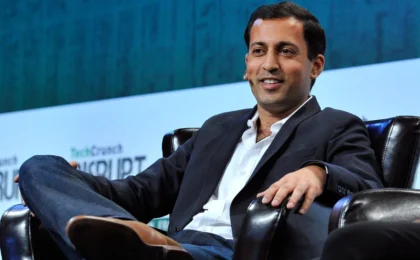
Tom Lee, co-founder of Fundstrat Global Advisors and a strategist with a notable track record for accurate market forecasting, suggests that this "beating" is not the end of the road. Instead, he views the current sell-off as a "healthy" recalibration. This report explores the confluence of factors—from Chinese technological breakthroughs to South Korean margin calls—that have triggered the recent slide, and why some experts believe a rebound is inevitable.
I. Main Facts: The Anatomy of a Sell-Off
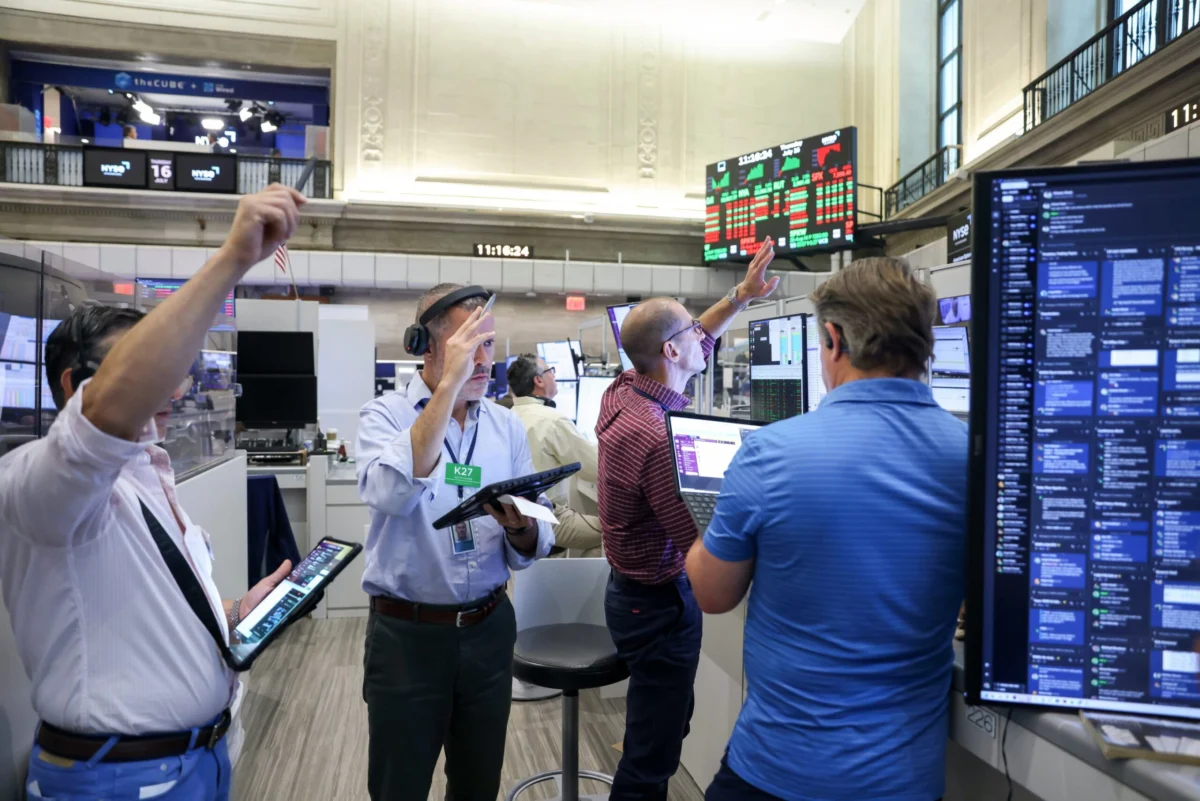
The recent market performance has been characterized by a sharp retreat from the high-flying tech stocks that have dominated the indices. For the most recent trading week, the S&P 500 declined by 1.6%, while the tech-heavy Nasdaq Composite slid a more dramatic 2.9%. The epicenter of this earthquake is the semiconductor sector, where chip stocks—formerly the darlings of the momentum trade—have led the downward charge.
The immediate catalyst for this shift was the release of a sophisticated new AI model from China. Developed by the startup Moonshot AI, the "Kimi K3" model has sent shockwaves through the industry. By demonstrating high-level performance with potentially lower compute requirements, the model has cast a shadow of doubt over the "hyperscaler" narrative. If AI can be achieved more efficiently, the gargantuan spending plans of companies like Microsoft, Google, and Meta—which involve hundreds of billions of dollars in GPU procurement—might be seen as over-extended.
However, Tom Lee argues that these companies remain at the heart of the United States’ most critical strategic initiative. Despite the volatility, Lee maintains that the AI cycle has "years of runway ahead" and that the current pullback serves to flush out speculative excess before the next leg of growth.
II. Chronology: From Euphoria to Correction
To understand the current market state, one must look at the timeline of events that led to this "rolling correction."
- The 2024-2025 Surge: Driven by the promise of Generative AI, the "Magnificent 7" and chipmakers like Nvidia and SK Hynix saw their valuations reach record highs. During this period, margin debt—money borrowed by investors to buy stocks—began to climb at an unsustainable pace.
- February 2026: The bond market showed peak enthusiasm for AI. Hyperscalers issuing debt to fund data centers saw "cover ratios" (the ratio of investor orders to the amount of debt offered) as high as 5x, indicating massive oversubscription.
- Late June 2026: Signs of fatigue emerged in the South Korean markets. The Kospi index, heavily weighted toward memory chip giants Samsung and SK Hynix, hit a record high but began to show signs of over-leverage among retail traders.
- July 17, 2026: The release of China’s Kimi K3 model provided the fundamental trigger for a global re-evaluation of AI infrastructure spending. On the same day, SK Hynix signaled a potential slowdown in its AI memory business, sparking the fifth-worst daily plunge in the history of the Kospi.
- Present Day: The correction has moved from Asia to the U.S., with the Nasdaq entering a 6% slide from its peak. This has triggered a massive wave of margin calls, particularly in highly leveraged markets.
III. Supporting Data: Leverage and the "Push-Button" Liquidity Crisis
The primary driver of the current volatility appears to be the unprecedented level of leverage embedded in the financial system. Tom Lee points to a staggering statistic: margin debt has surged 54% annually. This represents the sixth-largest increase in margin debt in the last 60 years. Historical data suggests that whenever debt increases at this velocity, a period of market consolidation or a "flush out" is inevitable.
The South Korean Proxy
South Korea serves as a cautionary tale for the dangers of a "trading mania." As Samsung and SK Hynix became the primary vehicles for the AI wave, retail demand for leveraged ETFs skyrocketed. This "frenzied demand" eventually hit a wall.
- The Kospi Crash: The index has plunged 27% from its record high, officially entering bear market territory.
- Margin Calls: Lee estimates that 1.2 million brokerage accounts in South Korea faced margin calls—representing nearly 10% of all trading accounts in the country. This forced selling created a self-reinforcing downward spiral.
The Bond Market Signal
While equity investors are often driven by sentiment, bond investors tend to be more analytical regarding long-term solvency and supply-demand dynamics. Data from Torsten Slok, Chief Economist at Apollo Global, indicates a cooling of enthusiasm:
- Cover Ratios: The ratio for hyperscaler bonds has tumbled from 5x in February 2026 to below 2x in July 2026.
- Relative Performance: While tech bond demand has plummeted, the broader investment-grade bond market has remained relatively stable, slipping only half a point in the same period.
- Rising Costs: To attract buyers in a saturated market, tech giants are being forced to issue debt in foreign currencies or offer wider "spreads" (higher interest rates), which will inevitably increase their borrowing costs.
IV. Official Responses and Expert Opinions
The financial community is divided on whether this is a temporary dip or a structural shift.
Tom Lee (Fundstrat):
Lee remains the most vocal bull, characterizing the pullback as "super healthy." In his CNBC interview, he noted, "I don’t think the trade is over. I think those names are going to bounce later this year." He attributed the volatility to "push-button liquidity," where zero-day trading options (0DTE) and leveraged funds allow investors to enter and exit positions with such speed that it exacerbates price swings.
Torsten Slok (Apollo Global):
Slok takes a more cautious view, focusing on the "debt blitz" required to sustain the AI boom. He warns that the declining cover ratios suggest investors now require more attractive terms to absorb the massive supply of tech debt. This suggests that the era of "cheap money" for AI expansion may be coming to a close.
JPMorgan Strategists:
In a note to clients, JPMorgan analysts suggested that the widening spreads on hyperscaler debt are a "rational" reaction to the accelerating pace of issuance. They argue that the market is simply trying to find a new equilibrium price for the sheer volume of debt being used to fund the AI revolution.
V. Implications: The Path Ahead for AI and the Global Economy
The current market correction has several deep-seated implications for the future of the technology sector and the broader macroeconomic environment.
1. The Strategic Importance of AI
Despite the market’s fluctuations, the strategic race for AI supremacy between the U.S. and China remains the primary driver of corporate policy. Tom Lee’s assertion that AI is "one of the most important strategic initiatives" for the U.S. suggests that even if stock prices fall, the underlying investment in the technology will likely continue, backed by both private capital and potential government support.
2. The "Crowding Out" Effect
The tech sector’s need for capital is now competing directly with the U.S. Treasury. With the federal deficit on track to hit $2 trillion this fiscal year, the flood of Treasury bonds is competing for the same pool of investor capital as the debt issued by Apple, Amazon, and Microsoft. This "crowding out" could lead to a sustained increase in interest rates for corporate borrowers, potentially squeezing the profit margins of even the most successful tech firms.
3. A Shift from Hardware to Software?
The "rolling correction" described by Lee suggests a rotation within the market. While chipmakers (hardware) are taking a hit due to concerns over oversupply and Chinese competition, software stocks and the "Magnificent 7" are acting as "ballast." Investors may be shifting their focus from the companies building the AI infrastructure to the companies that will monetize it through software and services.
4. The End of Speculative Mania
The 54% surge in margin debt and the subsequent crash in the Kospi indicate that the "speculative" phase of the AI trade is being liquidated. For long-term investors, this is often viewed as a positive development, as it removes "weak hands" from the market and allows valuations to return to levels supported by actual earnings rather than leveraged bets.
Conclusion
While the 27% crash in the Kospi and the 6% slide in the Nasdaq have caused widespread alarm, the consensus among veteran analysts like Tom Lee is that the fundamental AI story remains intact. However, the days of "easy gains" fueled by cheap debt and unlimited investor appetite appear to be over. The market is entering a more mature, and arguably more volatile, phase where the winners will be determined not by their proximity to the AI "hype," but by their ability to manage debt, navigate geopolitical rivalries, and deliver tangible returns on their massive infrastructure investments.