Executive Summary of the Incident
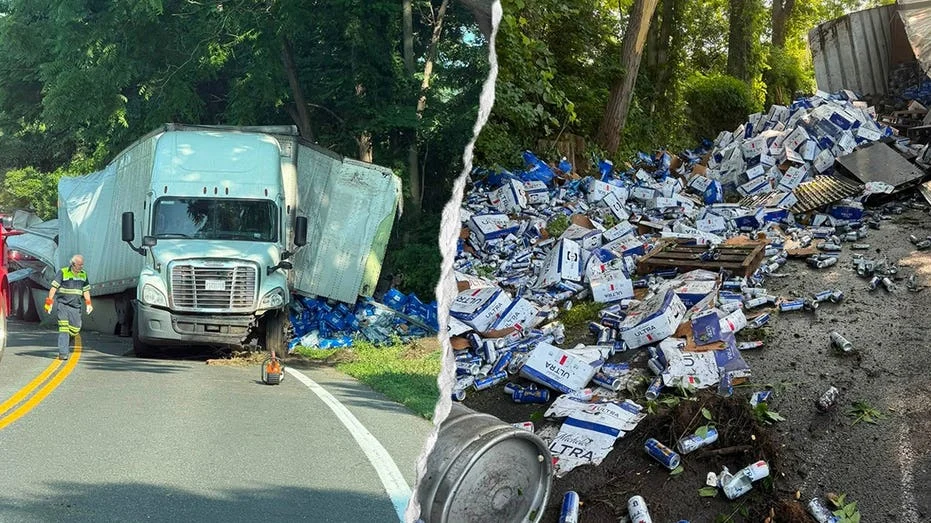
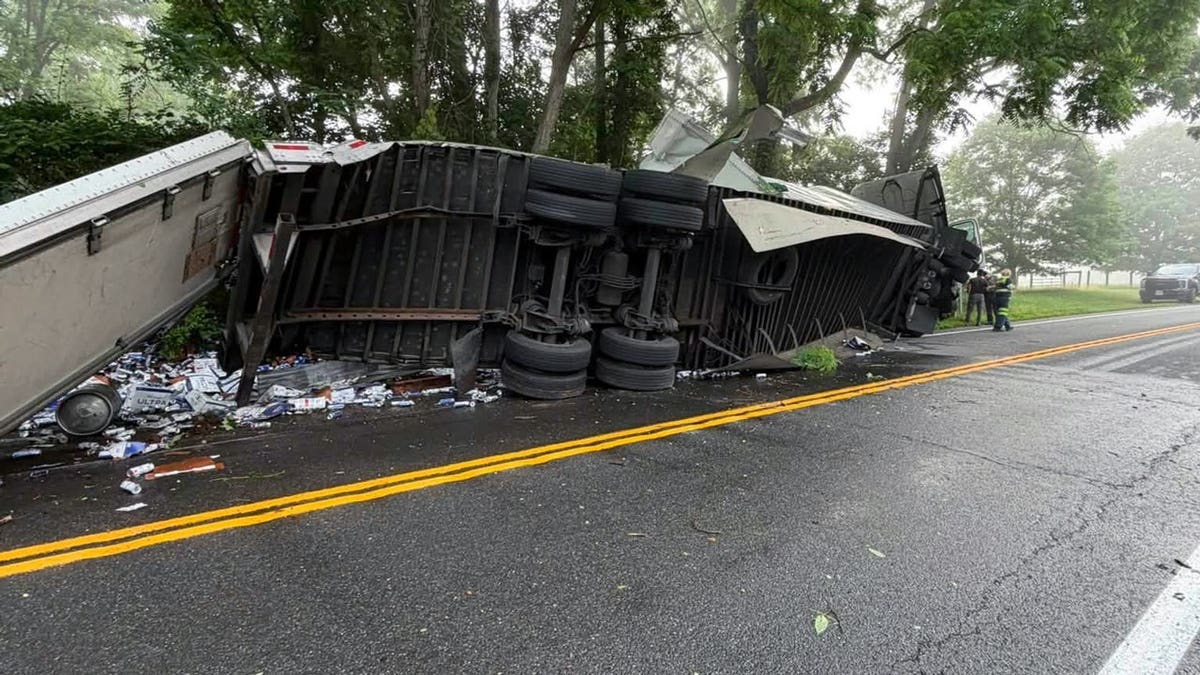
A major commercial transportation accident disrupted travel and mobilized a multi-agency recovery effort in Litchfield County, Connecticut, on Tuesday morning. A tractor-trailer transporting a massive cargo of commercial beer veered off the roadway and overturned, spilling thousands of cans across Route 44 in the town of Salisbury. The incident, which occurred during the early morning hours, resulted in severe damage to the transport vehicle, the complete blockage of a vital northern transportation corridor, and a complex cleanup operation that lasted for several hours.
The vehicle was carrying a mixed shipment of popular beverage brands, primarily Michelob Ultra and Bud Light, packaged in aluminum cans. Upon the vehicle’s rollover, the trailer’s structural integrity was compromised, causing a breach that discharged the cargo across both lanes of the highway and onto the adjacent shoulders.
The emergency response required the coordination of state and municipal resources, including law enforcement, medical personnel, environmental assessors, and specialized infrastructure recovery teams. While the physical debris has since been cleared and the roadway reopened, the incident has highlighted ongoing concerns regarding commercial vehicle safety on rural state highways and the logistical challenges of hazardous and non-hazardous cargo recovery.
Chronological Sequence of Events
[05:39 AM] Crash Occurs: Tractor-trailer veers off Route 44 and rolls over near Twin Lakes Road.
[05:45 AM] Emergency Dispatch: Connecticut State Police and local Salisbury EMS/Fire dispatched.
[06:00 AM] Traffic Control: Route 44 closed in both directions; detours established by CT DOT.
[08:00 AM] Clean-up Expansion: CT Department of Consumer Protection and towing crews arrive.
[12:30 PM] Road Reopened: Debris cleared, truck uprighted/towed, and highway deemed safe.
The Initial Crash
According to official reports from the Connecticut State Police, the sequence of events began at approximately 5:39 a.m. on Tuesday. The tractor-trailer was traveling along Route 44, a primary east-west arterial highway in the northwestern corner of the state. As the vehicle approached the intersection of Twin Lakes Road in Salisbury—a scenic area characterized by winding roads and rolling terrain—the driver lost control of the vehicle.
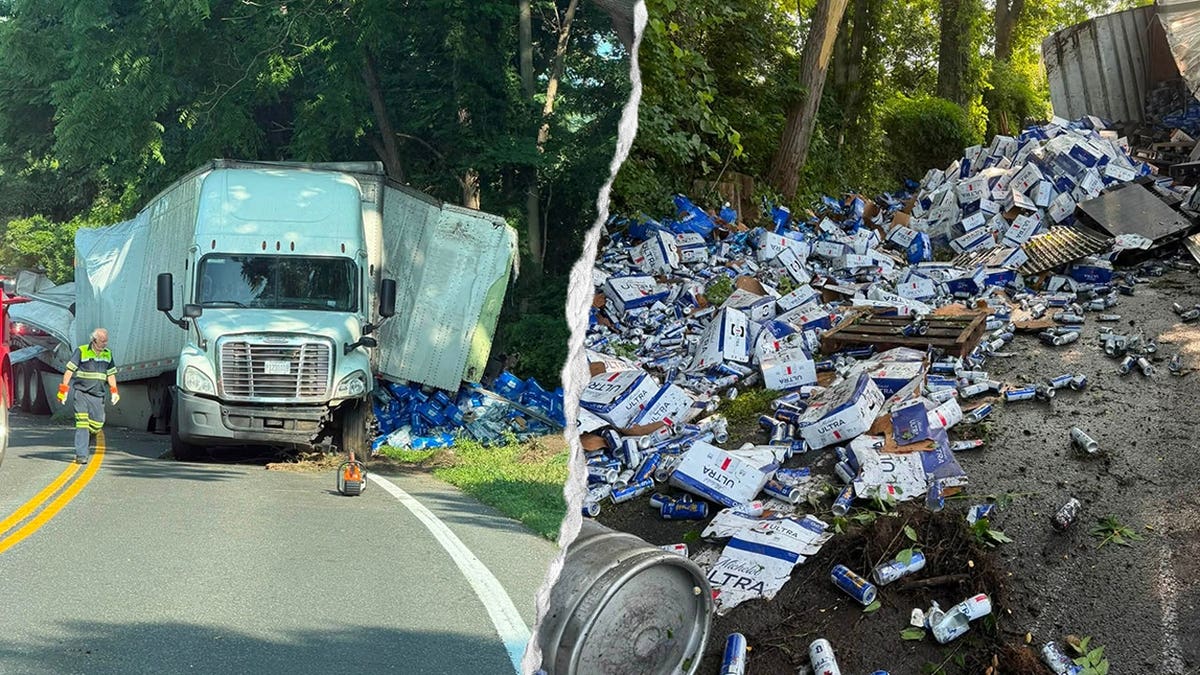
The truck veered off the paved surface of the roadway. The shift in momentum and the soft topography of the roadside shoulder caused the heavy commercial vehicle to lose stability, ultimately resulting in a complete rollover. The truck came to rest on its side, perpendicular to the flow of traffic, effectively blocking both lanes of Route 44.
First Responders Arrive on Scene
Emergency dispatchers immediately routed state troopers from the local barracks, alongside local volunteer firefighters and Emergency Medical Services (EMS) personnel, to the crash site. Upon arrival, responders assessed the driver of the tractor-trailer for injuries and secured the immediate perimeter to prevent secondary collisions.
The pre-dawn darkness and fog common to the Litchfield Hills region during the early morning hours presented initial visibility challenges for the responding crews. First responders quickly established a safety zone, shut down traffic in both directions, and illuminated the scene with emergency floodlights, revealing the massive scale of the cargo spill.
Scale of the Spill Revealed
With the rising sun, the true extent of the structural damage and cargo loss became clear. The force of the rollover had ruptured the roof and side panels of the trailer. Thousands of cases of Bud Light and Michelob Ultra had broken free from their pallets.
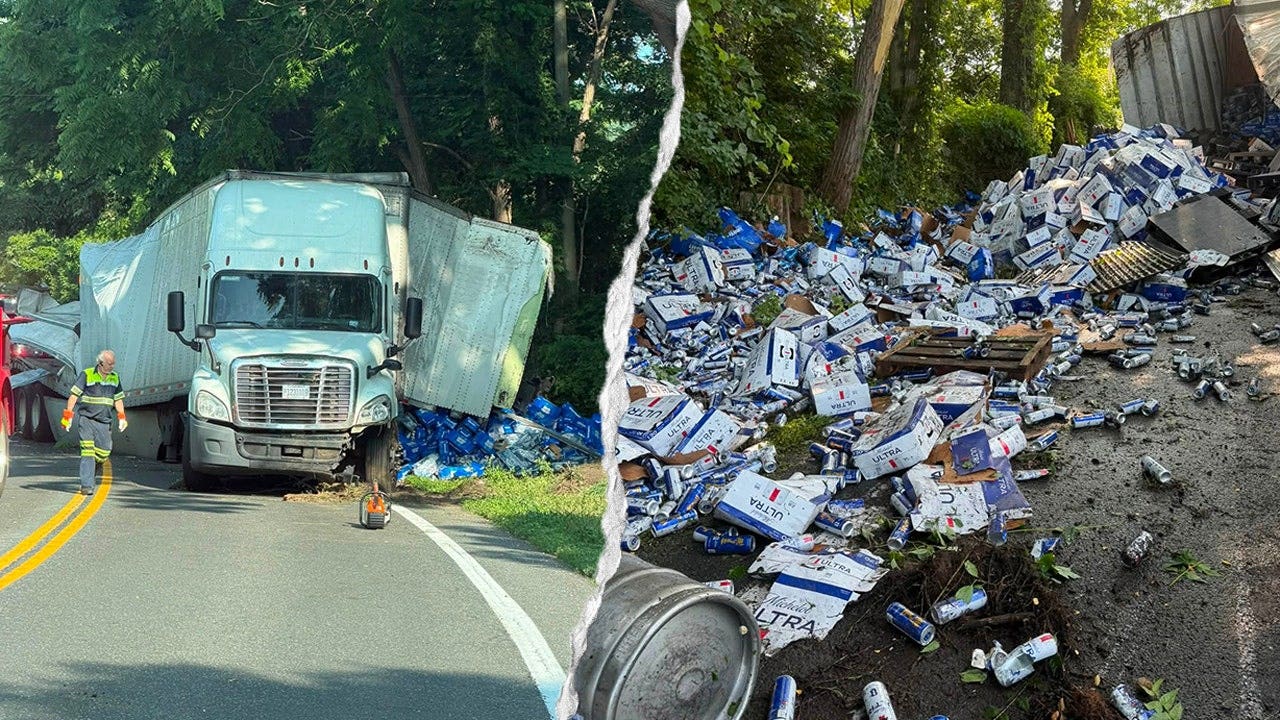
The roadway was blanketed in a dense field of blue, silver, and white aluminum cans, cardboard packaging, and plastic wrapping. Hundreds of gallons of beer had leaked from ruptured cans, mixing with dirt and road debris to create a slick hazard across the asphalt.
Initiating the Cleanup and Road Closure
Recognizing that the cleanup would be an extensive, multi-hour operation, the Connecticut Department of Transportation (CT DOT) was summoned to implement formal detour routes. Heavy-duty towing and recovery vehicles were dispatched to upright the damaged tractor-trailer.
Before the truck could be moved, however, manual labor was required to clear the thousands of loose cans blocking the wheels of the rig and the path of the recovery cranes. Personnel from local volunteer fire departments, towing crews, and state workers utilized shovels, brooms, and heavy machinery to consolidate the debris.
Reopening the Highway
Following several hours of continuous labor, the spilled cargo was cleared from the travel lanes, and the compromised tractor-trailer was successfully uprighted and towed from the scene. Maintenance crews from the CT DOT conducted a final sweep of the highway to ensure no sharp aluminum fragments or liquid hazards remained on the surface.
Once the road was deemed safe for passenger and commercial travel, State Police officially reopened Route 44 to traffic, bringing an end to a major half-day disruption.
Supporting Data and Operational Logistics
| Parameter | Details / Estimates |
|---|---|
| Incident Location | Route 44 near Twin Lakes Road, Salisbury, CT |
| Date & Time | Tuesday, approximately 5:39 a.m. EST |
| Cargo Type | Aluminum cans of Michelob Ultra and Bud Light |
| Estimated Cargo Weight | Up to 40,000–45,000 lbs (standard Class 8 trailer capacity) |
| Agencies Involved | CT State Police, Salisbury Fire/EMS, CT DOT, CT DCP, Private Towing |
| Roadway Status | Closed for approximately 6–7 hours |
Infrastructure and Geography of Route 44
Route 44 is a critical corridor in southern New England, stretching from western New York, through northern Connecticut, and into Rhode Island. The section of Route 44 running through Salisbury and toward the Massachusetts border is highly scenic but presents distinct challenges for commercial transportation.
Unlike interstate highways designed with wide lanes and sweeping curves, this portion of Route 44 is a historic, two-lane road featuring sharp bends, changing elevations, and limited shoulders. These geographic realities leave very little margin for error for operators of Class 8 heavy trucks.
The Physics of Commercial Vehicle Rollovers
According to data from the Federal Motor Carrier Safety Administration (FMCSA), rollovers are among the most dangerous types of commercial vehicle accidents. Several physical factors contribute to these incidents:
- High Center of Gravity: Tractor-trailers carrying heavy, stacked cargo like palletized beer have a elevated center of gravity.
- Centrifugal Force: When negotiating curves or sudden steering corrections, lateral forces can quickly exceed the vehicle’s roll stability threshold.
- Cargo Shifting: If the load is not perfectly secured, a sudden shift of several thousand pounds of liquid cargo can pull a trailer over, even at moderate speeds.
- Shoulder Drop-offs: If a truck’s passenger-side tires slip off the paved asphalt onto a soft dirt shoulder, the uneven terrain often triggers an unrecoverable roll.
Official Statements and Regulatory Agency Involvement
Connecticut State Police
Following the successful clearance of the highway, the Connecticut State Police released a public statement acknowledging the disruption and thanking local commuters for their cooperation:
"We would like to extend our sincere thanks to all motorists for their patience and for seeking alternate routes during the extended closure of Route 44 this morning. Multi-agency coordination was vital in clearing this significant hazard safely and efficiently."
State Police also confirmed that the cause of the crash remains under active investigation. Accident reconstruction teams will analyze electronic logging device (ELD) data from the truck, evaluate road conditions at the time of the crash, and interview the driver to determine whether mechanical failure, driver fatigue, or environmental factors played a role.
Connecticut Department of Consumer Protection (DCP)
The presence of the Department of Consumer Protection (DCP) at a highway accident scene may seem unusual, but it is standard protocol when commercial quantities of alcohol are compromised. The DCP’s Liquor Control Division is responsible for regulating the distribution and sale of alcoholic beverages within the state.
When an accident occurs involving a distributor’s cargo, the DCP must oversee the situation to ensure that:
- Contaminated Product Does Not Enter the Market: Damaged, warm, or potentially contaminated alcohol cannot be salvaged and sold to the public.
- Tax and Customs Compliance: State and federal excise taxes are tied to registered volumes of alcohol. Compromised shipments must be officially documented and destroyed under regulated conditions to adjust tax liabilities.
- Chain of Custody: The disposal of the alcohol must be verified so that no unregulated product is diverted for illicit consumption or sale.
The Department of Energy and Environmental Protection (DEEP) Discrepancy
One notable administrative detail emerged following the incident. Local media outlets reported that the Connecticut Department of Energy and Environmental Protection (DEEP) was not formally notified of the crash at the time of its occurrence.
Typically, any commercial spill involving large volumes of liquid—even non-hazardous consumer goods like beer or milk—triggers a notification to environmental authorities. When thousands of gallons of organic liquids enter the soil or local storm drains, they can have localized environmental impacts.
Organic matter undergoing decomposition in waterways consumes dissolved oxygen, which can stress local aquatic life. In this case, the proximity of the crash to Twin Lakes—a pristine and ecologically sensitive water system—makes the lack of immediate DEEP notification a point of discussion for local environmental advocates.
Broader Implications for Highway Safety and Supply Chains
                       [Tractor-Trailer Rollover]
                                   |
         +-------------------------+-------------------------+
         |                                                   |
[Supply Chain Impacts]                               [Local Environmental Toll]
 - Total loss of cargo value                          - Liquid runoff into soil
 - Delayed regional deliveries                        - Threat to local drainage/streams
 - Insurance premium increases                        - High organic load in waterways
Supply Chain and Economic Toll
While a spill of beer often draws lighthearted commentary on social media, the economic reality of such an accident is significant. A fully loaded dry van or refrigerated trailer carrying premium beverage products represents tens of thousands of dollars in wholesale inventory.
In addition to the total loss of the cargo, the carrier faces substantial financial liabilities:
- Towing and Recovery Fees: Heavy-duty recovery operations involving specialized cranes, flatbeds, and labor can easily cost thousands of dollars per hour.
- Infrastructure Damage: If the guardrails, signage, or road surface were damaged during the crash, the trucking company’s insurance must cover the state’s repair costs.
- Down-time and Lost Productivity: The loss of a commercial tractor and trailer reduces a fleet’s operational capacity, while the driver is sidelined during the post-accident investigation.
Environmental Impact of Large-Scale Beverage Spills
Though beer is non-toxic to humans, large-scale releases of organic fluids into the natural environment present distinct ecological hazards. When beverages containing sugars and alcohols enter local waterways, they undergo rapid biological breakdown by aerobic bacteria.
This process, measured as Biochemical Oxygen Demand (BOD), depletes the dissolved oxygen levels in the water. If the runoff is concentrated enough and enters a small stream or pond, it can lead to localized fish kills and disruptions to the aquatic food chain.
Furthermore, the cleanup of thousands of shattered aluminum cans requires meticulous care. Residual aluminum fragments left in the soil can pose a hazard to local wildlife and agricultural machinery used in nearby fields.
Improving Rural Highway Safety for Commercial Transports
The Route 44 rollover highlights the ongoing debate surrounding commercial truck traffic on rural New England highways. Many of these routes were originally designed for horse-drawn carriages or early passenger vehicles, not modern 53-foot commercial trailers.
Local safety advocates have frequently called for stricter weight limits, enhanced signage warning of sharp curves, and the implementation of mandatory speed-reduction zones for commercial vehicles along sensitive stretches like Salisbury. As regional supply chains continue to rely on these rural arteries to connect major distribution hubs, balancing local safety with commercial necessity remains a complex challenge for state transport officials.