For over a decade, the digital zeitgeist has been dominated by a singular, persistent anxiety: the death of the attention span. We lament our “digitally addled” brains, blame our inability to focus on the relentless pull of the vertical feed, and collectively bemoan the rise of “doomscrolling.” We have been told repeatedly that to read a book, study for an exam, or engage in deep, meaningful thought, one must physically distance themselves from the smartphone.
But what if the problem isn’t the medium, but the message? What if, instead of fighting the habit of the vertical scroll, we simply reframed the content flowing through it?
This is the radical hypothesis driving ScrollEd, a Palo Alto-based startup making waves at this year’s TechCrunch Disrupt Startup Battlefield 200. Their proposition is as simple as it is disruptive: if students refuse to open their textbooks, why not let the textbook open itself to them in the format they already crave?
The Mechanics of Mindful Scrolling
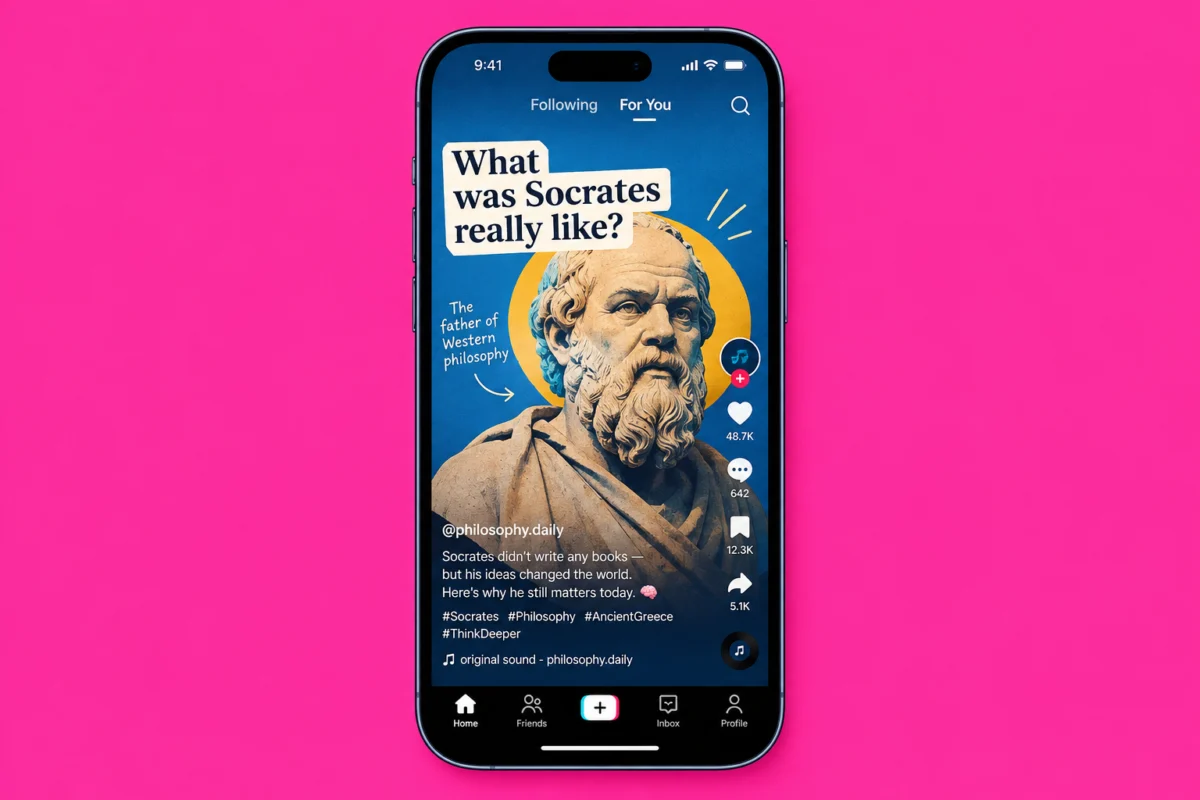
At its core, ScrollEd is an application designed to transform static, dense, and often intimidating educational material—be it dry PDFs, dense academic journals, or standard textbooks—into a dynamic, interactive, and highly engaging feed that mirrors the user interface of TikTok or Instagram Reels.
The user experience is intuitive to anyone born after 1995. As a user swipes up, they are presented with a new topic, rendered through a blend of AI-generated video, immersive audio, concise text, and interactive assessment tools. However, the true innovation lies in the lateral movement. While swiping up advances the feed, swiping sideways allows the user to “peel back the layers” of a subject. It facilitates a deeper dive into specific concepts, concluding with targeted, low-stakes quizzes to reinforce retention.
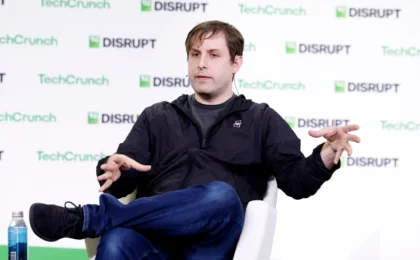
“The younger generation is increasingly going short-form, vertical feed only,” explains Utsav Gupta, co-founder of ScrollEd, who is currently studying AI and human purpose at Stanford. “This poses massive challenges for any kind of media that requires depth. We want to meet them where they are.”
A Chronology of Intent: From Nightly Regret to Educational Tool
The genesis of ScrollEd lies not in a boardroom, but in the quiet dissatisfaction of late-night habit loops. Earlier this year, Utsav Gupta and his co-founder (and spouse) Rebecca Neff—a computer science student at the University of Pennsylvania—found themselves caught in the universal trap of mindless doomscrolling before bed.
The pair realized that the visceral sensation of “wasted time” was not necessarily a result of the act of scrolling itself, but a result of the vapid nature of the content being consumed. They posited that the addictive dopamine loop of the vertical feed could be repurposed for intellectual gain rather than algorithmic distraction.
By bootstrapping the project throughout the year, Gupta and Neff developed the core architecture of the platform. They identified a gap between the pedagogical rigor of traditional education and the engagement mechanics of modern social media. As they refined their product, they recognized that the "social media" format was, in fact, a powerful engine for information delivery, provided the underlying intent was redirected from maximum engagement to maximum comprehension.
Supporting Data: Bridging the Engagement Gap
The challenge facing education today is not a lack of quality information, but a failure of delivery. Traditional digital learning platforms often rely on static interfaces that feel disconnected from the mobile-first lives of modern students.
ScrollEd operates on a “freemium” model, a strategic choice designed to facilitate rapid adoption. The consumer-facing version of the app provides a free feed for individual learners, while the "ScrollEd Pro" subscription and annual institutional licenses provide the revenue engine. For educational institutions and corporate training departments, the value proposition is clear: data-driven insights.
By delivering curriculum through the ScrollEd platform, institutions gain access to granular analytics regarding engagement levels, lesson progress, and knowledge retention. This shifts the role of the educator from a passive lecturer to an informed facilitator who can see, in real-time, where students are struggling and where they are excelling.
The startup is currently building out its “source-checking” workflow, a critical component that aims to mitigate the “hallucination” risks often associated with AI-generated educational content. By grounding the AI’s output in verified, static text files provided by the institution or the user, ScrollEd aims to ensure accuracy while maintaining the fluidity of the feed.
Official Perspectives: The Philosophy of "Good" Algorithms
The most striking aspect of the ScrollEd vision is the founders’ explicit rejection of the "engagement at all costs" model that governs Silicon Valley’s giants.
“We just have to be deliberate about how we use it and choose not to maximize engagement on the platform,” Gupta told TechCrunch. “A short video can make you curious; following that curiosity can mean searching for another explanation or leaving the app. We wanted going deeper to be as easy as moving to the next video.”
This creates a paradox: a tech company building an app designed to facilitate its own abandonment. By encouraging users to seek deeper explanations—even if that means leaving the ScrollEd ecosystem—the company positions itself as a tool for intellectual empowerment rather than a closed-loop attention trap.
This philosophy extends to their institutional partnerships. In the coming months, the startup intends to roll out pilot programs designed to integrate with existing Learning Management Systems (LMS). The ultimate ambition, according to Gupta, is to build infrastructure that allows educators to create personalized learning pathways that adapt to the individual’s pace and comprehension style, essentially turning the entire internet into a bespoke, interactive textbook.
Implications: The Future of Media Consumption
The implications of ScrollEd’s approach are significant for both the EdTech sector and the broader future of media. If successful, ScrollEd could bridge the widening chasm between the “attention economy” and the “knowledge economy.”
1. Re-thinking Digital Literacy
If students can learn to treat the "feed" as a source of structured knowledge rather than a source of fleeting entertainment, it may fundamentally change the way they interact with all digital information. It encourages a more critical, active engagement with content.
2. The Death of the "Dry" PDF
Academic and corporate sectors have long struggled with the transition from physical textbooks to digital formats. Often, this has simply meant digitizing the medium without improving the format. ScrollEd challenges this by arguing that the format of the content is as important as the content itself.
3. Ethical AI in Education
By focusing on a source-checked, closed-loop workflow, ScrollEd is navigating the treacherous waters of AI-in-the-classroom with a level of caution that is rare in the current gold rush. If they succeed in proving that AI can safely summarize and transform complex material without sacrificing pedagogical integrity, it could set a new industry standard for AI-assisted learning.
4. A New Model for Social Media
Perhaps most ambitiously, ScrollEd is positioning itself as a “social network that’s better for you.” While the company currently focuses on education and training, the long-term potential for a “curated, high-value, scrollable feed” is immense. It suggests a future where the addictive nature of social media is leveraged for personal growth, health, or professional development, rather than superficial vanity.
Conclusion: Disrupting the Disruption
As TechCrunch Disrupt 2024 approaches in San Francisco this October, the excitement surrounding ScrollEd is palpable. They are not merely launching an app; they are proposing a new social contract for the digital age. By refusing to vilify the technology that defines our era, and instead choosing to master its mechanics for the sake of human development, Gupta and Neff are attempting something arguably more difficult than building a typical startup: they are attempting to change the way we think about the very act of thinking.
Whether ScrollEd can scale its model across diverse academic disciplines and corporate environments remains to be seen. However, their core premise—that we do not need to abandon the feed to reclaim our focus—is a refreshing, and perhaps necessary, pivot in our collective relationship with technology.
In the final assessment, ScrollEd is not trying to disrupt the textbook; they are trying to disrupt the way we perceive the limits of our own curiosity. If the swipe of a thumb can lead to a quiz, and that quiz can lead to a deeper understanding of a complex subject, then perhaps we have been using the most powerful technology in human history for all the wrong things. For now, the world will be watching to see if this Palo Alto startup can indeed turn the scrolling tide.