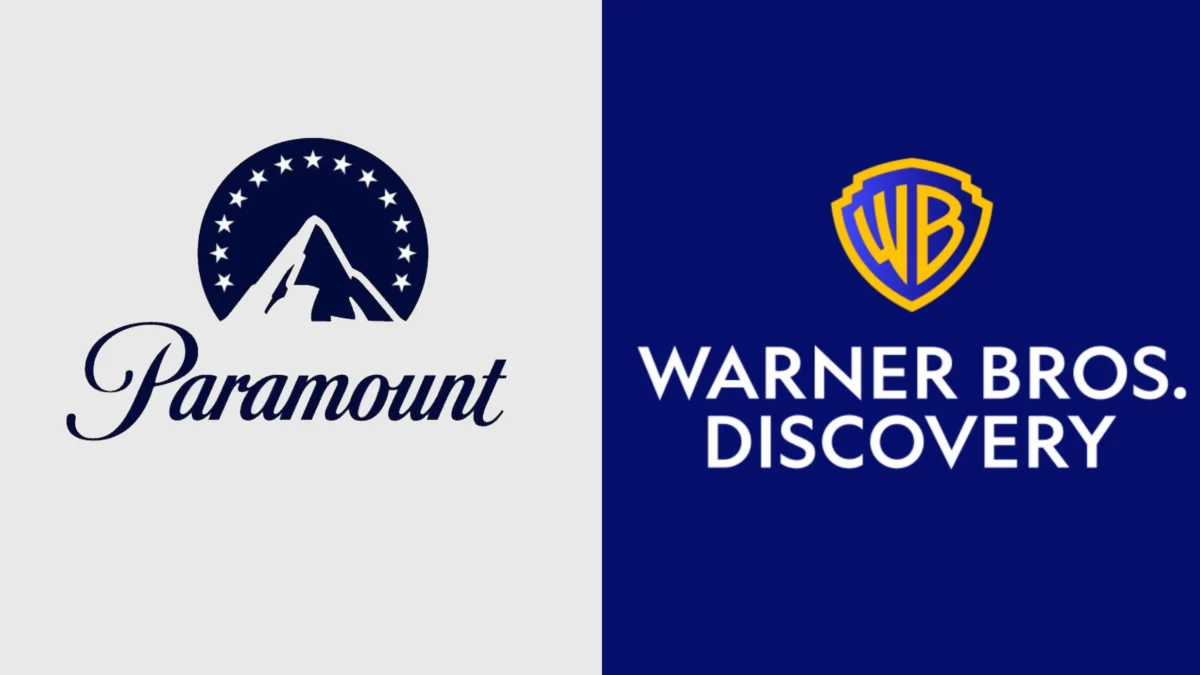
The entertainment industry is currently the stage for a high-stakes legal drama that could fundamentally reshape the future of global media. On Thursday, a federal judge in Oakland, California, delivered a stinging rebuke to a group of private Paramount+ subscribers attempting to halt the monumental $111 billion merger between Paramount and Warner Bros. Discovery. However, while the subscribers’ initial bid for a preliminary injunction has been soundly rejected, the legal battle is far from over. A coalition of 12 state attorneys general is set to escalate the challenge on Friday, signaling that the path to this media mega-merger remains fraught with significant judicial and regulatory peril.
The Courtroom Clash: A Failed Bid for Relief
In a hearing that highlighted the high bar for private antitrust intervention, U.S. District Judge Araceli Martinez-Olguin denied the request for a preliminary injunction filed by the subscriber coalition. The plaintiffs, who initiated their lawsuit in April, argued that the consolidation of two industry giants would inevitably lead to predatory price hikes and a significant contraction of content variety for consumers.
Judge Martinez-Olguin was unconvinced, characterizing the request for an injunction as an “extraordinary” measure that lacked the necessary evidentiary foundation. “Plaintiffs failed to submit a single item of evidence in support of the motion,” the judge stated. Perhaps more damaging to the plaintiffs’ long-term prospects was her explicit questioning of their legal standing to bring antitrust claims in the first place—a hurdle that often serves as a fatal blow to private litigation in high-level merger disputes.
Paramount’s legal team, led by veteran attorney Jeffrey Kessler, seized the moment to highlight what they described as a pattern of litigious overreach. Kessler pointedly noted that the subscribers’ attorney, Joseph Alioto, has spearheaded five similar attempts to block major corporate mergers—frequently utilizing the same group of individual plaintiffs—and has yet to secure a win.
“It’s very clear in this circuit and elsewhere that to get a preliminary injunction, you have to make a clear showing with evidence,” Kessler argued in court. “And when there is no evidence, then you cannot get a preliminary injunction.”
A Chronology of Opposition
The litigation against the Paramount-Warner Bros. Discovery merger is the latest chapter in a broader movement of skepticism regarding media consolidation. The timeline of this resistance demonstrates a multi-pronged strategy involving private citizens, state regulators, and industry unions.
- April 2026: The initial lawsuit is filed by private Paramount+ subscribers, alleging that the merger constitutes a monopolistic threat that will harm consumer pricing and viewing choices.
- Early 2026 (Ongoing): Joseph Alioto establishes a track record of challenging massive corporate consolidations, including the Microsoft-Activision and Kroger-Albertsons mergers, citing a perceived lack of federal oversight.
- Monday, May 2026: A coalition of 12 state attorneys general files a sweeping lawsuit, aiming to pause the $111 billion merger by seeking a temporary restraining order.
- Tuesday, May 2026: The Writers Guild of America (WGA) escalates the pressure by filing a federal antitrust suit, concerned about the impact on creative labor markets.
- Concurrent (Delaware): The Freedom of the Press Foundation and the Public Integrity Project file a shareholder derivative suit in the Delaware Chancery Court, challenging the merger’s governance and fiduciary implications.
- Thursday, May 2026: Judge Martinez-Olguin denies the private plaintiffs’ request for an injunction, taking Paramount’s motion to dismiss under advisement.
- Friday, May 2026: The coalition of 12 attorneys general prepares to present their case for a temporary restraining order before Judge Martinez-Olguin.
The State’s Strategy: A More Formidable Foe
While the private plaintiffs struggled to make their case, the entrance of 12 state attorneys general brings a different level of gravitas to the courtroom. The states contend that the merger will stifle competition in both the theatrical and basic cable markets, effectively creating a bottleneck for content distribution.
Paramount has already filed a robust opposition to the states’ motion, arguing that the government entities have failed to meet the threshold for a restraining order. The company maintains that the states are unlikely to prevail on the merits of their case, suggesting that the claims of harm are speculative rather than grounded in current market reality.
Because the state attorneys general and the private plaintiffs have agreed to consolidate their efforts under Judge Martinez-Olguin’s jurisdiction, the court is now the primary arbiter of this massive antitrust conflict. For the plaintiffs’ attorney, Joseph Alioto, the challenge is clear: he must pivot from the failed private-interest arguments to the more substantial, discovery-heavy approach favored by the states.
“We’re a private group,” Alioto admitted during Thursday’s hearing. “We don’t have the tools of a government.” His hope, it seems, lies in gaining access to the discovery materials currently being shared with the state attorneys general—an attempt to bridge the gap between private interest and public enforcement.
The Broader Antitrust Landscape
The intensity of this litigation reflects a growing trend in American jurisprudence, where the vacuum left by federal agencies—or perceived inactivity by the Department of Justice—is increasingly being filled by state-level attorneys general and private litigants.
Alioto’s history of filing challenges against mergers like T-Mobile-Sprint and United Airlines-Continental underscores a philosophy that he characterizes as necessary in an era of lax federal enforcement. He explicitly referenced the late Senator Harry Reid, noting that many of his clients were encouraged to take action because of a perceived unwillingness by federal regulators to stand up to corporate behemoths.
However, the courts have consistently maintained a high bar for these private challenges. The requirement to prove “antitrust injury”—the idea that the merger specifically harms the plaintiff in a way that violates the spirit of the Sherman Act—remains the greatest obstacle for those seeking to disrupt the deal.
Implications for the Future of Media
The potential merger between Paramount and Warner Bros. Discovery is not merely a financial transaction; it is a structural transformation of the American media landscape. If successful, the combined entity would hold unprecedented leverage over theatrical release windows, cable carriage agreements, and streaming service pricing.
Potential Industry Impacts:
- Consumer Pricing: Critics fear that with fewer competitors, the consolidated entity could hike subscription fees for platforms like Paramount+ and Max without fear of losing subscribers to rival services.
- Content Diversity: There is significant concern among creative guilds, including the WGA, that the merger will lead to cost-cutting measures that prioritize profitable franchises over original or niche storytelling.
- Market Concentration: The states’ case rests on the argument that the merger creates a “monopsony” in the labor market and a monopoly in the distribution market, potentially squeezing independent creators and smaller theater chains.
- Legal Precedent: The outcome of this case will set a critical precedent for future media consolidation. A win for the plaintiffs could embolden further litigation, while a victory for Paramount would likely signal to the industry that the current climate of mega-mergers remains largely favorable for those with the resources to defend them in court.
Conclusion: A Critical Weekend Ahead
As the courtroom in Oakland prepares for Friday’s hearing, the stakes could not be higher. Paramount is betting on its ability to demonstrate that the merger is pro-competitive and that the plaintiffs’ claims are based on theoretical fear rather than concrete harm. Conversely, the coalition of states is aiming to demonstrate that this specific merger represents an existential threat to competition that necessitates an immediate judicial pause.
While the individual subscribers may have lost the first round, their persistence—combined with the formal weight of 12 state governments and the creative concerns of the WGA—ensures that the Paramount-Warner Bros. Discovery merger will be decided not just in the boardroom, but under the harsh light of judicial scrutiny. The question remains whether the court will view this merger as a natural evolution of a digital-first media market, or as an anti-competitive consolidation that demands federal intervention. Friday’s hearing will likely provide the first true indication of which direction the scale of justice is tipping.