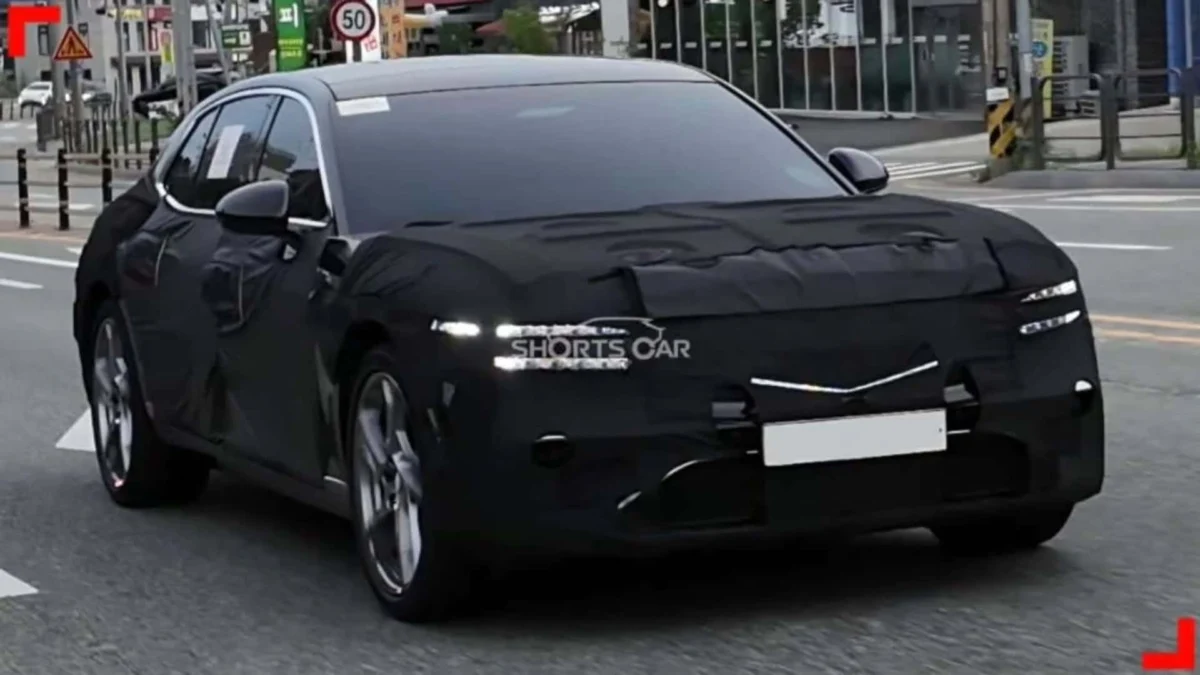
The automotive landscape is defined by constant evolution, and for Genesis, the time has come to sharpen the spearhead of its fleet. As the flagship sedan that signaled the birth of Genesis as a standalone luxury marque, the G90 holds a position of immense prestige. Now, as it nears the midpoint of its current lifecycle, fresh evidence captured in recent spy photography confirms that the South Korean automaker is preparing a significant mid-cycle update to ensure its flagship remains a formidable challenger to the established German and Japanese guard.
The Evolution of Identity: Design Refinements
The core of the Genesis brand identity has always been its "Athletic Elegance" design language, anchored by the iconic Two-Line lighting architecture. Recent images surfacing from the Short_Cars Instagram account provide a tantalizing look at how this aesthetic is being refined for the upcoming G90.
While the fundamental architecture of the vehicle remains familiar, the front fascia is receiving a sophisticated nip-and-tuck. The signature crest grille appears slightly narrower, contributing to a more aggressive, streamlined stance. Most notably, the periphery of this grille seems to incorporate an integrated lighting element, suggesting that the entire perimeter may now glow, creating a striking luminous signature that will make the G90 instantly recognizable in the rearview mirrors of other motorists at night.
Complementing this, the lower bumper has undergone a comprehensive redesign. Gone are the bulkier elements of the current model, replaced by sharper, more contemporary styling cues accented with high-quality chrome trim. These changes, while subtle to the untrained eye, serve to elevate the G90’s road presence, balancing the grandeur expected of a flagship limousine with a newfound sense of technical precision.
A Chronology of the G90 Journey
To understand the significance of this refresh, one must look at the G90’s trajectory. Born out of the necessity to separate Hyundai’s luxury aspirations from its mainstream roots, the original G90 launched in 2017. It was an audacious entry, intended to disrupt a segment that had been stagnant for decades.
- 2017: The inaugural G90 arrives, replacing the Hyundai Equus and establishing the Genesis brand as a legitimate contender.
- 2020: A significant facelift introduces the current design language, including the first iteration of the Two-Line lighting system.
- 2023: The second-generation G90 debuts, pushing boundaries with high-end materials, active air suspension, and a bold, sweeping silhouette.
- 2025 (Projected): The mid-cycle refresh currently captured in testing begins to surface, focusing on cabin technology and refined exterior detailing.
- 2027 (Expected): The refreshed model is slated to reach global markets, cementing its status as the pinnacle of the brand’s internal combustion offerings.
Interior Innovations: The Analog-Digital Paradox
Perhaps the most intriguing aspect of the upcoming update lies within the cabin. While modern luxury vehicles have largely succumbed to the "glass cockpit" trend—where every surface is a high-definition screen—reports from early test mules suggest Genesis might be taking a more measured approach.
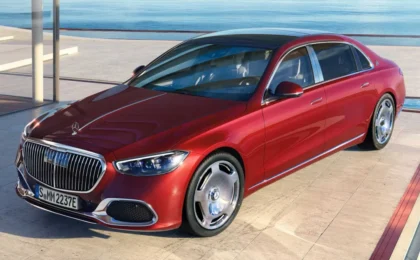
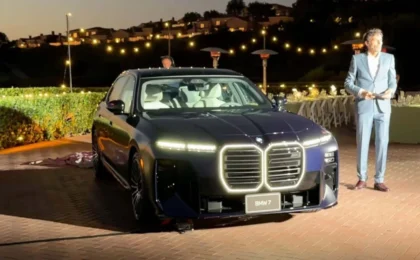
Recent glimpses into the test vehicle have revealed an instrument cluster that appears to favor a more traditional, round-gauge aesthetic. Whether these are high-resolution digital facsimiles or a return to physical mechanical instrumentation remains to be seen. Regardless, this design choice represents a bold departure from the screen-heavy interiors of the Mercedes-Benz S-Class or the BMW 7 Series. By leaning into a more classic, driver-focused layout, Genesis may be targeting the "analog luxury" buyer—someone who appreciates modern technology but desires the tactile, intuitive feedback that only physical gauges and buttons can provide.
We anticipate that the infotainment system will also see a massive overhaul. While the G90 will likely retain the physical controls for core functions—a major advantage for user experience—the central display is expected to grow in size and processing power, incorporating the latest version of the Genesis Connected Services suite.
Technical Specifications: Power and Performance
Under the hood, the G90 is expected to maintain its status as a paragon of smooth, effortless performance. Because this is a mid-cycle refresh rather than a ground-up redesign, the current powertrain options are expected to carry over with minimal changes.
The current lineup, featuring a 3.5-liter twin-turbocharged V6 engine, is highly regarded for its balance of power and refinement.
- Standard 3.5T V6: Producing 375 horsepower, this engine serves as the reliable heart of the G90.
- 3.5T e-Supercharger (Mild-Hybrid): The high-performance variant, outputting 409 horsepower, utilizes a 48-volt mild-hybrid system to ensure instantaneous torque delivery and seamless stop-start operation.
There is significant industry speculation regarding the potential for a Plug-in Hybrid (PHEV) variant. As luxury buyers increasingly demand lower emissions without sacrificing range, a PHEV G90 could bridge the gap between the internal combustion flagships of today and the all-electric GV90 SUVs of tomorrow. Such a move would provide the G90 with a unique selling proposition, allowing it to compete with the hybrid offerings of Lexus while maintaining its distinctively Korean brand of luxury.
Implications for the Luxury Market
The G90 occupies a unique space in the automotive hierarchy. It is not necessarily the highest-volume vehicle for Genesis—the GV70 and GV80 SUVs hold that title—but it is the brand’s "halo." It sets the tone for the quality, design, and technological capability of every car that sits beneath it in the hierarchy.
The implications of this refresh are twofold:
- Brand Credibility: By continuously refining the G90, Genesis proves that it is committed to the long-term viability of the sedan segment, even as the rest of the world shifts toward SUVs. This commitment helps maintain the residual value and prestige of the brand.
- Technological Benchmarking: The G90 serves as the testing ground for new features that will eventually filter down to the G70 and G80 lines. Improvements in cabin noise isolation, material quality, and chassis tuning found in the refreshed G90 will eventually become the baseline for the entire Genesis portfolio.
Furthermore, by resisting the urge to strip away every physical button in favor of a touchscreen, Genesis is making a strategic play to win over customers who feel alienated by the current industry trend toward digital-only interfaces. This could turn the G90 into a "cult classic" of sorts, favored by purists and those who prioritize ergonomic usability over digital flashiness.
Looking Ahead: The Road to 2027
The automotive industry is currently in a state of flux, grappling with the transition to electrification. Yet, for a flagship like the G90, the challenge is to provide a sense of timelessness. By integrating modern lighting technology with a driver-focused, potentially analog-inspired interior, Genesis is attempting to create a vehicle that feels both contemporary and permanent.
The official unveiling is expected to take place later this year, with the North American market likely to see the model arrive in showrooms by the end of 2027. Until then, the G90 continues to stand as a testament to the fact that, even in a world dominated by SUVs and electric transitions, there is still a place for the refined, comfortable, and undeniably powerful luxury sedan.
For enthusiasts and potential buyers alike, the message is clear: Genesis isn’t just maintaining its flagship; it is honing it. The brand is listening to its critics and its customers, refining the details that matter, and ensuring that when the new G90 finally hits the streets, it will do so with the confidence of an automaker that knows exactly who it is and exactly where it is going.
As we await the official specifications and further glimpses, one thing remains certain: the G90 will continue to be the yardstick against which all other Korean luxury vehicles are measured. Whether through its illuminated grille or its carefully considered cabin, the G90 remains a vital, compelling, and essential part of the modern luxury landscape.