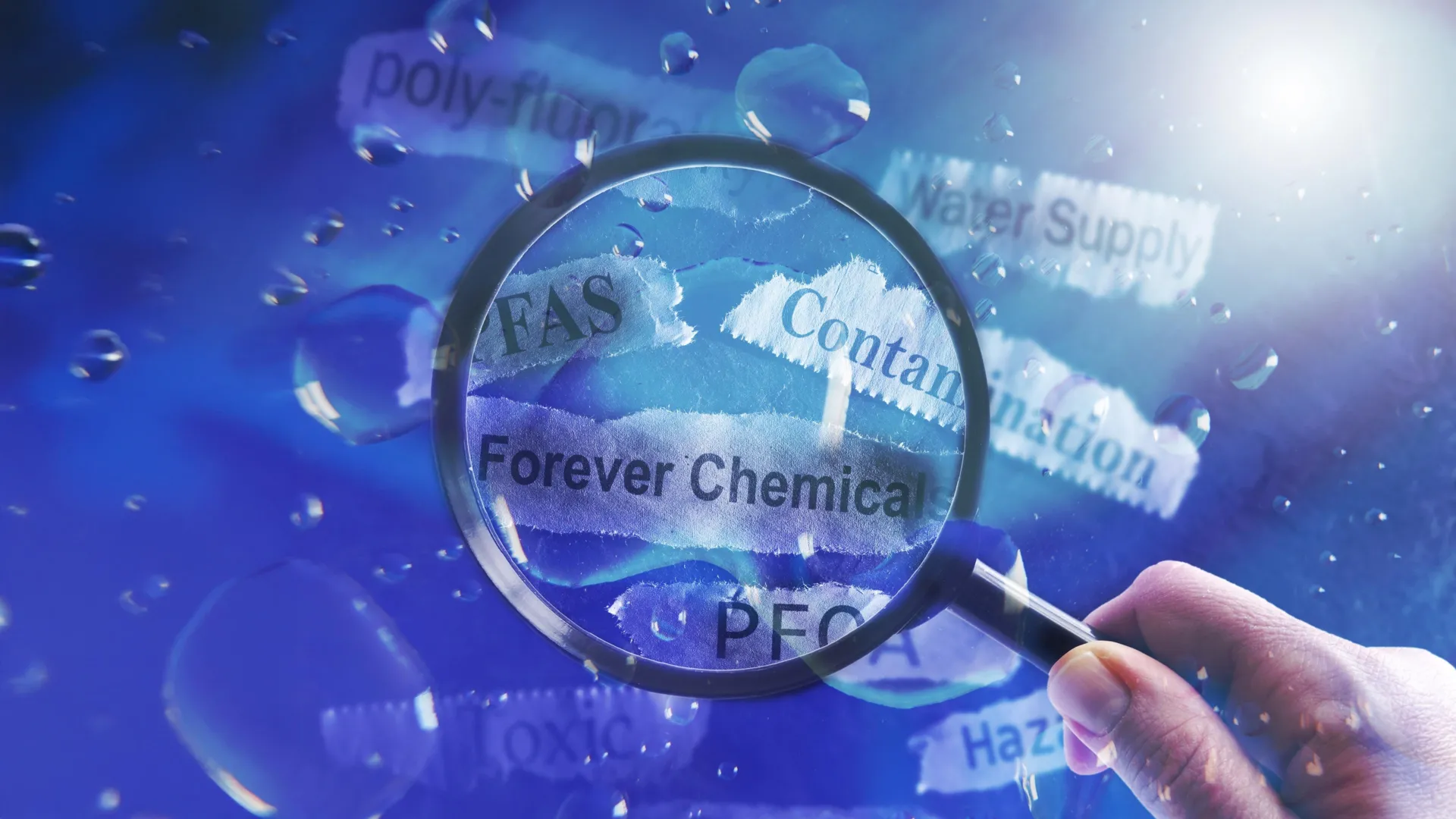
For decades, per- and polyfluoroalkyl substances (PFAS)—collectively dubbed "forever chemicals"—have represented one of the most daunting challenges in modern environmental science. Renowned for their extraordinary stability, these synthetic compounds have permeated global water supplies, entered fragile ecosystems, and accumulated within the human body. Their resilience is a result of one of the strongest bonds in organic chemistry: the carbon-fluorine bond.
However, a groundbreaking study led by researchers at Aarhus University has unveiled a pivotal mechanism that could turn the tide. By identifying hydrogen radicals as the primary agents capable of dismantling these robust molecules, scientists have moved from mere filtration to a viable path toward total molecular destruction.
The Chemistry of Persistence: Why PFAS Are So Stubborn
To understand the significance of this discovery, one must first grasp why PFAS have been so difficult to eradicate. PFAS are a group of thousands of synthetic chemicals used in everything from non-stick cookware and waterproof clothing to firefighting foams and food packaging. Their popularity in manufacturing stems from their ability to resist heat, oil, grease, and water.
This resistance is dictated by their molecular architecture. The carbon-fluorine bond is exceptionally short and strong, making the chemicals virtually immune to natural degradation processes—such as sunlight, microbial action, or heat—that break down other pollutants. Once released into the environment, they persist for decades, earning the moniker "forever chemicals." Their longevity has been linked to a variety of public health concerns, including hormonal imbalances, immune system suppression, and increased cancer risks.
A Chronology of the PFAS Crisis and Remediation
The realization that PFAS pose a systemic threat is relatively recent in the context of industrial history.
- 1940s–1950s: The mass production of PFAS begins, fueled by rapid industrial growth and the demand for high-performance, stain-resistant materials.
- 2000s: Emerging evidence links long-chain PFAS, such as PFOA and PFOS, to adverse health outcomes. Regulatory bodies begin to implement voluntary phase-outs of the most dangerous compounds.
- 2010s: As legacy PFAS are phased out, industry shifts toward "short-chain" alternatives, which prove to be similarly persistent and equally difficult to remove from water sources.
- 2020–2023: Global environmental agencies, including the EPA in the United States and the European Environment Agency, begin proposing stricter limits on PFAS in drinking water, forcing a surge in investment for remediation technologies.
- 2024: The Aarhus University study is published, marking a paradigm shift by identifying the specific chemical pathways required to degrade these compounds without the use of chemical additives.
The Breakthrough: Hydrogen Radicals as the Key
For years, the scientific community focused its efforts on various reactive species—such as hydroxyl radicals or sulfate radicals—to break down PFAS. While these methods showed promise in laboratory settings, they were often inefficient, required expensive reagents, or produced toxic byproducts.
The research team, led by Associate Professor Zongsu Wei, discovered that hydrogen radicals are the true engine behind PFAS destruction. When water is exposed to intense ultraviolet (UV) light at wavelengths below 300 nanometers, it generates hydrogen radicals. These highly reactive particles are capable of systematically stripping away the fluorine atoms from the carbon backbone of the PFAS molecule.
Challenging Old Assumptions
The discovery upends the prevailing wisdom in environmental chemistry. Previous models largely disregarded hydrogen radicals, assuming that other reactive particles were the primary drivers. By isolating the role of hydrogen radicals, the team has provided a clear, actionable target for engineers. "By identifying hydrogen radicals as a dominant driver, we now have a clearer direction for how to design more efficient and sustainable technologies," Wei explains.
This pivot from "trial and error" to a targeted, mechanistic approach is essential for scaling up destruction technologies.
Moving Beyond Removal: The Destruction Mandate
A critical distinction in this field is the difference between removal and destruction. Current municipal water treatment systems often rely on technologies like Granular Activated Carbon (GAC) or Ion Exchange resins. While these systems are highly effective at pulling PFAS out of a water supply, they do not destroy the chemicals.
"Today, many technologies can filter PFAS out of water, but they don’t eliminate them," says Associate Professor Wei. "They often transfer the chemicals from one location to another—typically to landfills or hazardous waste incinerators."
This "transfer" model is inherently unsustainable. If the chemicals are not destroyed, they eventually leach back into the environment. The goal of the Aarhus research is to achieve a closed-loop system where PFAS are fully mineralized—broken down into harmless components like carbon dioxide and fluoride ions.
Implications for Future Technology
The implications of this study are profound, though the researchers are careful to temper expectations. This is not an "overnight" fix. The degradation process remains relatively slow, and the study highlights the formation of "intermediate compounds"—smaller fragments that appear during the breakdown process. Scientists must now ensure these intermediates are fully neutralized to prevent the creation of secondary pollutants.
However, the path forward is clearer than ever:
- Optimized UV Reactors: Engineers can now design water treatment reactors specifically tuned to the wavelengths (below 300 nm) that maximize hydrogen radical production.
- Scalability: Because this method does not require the injection of additional chemicals, it presents a more "green" and potentially cost-effective route for large-scale water treatment facilities.
- Policy Shifts: As regulatory pressure mounts, utilities will be forced to move toward technologies that offer total destruction. This study provides the necessary scientific justification for government and private sector investment in UV-based mineralization.
Official Responses and Industry Outlook
The environmental science community has welcomed the findings with cautious optimism. Dr. Helena Arvidsson, an independent environmental chemist not involved in the study, noted, "The beauty of this discovery lies in its simplicity. By leveraging the chemistry of water itself through UV light, we reduce the complexity of the treatment chain. It is a fundamental advance in our understanding of how to dismantle one of the most stable bond structures in existence."
Government agencies, including the EPA and the European Chemicals Agency (ECHA), have signaled an interest in research that focuses on destruction technologies. As PFAS regulations tighten, the demand for non-chemical-intensive, scalable solutions will likely skyrocket.
Conclusion: A Turning Point for Environmental Stewardship
The fight against "forever chemicals" has long felt like a losing battle, characterized by a constant game of catch-up with emerging contaminants. The discovery by Associate Professor Zongsu Wei and his team offers a glimpse of a future where these substances are not merely managed, but eradicated.
While further refinement is required to increase reaction speeds and manage intermediate byproducts, the fundamental science is now in place. By understanding that even the strongest carbon-fluorine bonds are vulnerable to the right reactive environment, humanity has gained a significant weapon in its arsenal. It is a reminder that even the most persistent pollutants are not invincible when subjected to the precision of modern chemical research.
As we look toward the next decade, the transition from filtration to destruction will be the defining metric of success in water quality management. Thanks to this breakthrough, the dream of a world free from the shadow of forever chemicals is one step closer to reality.