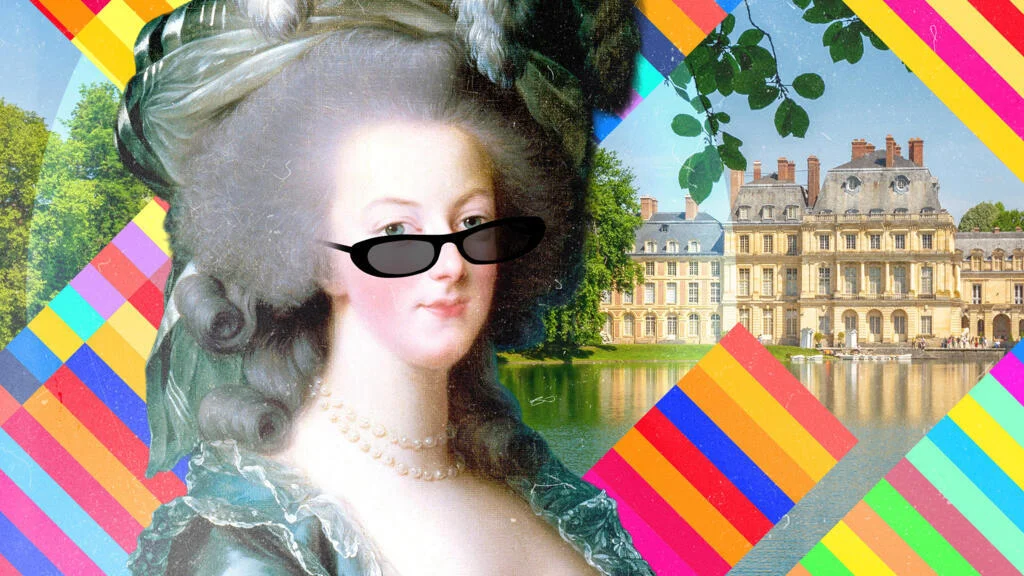
Two hundred and thirty-three years after her execution, the last Queen of France before the Revolution remains a potent, polarizing, and deeply magnetic figure. At the Château de Fontainebleau, a royal residence that once served as a sanctuary for the French monarchy for nearly eight centuries, an extraordinary phenomenon is currently unfolding: thousands of letters addressed to "Her Majesty" are arriving from every corner of the globe.
The campaign, titled "To your pens! Write to Marie Antoinette," was launched by the Château de Fontainebleau to mark a year dedicated to the royal couple, Marie Antoinette and Louis XVI. What began as a local initiative to spark interest in the history of the 18th century has morphed into a global outpouring of emotion, curiosity, and historical re-evaluation. To date, the palace has received over 4,000 letters—a figure that has taken even the organizers by surprise.
The Weight of "Your Majesty": A Bridge Across Time
Most of the missives arriving at the palace gates begin with the same formal honorific: "Your Majesty." It is a testament to the enduring power of the royal mystique that modern writers—ranging from schoolchildren to retirees—feel compelled to adopt the language of the Ancien Régime.
"Those who write to her play along wholeheartedly," says Sylvain Moulène, director of development and communications at the royal palace, located 60 kilometers southeast of Paris. "They address her in a very formal and respectful manner. It has been a wonderful success that has taken us by surprise. We didn’t expect so many letters, especially from all over the world."
The letters are not merely fan mail; they are complex psychological documents. They reveal a public that treats the long-dead queen as a confidante, a fashion icon, a tragic martyr, or a cautionary tale. By inviting the public to write to the queen, the curators at Fontainebleau have essentially created an interactive, living archive that bridges the gap between the 18th-century court and the digital age.

A Chronology of the Royal Retreat
To understand why this correspondence is centered at Fontainebleau, one must look at the historical significance of the site to the royal couple. Unlike the stifling, hyper-regulated environment of Versailles, Fontainebleau served as a true country retreat.
- 1770: Marie Antoinette first arrives at the French court, and the couple begins their intermittent visits to the forest-surrounded château.
- 1770–1786: During this sixteen-year window, the royal couple stayed at the palace on 11 separate occasions.
- 1786: The year of their final visit to the estate, marking the end of an era of relative peace and the beginning of the political instability that would lead to the Revolution.
- 1793: On October 16, Marie Antoinette is executed by guillotine, following her husband, Louis XVI, to the scaffold.
- Present Day: The Château de Fontainebleau marks the 240th anniversary of the couple’s final visit with a series of exhibits, concerts, and the "To your pens!" initiative.
"It was a country retreat the queen particularly loved," Moulène explains. "At the end of the 18th century, there was a real return to nature. The Château de Fontainebleau, close to the forest, allowed the queen to enjoy this. Court life there was also less formal than at Versailles."
Expert Perspectives: The Historian’s Insight
The mastermind behind this "dialogue across time" is Cécile Berly, a noted historian specializing in the 18th century. When asked by the palace to breathe new life into the history of the era, she immediately identified the letter as the perfect medium.
"I immediately thought that we needed to use the medium of the letter to encourage genuine engagement," Berly says. "It helps create a connection and a sense of closeness with the queen."
Berly has spent the last several months conducting writing workshops in middle and high schools, and her findings provide a fascinating glimpse into how Gen Z perceives history. Students, she notes, do not view the queen as a dusty relic. Instead, they view her as an "influencer."

"I could see from the students’ letters that they view her as an influencer. They are extremely struck by her modernity," Berly observes. "They see her as a fashion icon who, had she lived in our time, would have played a key role on social media. It’s quite surprising, but they also often judge her and point out that she didn’t always behave very well."
Supporting Data: A Global Fascination
The demographics of the letters are telling. While the project is French-led, the volume of international mail—particularly from the United States and Canada—suggests that the "Marie Antoinette brand" is a global phenomenon.
- Volume: Over 4,000 letters received and counting.
- Method: Participants write from home or from a specially recreated "boudoir" located outside the castle shop.
- Diversity: Letters arrive from across the globe, indicating that the queen’s cultural impact transcends national borders.
- Curation: The most poignant, insightful, and beautiful letters are being selected for a forthcoming anthology, scheduled for publication in the fall to coincide with the exhibition Marie-Antoinette and Louis XVI at Fontainebleau: Splendor and the Sweetness of Life.
This global idolization, according to Berly, often strips away the political complexity of the 18th century in favor of a personal, almost parasocial relationship. "Many foreigners have a kind of idolization of her," she says. "For them, she acts as a confidante, a best friend, and a role model. There is no longer any political depth, but rather a fascination with a historical figure who embodies an elegance and a destiny that is dizzying."
Official Responses and Cultural Implications
The "To your pens!" campaign is not merely a gimmick; it is an academic endeavor to deconstruct the image of the queen. The project has sparked a broader debate about the nature of historical memory and how we, as a society, curate our past.
Moulène notes that the queen’s image has been constantly repurposed for centuries. During the 19th-century Restoration, royalists painted her as a martyred saint. Conversely, the Third Republic used her image to symbolize the "wicked queen," a figure of excess used to justify the legitimacy of the new democratic regime.

The 20th and 21st centuries, however, have brought a different kind of appropriation. Through nearly 70 films, including Sofia Coppola’s 2006 stylized production, the queen has been transformed into a pop-culture archetype. "This film, with all its anachronisms, made her seem modern and contributed greatly to the globalization of her image," Moulène says.
Is She a Feminist Icon?
A recurring theme in the modern letters is the attempt to frame Marie Antoinette as a pioneer of feminism. Berly, however, is quick to temper this narrative. "Even though she fought for her own freedom, the issue of women’s rights and their place in society was not a concern of hers," she clarifies. "That said, she certainly belongs in the history of women’s emancipation."
Berly prefers to compare her to a blend of two modern archetypes: the rebellious "right-wing anarchist" spirit of Brigitte Bardot—someone who does what she wants regardless of social norms—and the carefully curated image of Catherine, Princess of Wales, who balances personal life with the crushing weight of public duty and royal expectation.
Looking Ahead: The Legacy of the Correspondence
As the deadline for the letter-writing campaign approaches on July 4—the date of a grand picnic and a Queen’s Ball in the English garden—the project moves toward its final phase. The anthology will not be a scholarly tome, but rather a reflection of how the contemporary world processes the life of a woman who was born an archduchess in Vienna, lived amidst the opulence of Versailles, and met her end in a political firestorm at age 37.
For Cécile Berly, the project is a tool for understanding the 18th century, a period often reduced to caricatures. By reading the letters, she hopes to move beyond the tropes of the "frivolous queen" and show a woman who was, in her own words, "entangled in her circumstances and her extremely turbulent life."

"Like Marilyn Monroe or Frida Kahlo, she wasn’t just about her stunning dresses," Berly concludes. "They say a lot about her, but they don’t tell the whole story."
Ultimately, the letters to Marie Antoinette serve as a mirror. Whether the writers are judging her behavior, admiring her fashion, or lamenting her tragic end, they are revealing more about the modern human condition than they are about the 18th century. In writing to the queen, the public is searching for a connection to a past that remains, in our collective imagination, as vibrant and controversial as ever.