The Main Facts: A Semiquincentennial Defined by Duality
On July 4, 2026, the United States marked its 250th anniversary—a historic semiquincentennial milestone. The occasion, intended to be a unifying celebration of democratic resilience, instead became a vivid tableau of the country’s profound internal fractures. President Donald Trump addressed tens of thousands on the National Mall, framing the American republic as the “crowning achievement of human history.” Yet, the festivities were punctuated by extreme weather, political protests, and a fiery rhetoric from the President that cast domestic political opponents as a “communist” threat.
While the day was meant to celebrate the signing of the Declaration of Independence in 1776, the atmosphere in Washington and across the country was defined by a volatile mix of fervent patriotism and deep-seated societal division. From record-breaking heatwaves to the presence of extremist groups, the 250th birthday of the United States proved to be as much a moment of national introspection as one of celebration.
Chronology: A Day of Storms and Standoffs
The day began under the shadow of meteorological and political volatility.
Morning and Afternoon: As crowds gathered on the National Mall, the National Weather Service issued extreme heat warnings for much of the eastern United States. Washington D.C. hit a staggering 103°F (39.4°C), an all-time high for the date. By mid-afternoon, the National Park Service was forced to order the temporary evacuation of the Mall due to severe, fast-approaching thunderstorms. The scene turned chaotic as some attendees refused to leave, while others surged toward the exits. AFP reporters noted shouts of “Charge!” and “Trump! Trump!” echoing through the crowd as the weather threatened to derail the day’s centerpiece.
The President’s Resolve: Despite the evacuation orders, President Trump remained steadfast. Drawing a parallel to the sacrifices of D-Day veterans, he told Fox News that if those who fought for freedom could withstand the elements, so could his supporters.
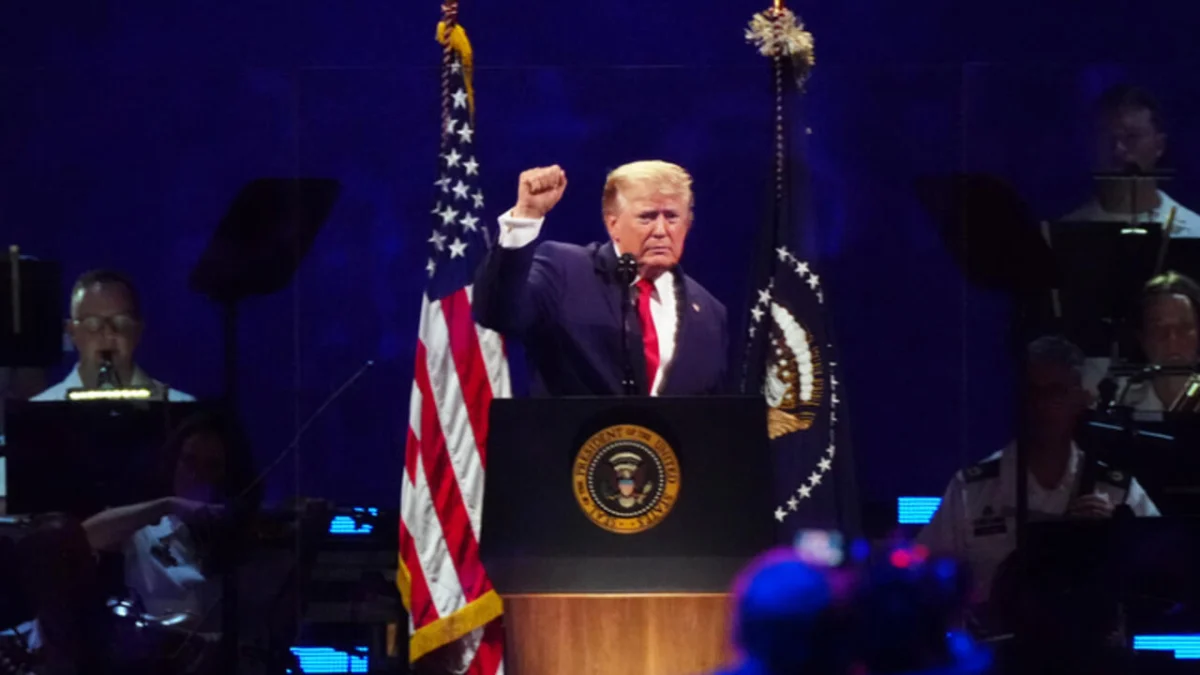
Evening: Following the dissipation of the storms, the President took the stage for a 45-minute address. Though many expected a rally-style event, Trump largely adhered to a patriotic script, honoring veterans of World War II, the Korean War, and the Vietnam War. However, the tone shifted when he pivoted to contemporary politics, using the veterans’ service as a platform to condemn modern-day left-wing movements.
Nightfall: The celebration concluded with what the White House touted as the world’s largest fireworks display, illuminating the sky over the nation’s capital even as cities like New York, Philadelphia, and Boston struggled with their own weather-related adjustments to their celebratory schedules.
Supporting Data: Statistics of a Divided Republic
The 250th anniversary was not merely an event of pomp and circumstance; it was a data point in a longer timeline of American political evolution.
- The Heat Factor: 160 million Americans were under extreme weather warnings on July 4, 2026, marking one of the most intense heatwaves in recent memory.
- Public Sentiment: A Quinnipiac University Poll released around the holiday revealed a stark reality: 61 percent of Americans believe the United States is currently failing to live up to the foundational ideals established in the Declaration of Independence.
- Political Polarization: The President’s rhetoric targeted the “anti-establishment left,” a group that has gained significant traction following a string of recent primary victories for the Democratic Party. This ideological warfare is a primary driver of the current legislative gridlock in Washington.
- Global Context: The event highlighted the 250-year legacy of the Revolutionary War, specifically the role of French intervention. However, current administration policy—including military actions in Iran and Venezuela—has added a layer of modern geopolitical tension to the historical narrative.
Official Responses and Rhetoric
President Trump’s address was characterized by an “us versus them” narrative that has defined his second term. Speaking to the crowd, he stated: “Our warriors did not fight communism on battlefields across the world, only to have that menace rear its ugly head right back here in America. We’re not going to let it happen.”

Referring to his political opponents, he labeled them a “cancer” that must be “cut out.” This framing mirrors his rhetoric from a speech at Mount Rushmore just 24 hours prior.
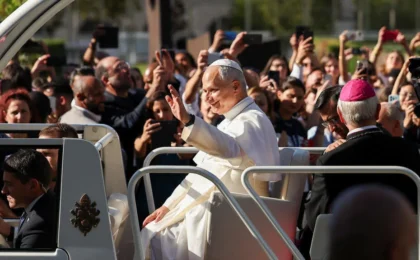
Conversely, international and religious leaders offered calls for temperance. Pope Francis, in a message timed for the anniversary, urged “moderation” in the American public discourse, signaling concern from the global community regarding the tenor of the U.S. political climate.
Supporters, however, found comfort in the President’s traditional framing. Richard Sullivan, a 70-year-old attendee, expressed the sentiment of many in the crowd: “He went through our great history and had a word for the veterans… He makes us proud to be American.”
Implications: A Nation Searching for Identity
The 250th anniversary has left observers questioning the trajectory of the American experiment.
The Rise of Extremism
The presence of fringe groups near Capitol Hill—including masked individuals carrying Confederate flags and logos of the “Patriot Front”—served as a grim reminder of the radicalization occurring on the fringes of the political spectrum. Their chant, “Reclaim America,” underscored a desire by these groups to impose a narrow, exclusionary vision of the nation that contrasts sharply with the inclusive democratic ideals of the Founding Fathers.
The Institutional Strain
The tension between the White House and the anti-establishment left, coupled with a populace that is increasingly cynical about the government’s ability to meet its own standards, suggests a systemic strain. As the midterm elections approach in November, the “cancer” metaphor used by the President is likely to define the campaign season.
The Future of the "American Dream"
The 250th anniversary was intended to be a victory lap for the world’s oldest continuous democracy. Instead, it highlighted that the "American Dream" is currently being contested by two radically different visions of what the country should be. One vision, championed by the current administration, looks back toward a traditionalist, militant, and nationalist identity. The other, currently represented by the insurgent left, seeks a fundamental transformation of economic and social power structures.
As the fireworks faded over the Potomac, the United States entered its 251st year with more questions than answers. The resilience of the American people, tested by 103-degree heat and ideological fire, remains a constant. Whether that resilience can be channeled into a cohesive national identity, or whether the current divisions will further deepen, remains the defining challenge for the years ahead.
The semiquincentennial was not the end of the story, but rather a sharp reminder that the work of "forming a more perfect union" is far from complete. As the Quinnipiac polling suggests, the American people are acutely aware of the gap between their history and their reality, a realization that will likely dictate the outcome of the impending midterm elections and the future of the republic itself.