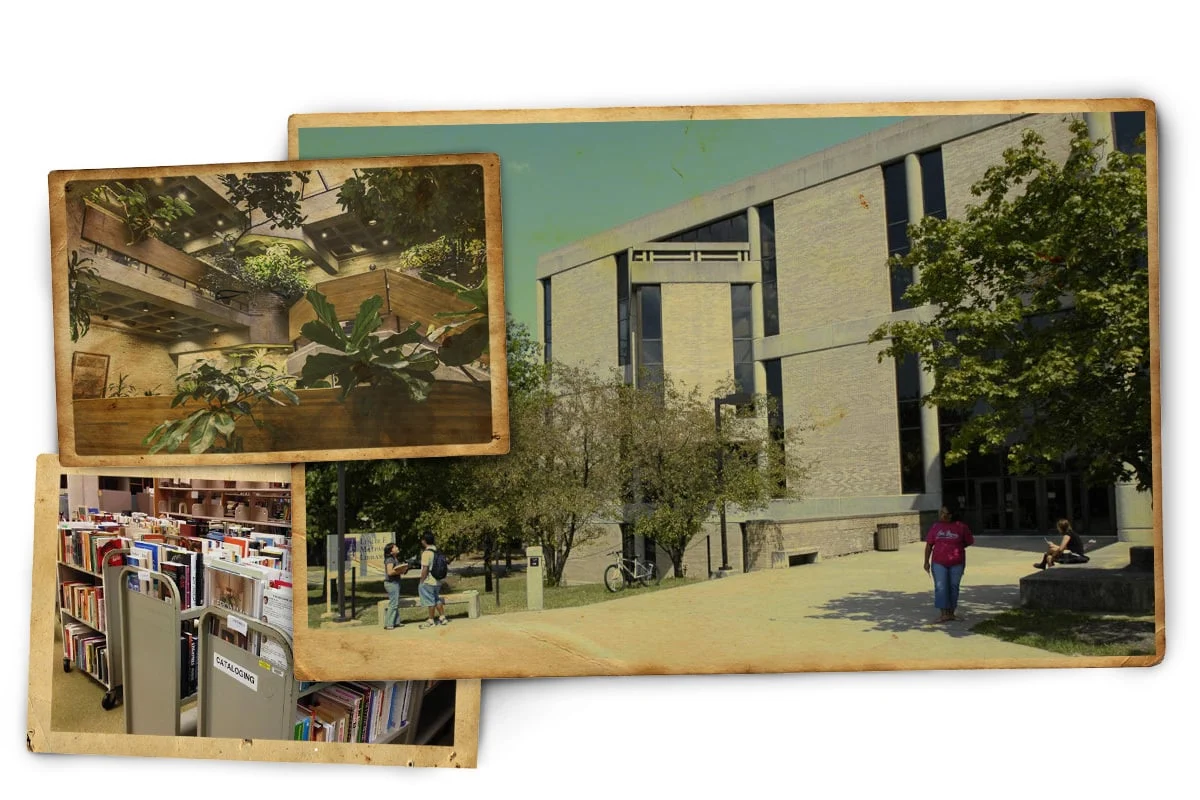
In a landmark decision that resonates across the landscape of American higher education, an independent arbitrator has ruled that Western Illinois University (WIU) violated its collective bargaining agreement when it moved to terminate the contracts of 11 employees, including its entire contingent of nine academic librarians. The ruling, delivered this week, mandates that the university must reinstate the affected faculty members and provide full back pay, effectively reversing a controversial cost-cutting measure that had sparked significant outrage among students, faculty, and academic labor organizations.
The decision serves as a stern rebuke to administrative efforts to address fiscal deficits by dismantling core academic infrastructure. For the Western Illinois University Professionals Organization (WIUPO), the union representing the faculty, the ruling is a vindication of the sanctity of contractual agreements and a clear signal that faculty status cannot be treated as an expendable line item in an institutional budget.
Chronology of a Crisis: From Deficit to Dispute
The crisis at Western Illinois University began in the shadow of deepening financial instability. Facing declining enrollment, budgetary shortfalls, and a challenging economic environment for public institutions in Illinois, the WIU administration identified the library faculty as a target for structural reorganization.
- August 2024: Western Illinois University formally announced the decision to eliminate 11 positions, including the entirety of its professional library faculty. The move was framed by administrators as a necessary step to mitigate the university’s mounting financial pressures.
- Late 2024: Following the announcement, the WIU Professionals Organization filed a series of grievances, arguing that the layoffs were not only educationally short-sighted but a direct breach of the existing collective bargaining agreement (CBA). The union contended that the university bypassed established procedures for layoffs and failed to demonstrate the existence of a "financial exigency" severe enough to warrant such drastic action.
- 2025: Despite the ongoing legal and contractual challenges, the layoffs officially took effect, leaving the university’s library services in a state of operational flux and triggering a campus-wide outcry.
- June 2026: The independent arbitrator, having reviewed the evidence presented by both the university administration and the faculty union, issued a binding ruling. The arbitrator concluded that the university’s actions were inconsistent with the terms of the CBA, ordering the immediate reinstatement of the librarians and the other affected employees.
Supporting Data: The Value of Academic Librarianship
The decision to lay off all nine academic librarians was met with intense skepticism by the broader academic community. Critics of the university’s decision pointed to the multifaceted role librarians play in modern higher education, extending far beyond the traditional image of book preservation.
Academic librarians serve as the primary conduits for information literacy, research assistance, and data management. At a regional institution like WIU, these faculty members provide critical support for students who may be first-generation or from underrepresented backgrounds, helping them navigate complex digital archives and peer-reviewed databases.
According to data from the American Library Association (ALA), the loss of professional library faculty correlates with a measurable decline in student research proficiency. In the case of WIU, the administration’s decision to prioritize short-term salary savings over long-term academic quality was a central point of contention during the arbitration process. The union’s argument was bolstered by the fact that the university had not adequately explained how library functions—essential for accreditation and student retention—would be maintained without professional faculty oversight.
Official Responses: A Clash of Perspectives
The aftermath of the arbitrator’s ruling has seen a sharp contrast in how the two parties view the outcome.
The Union’s Perspective
Merrill Cole, president of the WIU chapter of the faculty union, hailed the decision as a moral and legal victory. "This decision confirms what we have argued from the beginning: these layoffs were wrong, they were harmful to staff and students, and they violated our contract," Cole stated in a formal release.
For the union, the ruling is about more than just job security; it is about protecting the faculty’s role in the shared governance of the institution. By ignoring the established contractual protections, the administration had effectively undermined the power of the faculty union to negotiate working conditions. The arbitrator’s order for "meaningful remedies"—specifically back pay—is intended to make the employees whole and serve as a deterrent against future unilateral actions by the administration.
The University’s Perspective
The university administration, by contrast, has remained largely reticent in the wake of the ruling. In a brief statement provided to Tri States Public Radio, the university indicated that it "continues to participate in the collaborative arbitration process and has no further comment on pending contractual and personnel matters."

This measured response suggests that while the university may be forced to comply with the legal mandate to reinstate the faculty, there is little appetite from the leadership to engage in a public post-mortem of the decision-making process that led to the initial layoffs.
Implications for Higher Education and Labor Relations
The WIU ruling carries significant weight for colleges and universities across the United States. As many institutions face "enrollment cliffs" and financial turbulence, administrators are increasingly tempted to cut faculty lines, often targeting non-tenure-track or specialized roles like librarians, who are sometimes viewed as easier to remove than tenured professors.
1. The Power of Collective Bargaining
This case underscores the vital importance of robust collective bargaining agreements. In an era where "at-will" employment is becoming the standard in the corporate world, the arbitration ruling reinforces the idea that academic employment operates under a different set of rules—one that values stability, tenure, and contractual due process.
2. The Limits of "Financial Exigency"
University administrations frequently invoke the concept of "financial exigency" to bypass contract language during times of crisis. The arbitrator’s ruling suggests that this is not a "get out of jail free" card. To successfully execute mass layoffs, institutions must provide rigorous proof that the financial situation is truly dire and that all other cost-saving measures have been exhausted. Arbitrators are increasingly looking for transparency, which was clearly lacking in the WIU case.
3. The Future of Library Services
The case also reignites the debate over the role of the physical library. While some administrators view the library as a legacy facility that can be managed by support staff or digitized systems, this ruling highlights the necessity of human expertise. Academic librarians are educators. Their removal constitutes a reduction in the university’s teaching capacity, a fact that the arbitrator seemingly recognized as a violation of the university’s academic mission.
4. A Precedent for Future Labor Disputes
For other faculty unions facing similar threats, the WIU decision provides a roadmap for resistance. By documenting the specific ways that library faculty contribute to student success and linking those contributions to the university’s contractual obligations, unions can create a strong legal defense. The ruling sends a message to university boards of trustees that labor violations will result in costly financial penalties and the forced reinstatement of staff.
Conclusion: A Path Toward Reconciliation?
As Western Illinois University moves to implement the arbitrator’s order, the institution faces a complex period of reconciliation. Bringing back nine faculty members—many of whom may have secured other employment or suffered personal hardship during their displacement—will be a logistical and emotional challenge.
Furthermore, the relationship between the administration and the faculty union remains strained. The ruling does not solve the underlying financial issues that triggered the layoffs in the first place. For WIU to emerge from this crisis stronger, it must find a way to balance its fiscal responsibilities with its commitment to the faculty and the academic standards that define the university.
The arbitrator’s decision is a clear reminder that while universities are businesses in their operational structure, they are fundamentally academic institutions in their purpose. When those two identities collide, the protection of faculty rights—and the professional expertise they provide—must remain a non-negotiable priority. For now, the academic community watches with interest, viewing this outcome as a landmark moment in the ongoing struggle to protect the integrity of the professoriate in an increasingly volatile educational landscape.