For decades, the medical community has operated under the general assumption that weight loss, regardless of the method, is the primary driver of improved metabolic health for individuals living with obesity. Whether a patient opts for a low-fat regimen, a plant-forward Mediterranean diet, or a carbohydrate-restricted approach, the conventional wisdom has been that the "calorie deficit" is the king of clinical outcomes.
However, a groundbreaking clinical trial published on August 27 in the Cell Press journal Cell Metabolism suggests that the "how" of weight loss might be just as important as the weight loss itself. Researchers from the Washington University School of Medicine in St. Louis have uncovered evidence that a very low-carbohydrate, high-fat ketogenic (Keto) diet provides distinct, superior metabolic benefits—specifically regarding liver health and prediabetes—that surpass those achieved by other popular dietary patterns, even when weight loss is held constant.
The Core Findings: A New Paradigm for Metabolic Health
The study, which tracked 42 participants living with obesity, prediabetes, and fatty liver disease, aimed to strip away the "noise" of varying weight-loss rates. By carefully controlling the caloric intake of all participants to ensure each group lost roughly 10% of their body weight, the researchers were able to isolate the biological effects of the diet’s composition rather than the effects of shedding pounds alone.
The results were striking: While all participants saw improvements in body fat and insulin sensitivity, the ketogenic group experienced a dramatic 67% reduction in liver fat. In contrast, those following the Mediterranean and plant-forward diets saw a 45% reduction. Furthermore, the ketogenic diet proved uniquely effective at reversing prediabetes, with 50% of the keto-group participants effectively exiting the prediabetic range, compared to 29% for the Mediterranean group and a mere 7% for the low-fat, plant-forward group.
Chronology of the Clinical Trial
To reach these conclusions, the Washington University research team, led by corresponding author Samuel Klein and first author Max Petersen, implemented a rigorous, multi-month study protocol designed to eliminate dietary variables and compliance issues.
Phase 1: Enrollment and Baseline Assessment
The study began by recruiting 42 participants who all shared a specific clinical profile: they were diagnosed with obesity, prediabetes, and non-alcoholic fatty liver disease (NAFLD). Baseline measurements were taken to establish a clear picture of their metabolic health, including liver fat content, blood lipid panels, and hormonal markers like insulin and glucagon.
Phase 2: Controlled Dietary Intervention
The researchers took the unusual step of providing all meals to the participants. By removing the guesswork of grocery shopping and meal preparation, the team ensured total adherence to the assigned diet. Participants met weekly with a registered dietitian to monitor progress and address any challenges.
- The Ketogenic Group: Adhered to a 4% carbohydrate and 73% fat intake.
- The Mediterranean Group: Followed a balanced 50% carbohydrate and 35% fat intake.
- The Plant-Forward Group: Followed a 70% carbohydrate and 15% fat intake.
Phase 3: The Weight-Loss Calibration
Over a period of four to five months, the researchers adjusted individual caloric intake to ensure that every participant—regardless of their dietary group—achieved the 10% weight loss target. This was the study’s most critical control mechanism, ensuring that any differences in metabolic health could be attributed to the diet’s macronutrient composition rather than one group losing more weight than another.
Phase 4: Final Evaluation and 24-Hour Monitoring
Once the target weight loss was achieved, the team conducted a final metabolic assessment. This included a comprehensive 24-hour observation period where blood was analyzed repeatedly to measure hormonal responses and metabolic shifts in real-time.
Supporting Data: Dissecting the Metabolic Shift
The data provided by this trial challenges several long-held assumptions regarding nutrition. The most significant divergence occurred within the liver.
The Liver Fat Discrepancy
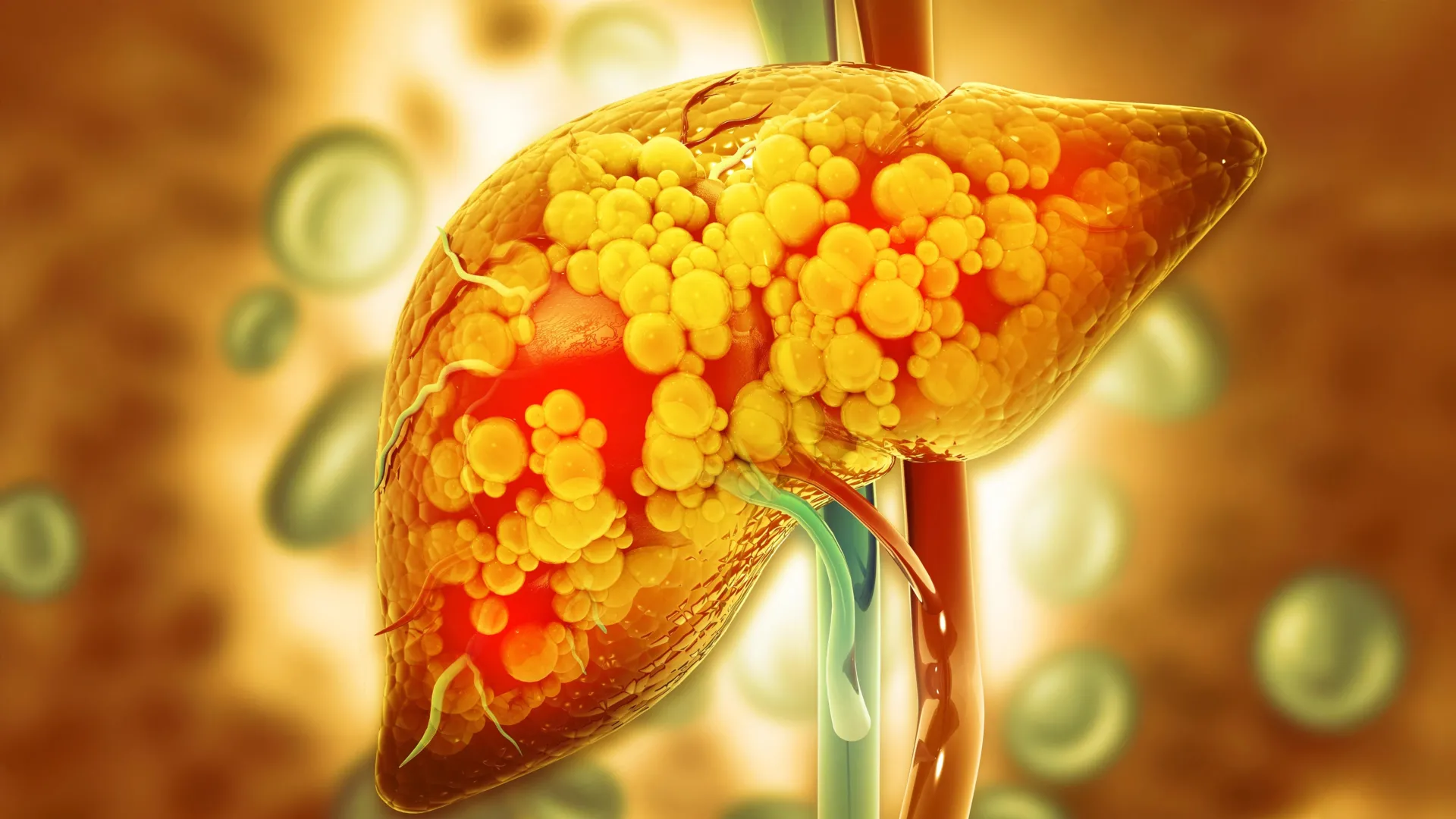
The 67% reduction in liver fat seen in the keto group suggests a specific biochemical mechanism at play. The researchers observed that participants on the keto diet showed a significant rise in glucagon, a hormone that regulates glucose and facilitates the breakdown of fat stored in the liver. Concurrently, these participants saw a sharper decline in blood insulin levels. The synergy between high glucagon and low insulin appears to create a uniquely "pro-fat-burning" environment within the liver, which is not as efficiently triggered by the higher-carbohydrate diets.
The Lipid Paradox
Perhaps the most surprising finding—as noted by lead author Max Petersen—was the absence of negative cardiovascular markers. Despite the high fat intake (including saturated fats from animal products) in the ketogenic diet, the participants did not experience an increase in blood fat or cholesterol levels. This contradicts the traditional fear that high-fat diets inherently lead to poorer heart-health profiles, suggesting that in the context of extreme carbohydrate restriction, the body processes dietary fats differently than it does when carbohydrates are present.
Official Responses and Expert Perspectives
The researchers behind the study were careful to frame their findings as an addition to, rather than a replacement for, modern medical interventions.
"We know weight loss can improve metabolic health in people who are obese," said Samuel Klein. "Our data suggest that if you have high liver fat content and prediabetes, reducing carbohydrate intake can have important therapeutic effects on metabolism beyond just weight loss alone."
Max Petersen emphasized the context of the current medical landscape, noting that while the rise of GLP-1 receptor agonists (such as Ozempic and Wegovy) has changed the game for obesity management, diet remains a primary tool. "GLP-1-based medications have revolutionized the therapy of obesity," Petersen said. "We now have a very effective pharmacotherapy for achieving significant weight loss. But in addition, our study shows that the specific composition of the diet can give you added benefits."
The study was supported by the National Institutes of Health and the Foundation for Barnes-Jewish Hospital, lending significant weight to the methodology and the implications of the results.
Implications: A New Strategy for Clinical Practice
The implications of this trial are far-reaching, particularly for the estimated 40% of U.S. adults living with obesity.
1. Precision Nutrition as Medicine
For physicians, the study suggests that "a diet" is no longer a one-size-fits-all recommendation. For patients specifically struggling with metabolic syndrome, fatty liver, and prediabetes, the ketogenic diet may be a more potent clinical tool than the standard Mediterranean or low-fat diets. This move toward "precision nutrition"—matching the diet to the specific metabolic dysfunction of the patient—could become a cornerstone of future obesity treatment.
2. Addressing the Fatty Liver Crisis
Non-alcoholic fatty liver disease is becoming an epidemic in the Western world. Because the liver is a central metabolic hub, the finding that a keto diet can "clear" the liver more effectively than other diets could have massive implications for preventing the progression to more severe conditions like cirrhosis or liver failure.
3. Re-evaluating Saturated Fats
The study’s findings regarding cholesterol and blood lipids invite a broader conversation about the role of fats in the diet. By showing that high-fat intake did not negatively impact lipid profiles during weight loss, the study may encourage researchers to revisit the long-standing dietary guidelines that demonize all saturated fats, regardless of the carbohydrate context in which they are consumed.
4. A Complementary Approach
The study does not suggest that patients should choose between diet and medical therapy. Rather, it highlights that even for those on medication, the dietary composition chosen can significantly amplify the metabolic benefits of the weight loss itself. Future research will likely focus on how these dietary patterns interact with GLP-1 medications to maximize patient outcomes.
In conclusion, the research published in Cell Metabolism serves as a powerful reminder that the body is a complex, responsive biological system. While weight loss is a vital goal for improving health, the data provided by Klein and his colleagues suggest that by adjusting the "fuel source" we provide our bodies, we can achieve therapeutic results that go significantly deeper than the number on the scale.