In the world of personal finance, we are often obsessed with the "what"—the index funds, the retirement accounts, and the compounding interest of a diversified portfolio. We spend our lives staring at spreadsheets, calculating net worth, and agonizing over the volatility of the stock market. But what if we are measuring our wealth through the wrong lens?
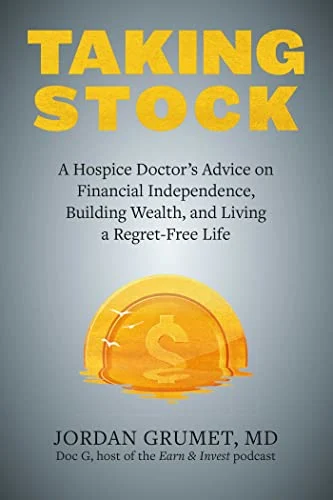
Jordan Grumet, a physician who has spent his career in the intimate, often somber corridors of hospice care, suggests that the true metrics of a life well-lived have almost nothing to do with currency. In his book Taking Stock, Grumet draws upon his unique vantage point—frequently informed by the wisdom of his patients and even his local undertaker—to argue that the most significant investments we make are those that cannot be tracked on a bank statement.
The Philosophy of the Final Days: Main Facts
Grumet’s core thesis is deceptively simple: death is the ultimate reality check. When individuals are stripped of their professional titles, their material possessions, and their daily distractions, what remains is the inventory of their life’s true investments.
"When the undertaker speaks, you should really listen," Grumet notes, recalling his conversations with a patient in the funeral business. He argues that those who work in the vicinity of mortality—physicians and morticians alike—possess a unique insight into what actually provides comfort and peace at the end of life. While financial security is a prerequisite for a stable existence, it is merely the foundation, not the structure, of a life of meaning. Grumet posits that we are "investing" every day, whether we realize it or not, and our choices regarding time, relationships, and self-forgiveness yield the most significant returns.
A Chronology of Regret and Realization
To understand the importance of non-monetary investment, one must look at the arc of a human life. Grumet frequently observes a pattern: individuals spend their youth and middle age accumulating assets, often at the expense of their physical health, their relationships, and their personal growth.
Consider the case of "Gerald," one of Grumet’s patients. Gerald’s journey—a common one in the hospice setting—did not begin with his terminal diagnosis of cirrhosis. It began decades earlier with the loss of a corporate job, which triggered a downward spiral of alcoholism, divorce, and estrangement from his daughter, Sandy.
- The Early Stage: Initial professional success followed by a traumatic setback.
- The Middle Stage: A period of "lost time," characterized by self-blame and the destruction of personal support systems.
- The Terminal Stage: The "life review" process, where the patient must confront the chasm between their past choices and their current reality.
Gerald eventually found peace through self-forgiveness, but the realization came too late to mend the physical damage to his body or the broken relationship with his child. His story serves as a chronological warning: the compounding effects of negative emotional and behavioral habits are just as potent—and perhaps more destructive—than the compounding interest of a well-managed 401(k).
Supporting Data: The Pillars of True Wealth
Grumet categorizes our non-monetary investments into several distinct pillars. While these may seem abstract, they function with the same mathematical certainty as financial assets.
1. The Power of Self-Forgiveness
Remorse is a universal human experience, but it is also a "wealth-killer." The capacity for self-blame can paralyze an individual, preventing them from making the incremental changes necessary for growth. Grumet argues that self-forgiveness is not an act of indulgence; it is a strategic investment in one’s future capacity to function.
2. Slow, Incremental Gains
We often fall into the trap of wanting "get rich quick" success. In health, education, and relationships, however, the "turtle and the hare" principle prevails. A one-percent improvement per month, compounded over a decade, results in life-altering transformations. This applies to skills, physical fitness, and professional development.
3. The Compounding Nature of Experience
Much like Ben Franklin’s view on interest, experience is not linear; it is exponential. Every time we "say yes" to a foreign or uncomfortable experience, we are diversifying our internal portfolio. These experiences build the resilience required to navigate the inevitable crises of life.
4. Education as an Emergency Fund
Grumet emphasizes that knowledge is the only asset that cannot be liquidated or stolen. In times of crisis, your ability to adapt, learn, and apply new information serves as your ultimate financial safety net. He advocates for constant, lifelong learning—reading, debating, and taking courses—to keep the mind sharp and the future secure.
The Perspective of the Hospice Professional
From a medical standpoint, the implications of these investments are clear. Patients who have invested in their social circles—those surrounded by friends, letters, and community—often approach the end of life with a sense of completion that the "financially wealthy but socially bankrupt" patient lacks.
Grumet observes that when he enters a room, he can tell within seconds if a patient has been a "successful investor" in humanity. The room is either filled with the warmth of connection or the cold silence of isolation. This is the ultimate dividend of human life. The "essence" of an individual survives not in their estate, but in the memories and character of those they leave behind.
Implications for the Modern Investor
What, then, should the average person do with this information? Grumet is careful not to dismiss the importance of money. He acknowledges that the stock market is a critical tool for achieving the freedom to pursue these non-monetary goals. However, the implication is that the goal of financial independence is not to stop working, but to gain the time and energy to invest in the five key areas identified in his work:
- Self: Prioritizing mental and physical health as the framework for all other activities.
- Education: Treating intellectual curiosity as a high-yield asset class.
- Others: Recognizing that relationships are the true measure of success.
- Children: Understanding that time spent with the next generation is the only way to leave a legacy.
- The Market: Using financial discipline as a support structure for a life of purpose.
Practical Application: The Non-Monetary Inventory
To move from theory to practice, Grumet suggests a specific exercise: The Non-Monetary Investment Inventory. By setting aside time to audit one’s life, individuals can assess whether their current path aligns with their long-term values.
The Exercise:
- Divide a sheet of paper into three columns.
- Number each column from 1 to 10.
- List your non-monetary assets (e.g., strong friendships, a specific skill set, a healthy routine, a close family bond).
- Evaluate: If you added these to your financial net worth, would you be "financially independent"?
This exercise is designed to shift the focus from what we lack in our bank accounts to what we possess in our lives. If the answer to the final question is yes, then the reader has already reached the pinnacle of true financial independence.
Conclusion: Preparing for Life
The takeaway from Taking Stock is a paradox: to be truly prepared for death, one must be fully engaged in the act of living. Financial literacy is necessary, but it is not sufficient. A life well-invested requires the bravery to forgive oneself, the humility to keep learning, and the dedication to nurture the people around us.
As Grumet concludes, building a life of meaning takes time, energy, and a willingness to endure the strain of personal growth. It is a taxing endeavor, but it is the only investment that guarantees a return in the currency that matters most at the end of the journey: peace, legacy, and the knowledge that one has truly lived. Do not wait until the end of your life to begin auditing your portfolio. Start today—because the market of life is open, and your most valuable assets are waiting to be grown.