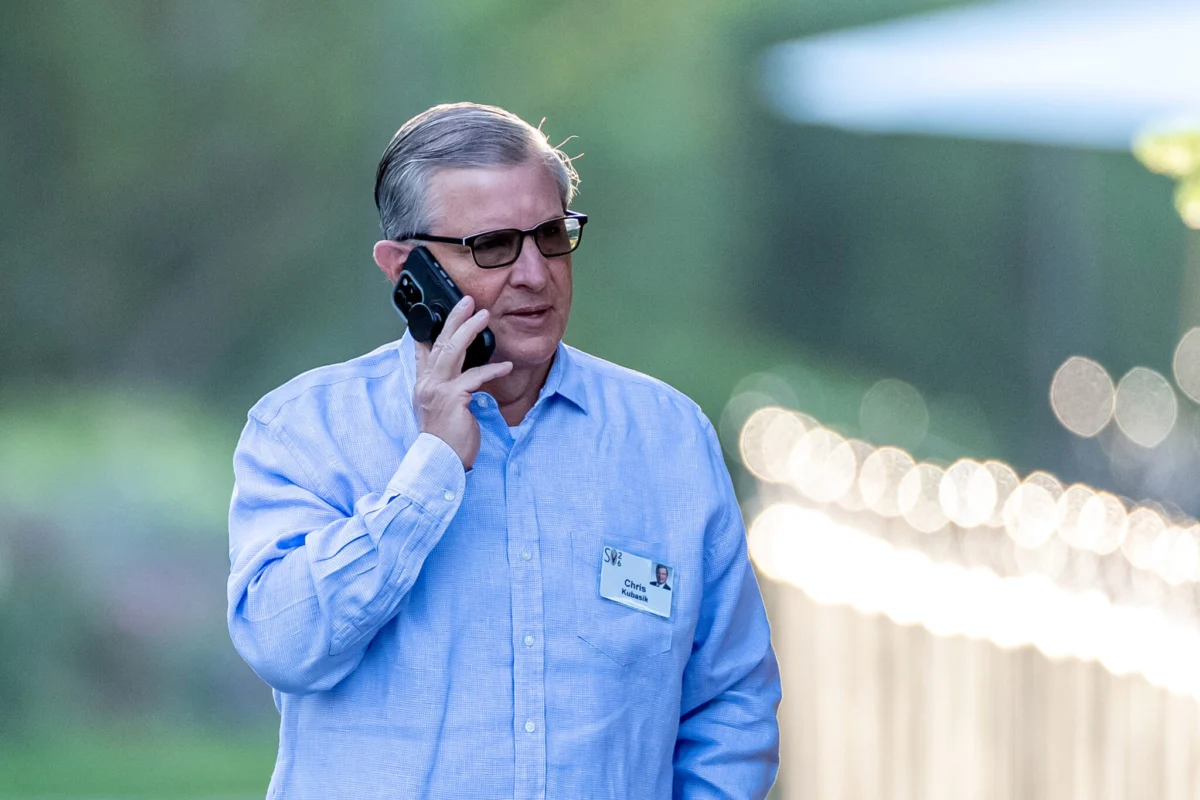
MELBOURNE, FL – In a move that has sent shockwaves through the American defense industrial base, L3Harris Technologies, the nation’s sixth-largest defense contractor, announced the immediate departure of its Chairman and Chief Executive Officer, Christopher E. Kubasik. The exit, described by industry analysts as a "shotgun transition," follows a weekend board investigation that found Kubasik had violated the company’s code of conduct.
The departure marks a dramatic fall for one of the most visible figures in the aerospace and tech sector. At 65, Kubasik was not only the architect of L3Harris’s recent aggressive expansion but also a vocal proponent of the "Trusted Disruptor" strategy—a mission aimed at challenging the dominance of legacy "Primes" like Boeing and Lockheed Martin. His removal, effective immediately, leaves the $50 billion company in the hands of seasoned executive Sam Mehta, as the board moves swiftly to contain potential reputational fallout.
The Investigation and the Departure
The L3Harris Board of Directors initiated an internal investigation into Kubasik’s conduct over the weekend. While the company has been tight-lipped regarding the specific nature of the violation, it took the unusual step of clarifying what the transgression was not. According to a company filing, the violation did not involve financial reporting, internal controls, customer relationships, or the company’s day-to-day operations.
Despite the lack of operational impact, the board’s response was definitive. Kubasik resigned not only from his role as CEO and Chairman but also from all positions within L3Harris subsidiaries and affiliates. The board opted for a separation agreement rather than a "for cause" termination—a strategic move often used to ensure a quiet exit and avoid protracted legal battles. However, the terms of this agreement are notably stringent, reflecting the board’s commitment to its ethical guidelines.
Under the terms of the deal struck on Sunday, Kubasik will receive no severance or annual bonus for 2026. Most significantly, he has forfeited all outstanding equity awards, a move that strips him of approximately $45 million in potential cash and equity. Depending on performance metrics over the next two cycles, that forfeiture could have reached as high as $62 million.
A Career Defined by High Stakes and Hard Lessons
To understand the gravity of Kubasik’s departure from L3Harris, one must look back to 2012, when his career faced a similar, high-profile crisis. At the time, Kubasik was the Vice Chairman and COO of Lockheed Martin, the world’s largest defense contractor. He had been hand-picked to take over as CEO in early 2013.
However, just weeks before he was set to take the reins, an ethics investigation revealed that Kubasik had engaged in a "close personal relationship" with a subordinate employee. The Lockheed board acted swiftly, forcing his resignation. That incident, which cost him the top job at the industry’s most prestigious firm, was thought to be a career-ending event.
Instead, Kubasik staged a remarkable comeback. He joined L3 Technologies and was a primary driver behind the 2019 merger with Harris Corporation—the largest merger in defense industry history. As CEO of the newly formed L3Harris since 2021, he cultivated a reputation as a hard-charging leader who wasn’t afraid to ruffle feathers in the Pentagon or on Wall Street. His second downfall, occurring 14 years after the first and under similar "conduct" clouds, raises significant questions about corporate governance and executive vetting in the defense sector.
Financial Breakdown: What Kubasik Leaves Behind
While the forfeiture of $45 million is a significant financial blow, Kubasik is by no means leaving empty-handed. His tenure at L3Harris was exceptionally lucrative, reflecting the company’s growth and its aggressive pursuit of government contracts.
Over the past three fiscal years, L3Harris paid Kubasik compensation valued at approximately $66.3 million, including a $25.6 million package in fiscal 2025 alone. According to SEC filings, Kubasik retains:
- Vested Options: Stocks worth approximately $23 million.
- Direct Ownership: More than 200,000 shares of L3Harris stock, valued at nearly $57 million based on recent market prices.
- Total Retained Wealth: An estimated $80 million in company-related assets.
The board has, however, protected the company’s interests with a "clawback" provision. Should future court rulings establish that Kubasik engaged in undisclosed misconduct—including fraud, sexual assault, embezzlement, or securities violations—the board retains the right to seize his remaining options.
The New Guard: Mehta and Hay Take the Helm
In the wake of the vacuum left by Kubasik, the board has turned to internal stability. Sam Mehta, 53, has been appointed as the new CEO. Mehta is a known quantity within the halls of L3Harris, having previously led the company’s Space and Mission Systems as well as the Communications and Spectrum Dominance segments. These areas are critical to the company’s future, particularly as the Department of Defense (DoD) pivots toward integrated JADC2 (Joint All-Domain Command and Control) capabilities.
Complementing Mehta’s operational leadership, Lewis Hay II, formerly the lead independent director, has been named Independent Chairman. Hay, the former CEO of NextEra Energy, brings a wealth of experience in managing large-scale infrastructure and regulated industries.
In a prepared statement, Hay struck a balance between acknowledging Kubasik’s contributions and reinforcing the board’s moral stance. "Chris has overseen significant transformation during his tenure… however, our values guide the actions we take each day as ‘The Trusted Disruptor.’ The Board and Chris have agreed that implementing our succession plan today is the right thing to do."
Strategic Implications and the "Department of War" Era
The timing of Kubasik’s departure is particularly sensitive given L3Harris’s strategic positioning. Under his leadership, the company leaned heavily into a close relationship with the Trump administration’s defense apparatus—famously referred to by some administration officials as the "Department of War."
L3Harris has been at the center of several high-profile, politically sensitive projects:
- Aerojet Rocketdyne: In April, L3Harris’s subsidiary, Aerojet Rocketdyne, secured a $1 billion government investment into its missile-propulsion business. This move was part of a broader plan to take the business public, a strategy now overseen by Mehta.
- Air Force One (VC-25B): In June, L3Harris delivered a modified Boeing 747 to the White House to serve as an interim Air Force One. The aircraft was originally a gift from the Qatari royal family and underwent extensive modifications by L3Harris to meet presidential standards.
- The "Sixth Prime" Status: Kubasik successfully positioned L3Harris as the alternative to the "Big Five" (Lockheed, Boeing, Raytheon, Northrop Grumman, and General Dynamics). This positioning is vital for winning "disruptive" contracts in electronic warfare and space-based surveillance.
Market analysts are now questioning whether the "Trusted Disruptor" brand can survive without its chief architect. On the Monday following the announcement, L3Harris stock dipped more than 4%, reflecting investor anxiety over the sudden leadership change. However, the company sought to soothe markets by reaffirming its full-year 2026 guidance, suggesting that the underlying business fundamentals remain strong despite the executive suite drama.
Industry Perspectives and Reputation Management
The defense industry is built on a foundation of trust and rigorous ethical standards, largely because its primary customer is the U.S. government. A violation of a code of conduct at the CEO level is not merely a human resources issue; it is a potential threat to the company’s "Security Clearance" culture.
"In the defense world, your reputation is your currency," says one industry consultant who requested anonymity. "L3Harris is trying to prove they can play with the big boys. By moving so fast against Kubasik, the board is sending a message to the Pentagon: ‘We are disciplined, and no one is above the rules.’ It’s a painful move, but likely a necessary one to protect their multi-billion dollar contract pipeline."
The "no-talk" clause in the separation agreement is also a standard but critical component of the transition. Both Kubasik and the company are forbidden from making statements "inconsistent" with the official disclosure. This ensures that the specifics of the investigation remain confidential, preventing a public relations war that could further depress stock prices or invite unwanted Congressional scrutiny.
Conclusion: A Turning Point for L3Harris
Chris Kubasik’s departure marks the end of an era of aggressive, personality-driven growth at L3Harris. While he leaves behind a company that is significantly larger and more capable than the one he joined, his legacy will inevitably be colored by the circumstances of his exit—twice over.
For Sam Mehta, the challenge will be to maintain the momentum of the "Trusted Disruptor" while restoring a sense of corporate decorum and stability. As L3Harris prepares to spin off Aerojet Rocketdyne and continues its work on the next generation of defense technology, the industry will be watching closely to see if the company can thrive without the man who spent a decade trying to reinvent it.
For now, L3Harris remains a titan in the field, but one that is currently navigating the turbulent waters of a self-inflicted leadership crisis. The board’s decisive action suggests that while they valued Kubasik’s vision, they valued the company’s integrity more. In the high-stakes world of national defense, that may be the most important "disruption" of all.