The 2026 MTV Video Music Awards (VMAs) unfolded as a definitive milestone in music history, balancing the modern dominance of the pop establishment with poignant tributes to the architects of the past. Broadcast live from the iconic Peacock Theater in Los Angeles, the ceremony served as a sprawling testament to the evolution of visual storytelling, anchored by a historic achievement from the world’s most recognizable pop powerhouse: Taylor Swift.
The Swift Supremacy: Rewriting the History Books
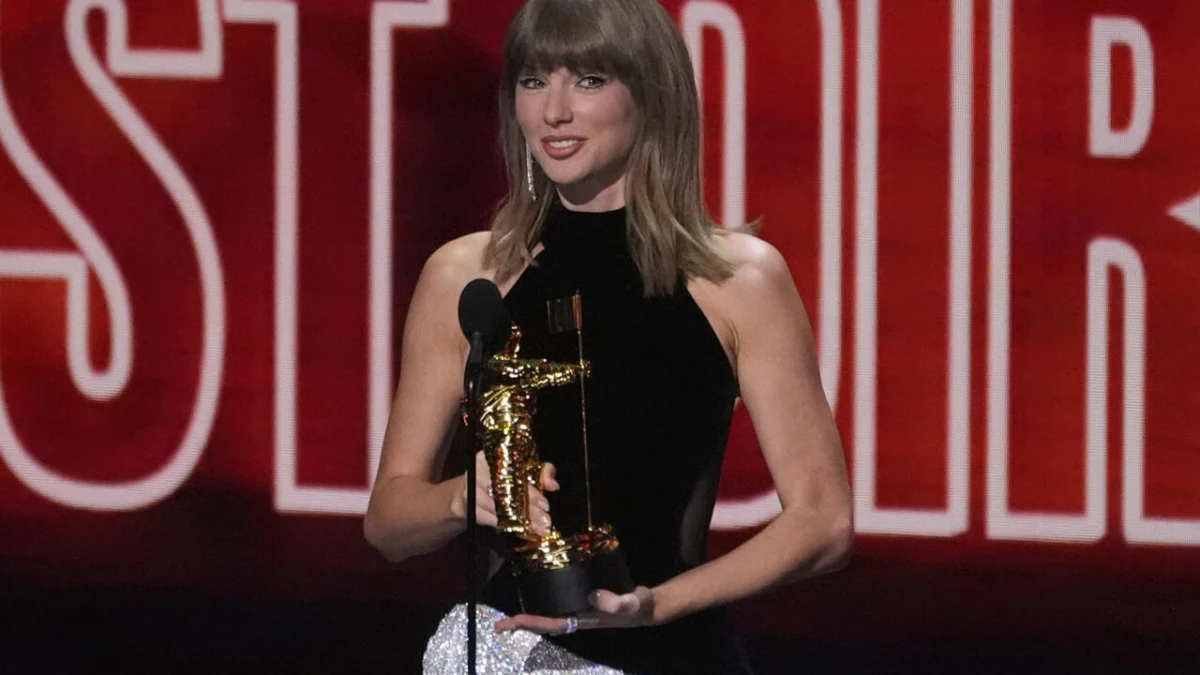
Taylor Swift, already a colossus in the contemporary music landscape, further cemented her legacy on Sunday night by securing the inaugural Artist Director Honors. This new accolade, designed to celebrate artists who have expanded the technical and artistic possibilities of music videos, pushed Swift’s career VMA total to 31, officially breaking her previous tie with Beyoncé for the most-awarded artist in the ceremony’s history.
In her acceptance speech, Swift reflected on a two-decade journey that has seen her transition from a teenage country sensation to a sophisticated auteur. "I got to start making music videos and being a part of music videos 20 years ago," she noted, highlighting that of her roughly 60 video projects, she has personally written and directed 18. "You, the fans, make it so much fun," she added, acknowledging the fervent support base that has fueled her meteoric rise.
The evening also served as a stage for her latest creative endeavor. Swift debuted the music video for her new single, "Patient Zero," a cinematic piece featuring actors Colin Farrell and Dakota Johnson. The visual, which sees Johnson and Swift portraying mirror images of one another, marks the singer’s first creative release since her high-profile July wedding to Kansas City Chiefs tight end Travis Kelce—a star-studded event at Madison Square Garden that dominated global headlines earlier this summer.
Chronology of an Electrifying Evening
The two-hour broadcast, which began with a 20-minute delay due to a nail-biting NFL clash between the Baltimore Ravens and the Dallas Cowboys, hit the ground running with a high-octane opening.
The Madonna Phenomenon
The stage was set by the "Queen of Pop" herself. Madonna opened the show with her 2026 single "Bring Your Love," joined by collaborator Sabrina Carpenter. Greeting the crowd with a cheeky "It’s mother," Madonna later secured the award for Best Collaboration. Her return to the stage to accept the Artist of the Year award was met with characteristic wit. "First of all, I would like to thank my fingers because I can always count on them," she quipped, before launching into a vibrant, club-inspired performance of a reworked "Danceteria." The performance turned the stage into a microcosm of 1980s New York nightlife, featuring actor Debi Mazar, Sombr, and Julia Garner amidst a swarm of dancers.
Hosting Duties and Emerging Stars
Following the performance, Snoop Dogg—a veteran of the industry with 13 nominations and three wins to his name—assumed hosting duties. His sharp humor, including a playful jab at Madonna’s legacy, set a lighthearted tone for the night.
The awards portion saw early excitement as Teyana Taylor presented the Best Pop award to K-pop sensation LISA for her track "Dream," featuring Kentaro Sakaguchi. A visibly moved LISA addressed the audience, stating, "Thank you MTV for this amazing award. All those late-night dreams brought me here today." Her later performance of the hip-hop-infused "Sawadika" showcased her versatility and solidified her status as a global powerhouse.
A Somber Reflection: Honoring Dolly Parton
The industry took a collective pause to mourn the loss of one of country music’s most vital architects, Dolly Parton, who passed away in August at the age of 80 following a battle with cancer. Kacey Musgraves delivered a stirring, stripped-back rendition of "I Will Always Love You," a performance that resonated deeply with the crowd.
The tribute served as a reminder of Parton’s immense footprint—a trajectory that took her from a humble log cabin in the Tennessee mountains to the global stage. Her influence, characterized by her soaring vibrato and unmatched narrative songwriting, remains a bedrock of the American songbook.
The Grunge Legacy: Nirvana’s Vanguard Moment
In a move that balanced the evening’s pop-heavy aesthetic, MTV awarded the coveted Video Vanguard Award to Nirvana. The presentation, led by Public Enemy’s Chuck D, underscored the band’s enduring cultural relevance.
"They were completely original and always fearless at a time when the status quo kind of got to the point of being formulaic," Chuck D observed. Surviving members Krist Novoselic, Dave Grohl, and Pat Smear accepted the honor on behalf of the group and their late frontman, Kurt Cobain.
"Kurt was one of one," Novoselic remarked during his speech. He reflected on the band’s initial disbelief that their raw, uncompromising sound would reach such a massive, multi-generational audience. The band noted that the continued popularity of Nirvana stems from a universal, ongoing hunger for "something real"—a sentiment that remains as poignant today as it was in the early 1990s.
Supporting Data and Industry Trends
The 2026 VMAs were defined by a distinct "genre-blurring" trend. Performances reflected the current state of the music industry, where boundaries between country, rap, and soul are increasingly porous:
- Genre Hybrids: Shaboozey and Gunna’s performance of "High Noon" highlighted the growing commercial viability of country-rap crossovers.
- Soulful Returns: Raye’s medley of "I Will Overcome" and "Where Is My Husband!" showcased a resurgence in throwback soul aesthetics.
- Production Diversity: The show featured an array of rising talent, including Sienna Spiro and the experimental sounds of GENER8ION with Yung Lean.
The upcoming tribute to George Michael, featuring Raye, Sombr, and Teddy Swims, marks the 10th anniversary of the legendary singer’s passing, further emphasizing the ceremony’s focus on the cyclical nature of music history.
Implications for the Future of Music Media
The 2026 ceremony suggests a shift in how the music industry views its own history. By honoring both the avant-garde visual direction of Taylor Swift and the raw, unpolished authenticity of Nirvana, the VMAs are attempting to bridge the gap between digital-era perfection and analog-era grit.
Furthermore, the integration of high-stakes sports broadcasting (the NFL lead-in) and the global nature of the winners—spanning from American country icons to Thai pop stars—indicates that the VMAs are moving away from a US-centric model toward a truly international, cross-platform media event.
The success of the "Artist Director Honors" specifically signals that MTV is placing a higher premium on the "auteur" status of its nominees. As music videos become increasingly complex, short-form, and narrative-driven, the award serves to acknowledge that the artist is no longer just a performer, but a producer and director in their own right.
Conclusion: A Reflective Conclusion
As the 2026 VMAs draw to a close, the narrative of the night remains clear: the industry is in a period of transition. Whether it is Taylor Swift redefining what it means to be a modern pop mogul, or the surviving members of Nirvana reminding a new generation of the power of "coming as you are," the evening demonstrated that while the technology of music consumption changes, the demand for authentic, visually compelling storytelling remains constant.
For the fans watching at home, the night was a spectacle of high production value and emotional resonance, a fitting tribute to the artists who have shaped the soundtrack of the 21st century. As the lights dim at the Peacock Theater, one thing is certain: the bar for visual artistry in music has been raised, and the industry’s eyes are already turned toward what the next generation of directors and performers will offer.