For over seventy years, 6-thioguanine (6-TG) has stood as a stalwart in the oncologist’s arsenal. A cornerstone in the treatment of various forms of leukemia, this thiopurine drug has saved countless lives. Yet, despite its long history of clinical use, a fundamental mystery has persisted in the field of hematology: why does the drug prove lethal to some malignant cells while others, seemingly identical, manage to thrive in its presence?
A groundbreaking study, recently published in Science and spearheaded by the CeMM Research Center for Molecular Medicine of the Austrian Academy of Sciences, in collaboration with the University of Oxford, the Weizmann Institute of Science, and the University of Dundee, has finally pulled back the curtain on this biological paradox. The researchers have identified a previously unrecognized factor in drug resistance: a protein called NUDT5. More importantly, they have discovered that NUDT5’s influence on leukemia treatment has nothing to do with its traditional job as an enzyme, but rather its structural role as a "molecular scaffold" within the cell.
The Main Facts: Decoupling Chemistry from Structure
The discovery challenges a foundational assumption in pharmacology. For decades, the development of small-molecule drugs has been predicated on the "lock and key" model—the idea that to change a cell’s behavior, one must inhibit an enzyme’s catalytic activity. When researchers at CeMM and their partners first began investigating NUDT5, they followed this conventional path. They assumed that by suppressing the protein’s ability to drive chemical reactions, they would observe a corresponding change in the cells’ sensitivity to 6-TG.
They were wrong.
The team found that inhibiting the catalytic activity of NUDT5 had virtually no effect on how leukemia cells reacted to 6-TG. Instead, the determining factor was the physical presence of the protein itself. When the protein was present, cells remained vulnerable; when it was removed, they gained a shield against the drug’s toxicity. This distinction—between a protein’s "job" and its "existence"—has profound implications for how we treat cancer and how we design the next generation of therapeutics.
A Chronological Progression: From Discovery to Degradation
The journey to this discovery began with foundational research conducted by the Kubicek and Huber laboratories, which hinted that NUDT5 performed functions far beyond its annotated enzymatic duties.
Phase I: The Limitation of Traditional Inhibitors
In the early stages of the study, the researchers utilized traditional small-molecule inhibitors to target NUDT5. These compounds were designed to bind to the active site of the enzyme, effectively shutting down its chemical machinery. However, as Tuan-Anh Nguyen, co-first author of the study, noted, the results were underwhelming. The cells continued to respond to 6-TG as if the protein were fully operational. This suggested that the biological mechanism influencing drug sensitivity was not located within the catalytic core, but rather in the protein’s structural geometry.
Phase II: The Advent of Targeted Protein Degradation
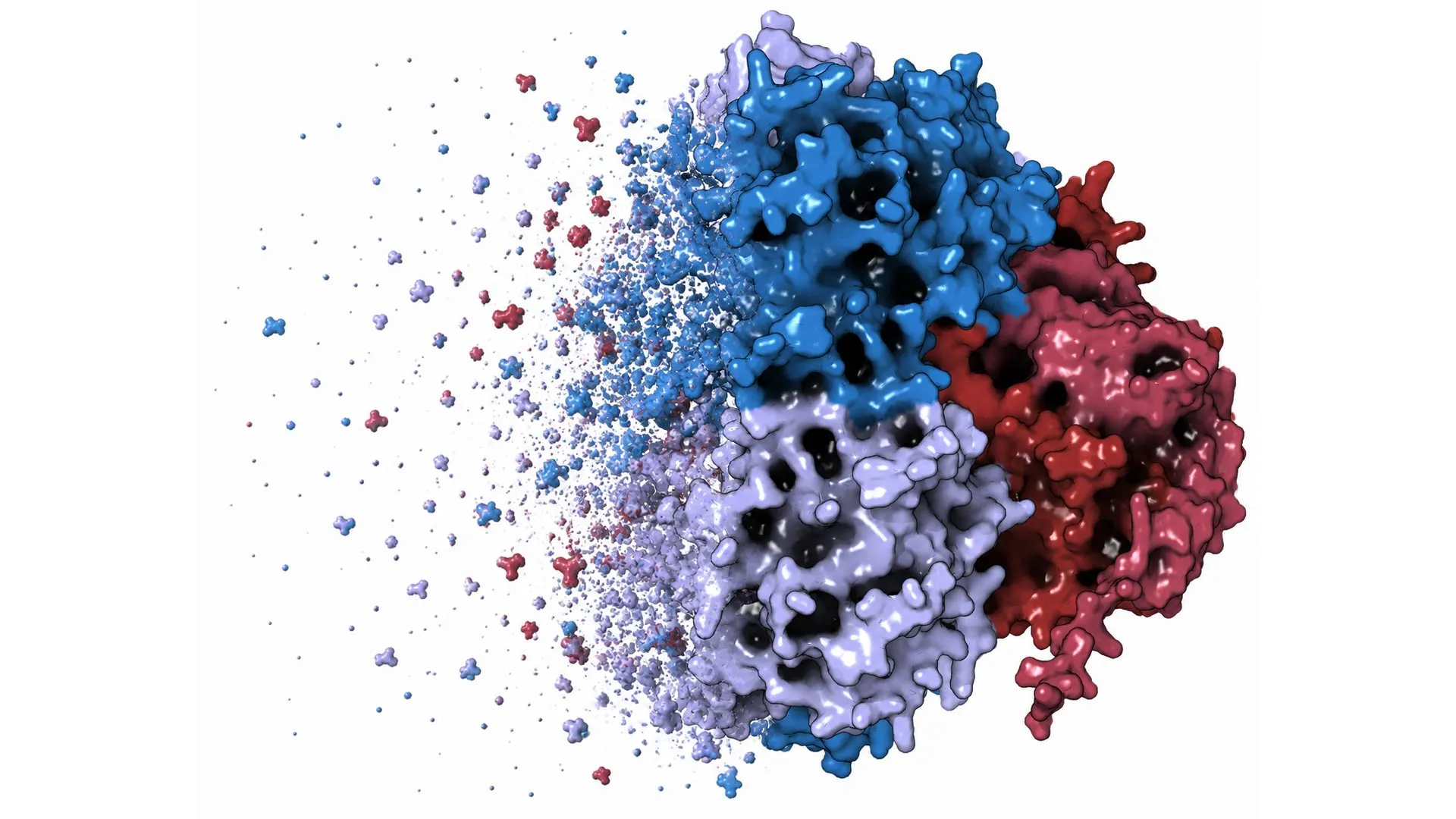
Realizing that standard inhibitors were insufficient to probe the full scope of NUDT5’s function, the team turned to a cutting-edge methodology: targeted protein degradation. Unlike inhibitors, which merely "pause" a protein, degraders hijack the cell’s own waste-disposal system (the ubiquitin-proteasome pathway) to mark a specific protein for destruction and removal.
Led by the medicinal chemistry expertise at the University of Oxford, the team developed "dNUDT5," a highly selective degrader. Simultaneously, they created control compounds that could bind to the protein without destroying it. This allowed them to rigorously prove that it was the elimination of NUDT5, rather than the occupation of its active site, that conferred resistance to 6-TG.
Phase III: Mapping the Regulatory Landscape
With the degrader in hand, the researchers observed a clear, dose-dependent protection of cells against 6-TG. Genetic validation experiments confirmed that the observed resistance was not a side effect of the chemical process but a direct consequence of the loss of the NUDT5 protein. By the time the study reached its conclusion, the researchers had successfully mapped a hidden, non-catalytic regulatory layer that dictates the success or failure of leukemia treatment.
Supporting Data: The NUDT5/NUDT15 Interplay
The complexity of the study deepened when the team analyzed the relationship between NUDT5 and NUDT15. NUDT15 is a well-characterized protein known to be a primary determinant of patient response to thiopurines. Patients lacking functional NUDT15 often suffer severe side effects from these drugs, as their cells cannot properly process the medication.
The researchers discovered that NUDT5 and NUDT15 act like opposing switches in a biological circuit:
- Loss of NUDT15: Increases cell sensitivity to 6-TG.
- Loss of NUDT5: Decreases cell sensitivity (confers resistance) to 6-TG.
This "push-pull" dynamic suggests that the sensitivity of a cancer cell to chemotherapy is not a single-point measurement, but the result of a delicate balance between competing regulatory proteins. The data indicates that NUDT5 acts as a molecular scaffold, potentially organizing metabolic pathways in a way that NUDT15 cannot, thereby creating a buffer that shields the cell from the cytotoxic effects of 6-TG.
Official Responses and Expert Perspective
The implications of this research were not lost on the study’s leads, who view this as a paradigm shift in molecular biology.
"Chemical degraders give us a way to separate what a protein does as an enzyme from what it does as a physical presence in the cell," says Professor Kilian Huber of the Centre for Medicines Discovery at the University of Oxford. "In this case, that distinction was decisive: removing NUDT5 revealed biology that conventional inhibitors missed."
Stefan Kubicek, the Principal Investigator at CeMM, emphasized the broader lesson for the scientific community: "Our results show that proteins can have important biological functions that are completely independent of their enzymatic activity. By removing NUDT5 rather than simply inhibiting it, we were able to uncover a hidden layer of biology that helps determine how cells respond to a clinically important drug."
The excitement was palpable throughout the research team. Ludwig Bauer, a first author of the paper, described the moment the data became clear: "As the results came in, it became immediately clear that the dNUDT5 was protecting cells from 6-thioguanine toxicity in a dose-dependent manner. That was an incredibly exciting moment."
Implications: The Future of Precision Oncology
While the discovery of the NUDT5 mechanism does not yield a "cure" for leukemia overnight, it provides a crucial, missing piece of the puzzle. The findings offer several critical takeaways for the future of medicine:
1. Beyond "Inhibition"
The pharmaceutical industry has historically prioritized enzyme inhibition. This study serves as a strong argument for the adoption of targeted protein degradation (PROTACs and related technologies). By focusing on the removal of proteins, researchers can now address "undruggable" targets—proteins that do not have convenient active sites for drugs to bind to but which nonetheless drive disease progression.
2. Personalized Medicine
Understanding the interplay between NUDT5 and NUDT15 could lead to better patient stratification. By screening patients for the expression levels of these specific proteins, clinicians might be able to predict which individuals will respond well to 6-TG and which might require alternative treatments, thereby minimizing both treatment failure and unnecessary toxicity.
3. A Blueprint for Future Discovery
The platform developed by the Oxford and CeMM teams to create NUDT5 degraders acts as a template for other laboratories. The ability to distinguish between catalytic and structural roles is a powerful tool that will likely be applied to other metabolic enzymes, potentially revealing similar "hidden" regulatory roles in cancer, neurodegeneration, and autoimmune diseases.
4. Supporting Research Infrastructure
The success of this international, multi-institutional collaboration underscores the importance of continued funding for basic biological research. Supported by entities such as the European Research Council (ERC), the Austrian Science Fund (FWF), and the Wellcome Trust, this study demonstrates that long-term, high-risk, and high-reward investigations are essential to move beyond the boundaries of established medical knowledge.
As the scientific community digests these findings, one thing is clear: the "hidden" functions of proteins like NUDT5 are no longer hidden. By peeling back the layers of how cells manage their internal environment, researchers are moving closer to a future where cancer treatment is not just a blunt instrument, but a precise, informed intervention tailored to the unique molecular architecture of every cell.