In an era defined by rapid technological shifts, economic uncertainty, and a pervasive sense of digital overwhelm, the human desire for purpose has never been more acute. Recently, a unique synthesis of pop culture and practical philosophy has emerged as a beacon for those seeking to navigate these turbulent waters. The Oscar-winning phenomenon Everything Everywhere All at Once (EEAAO) and the life-planning methodology outlined in Bill Burnett and Dave Evans’ Designing Your Life have unexpectedly converged, offering a compelling framework for personal agency.
By blending the chaotic, nihilistic landscapes of multiverse theory with the structured, iterative principles of design thinking, individuals are finding new ways to reconcile the feeling that "nothing matters" with the profound realization that, because nothing is predetermined, everything is possible.
The Cinematic Catalyst: Why We Are Obsessed
The film Everything Everywhere All at Once is a sensory overload, a bizarre yet poignant collision of science fiction, martial arts, family drama, and the mundane reality of filing taxes. The plot follows Evelyn Wang, an exhausted laundromat owner whose life is fracturing under the weight of an IRS audit, a crumbling marriage, and a strained relationship with her daughter, Joy.
When Evelyn is thrust into a multiverse conflict, she discovers that her own reality is merely one of infinite possibilities. The film’s antagonist, Jobu Tupaki, serves as the embodiment of modern nihilism: if every life is lived simultaneously across every conceivable dimension, then no single action holds inherent weight. The film, however, rejects this despair. It suggests that while the universe may be vast and indifferent, the act of choosing kindness and creating intentional meaning is the only true act of rebellion.
For many viewers, this narrative arc is not merely entertainment—it is a mirror. It forces a confrontation with the "what-ifs" of our own lives, echoing the sentiments of contemporary literature like Matt Haig’s The Midnight Library, where the protagonist explores the alternate paths her life could have taken had she made different choices.
Chronology of a Crisis: From Nihilism to Intentionality
The journey toward "life design" often begins at a point of stagnation or, as some describe it, a "nihilistic nadir."
- The Trigger: A period of intense personal reflection, often spurred by trauma, loss, or the realization that one’s current trajectory no longer aligns with their core values.
- The Realization: Acknowledging that the current reality is not a fixed prison. Drawing inspiration from the multiverse concept, the realization hits that one is not trapped in a single timeline.
- The Application: Moving from abstract rumination to structured planning. This is where the work of Stanford educators Bill Burnett and Dave Evans becomes vital.
- The Iteration: Using "Odyssey Planning" to prototype potential futures, testing which versions of the self feel most "coherent."
Supporting Data: The Science of Life Design
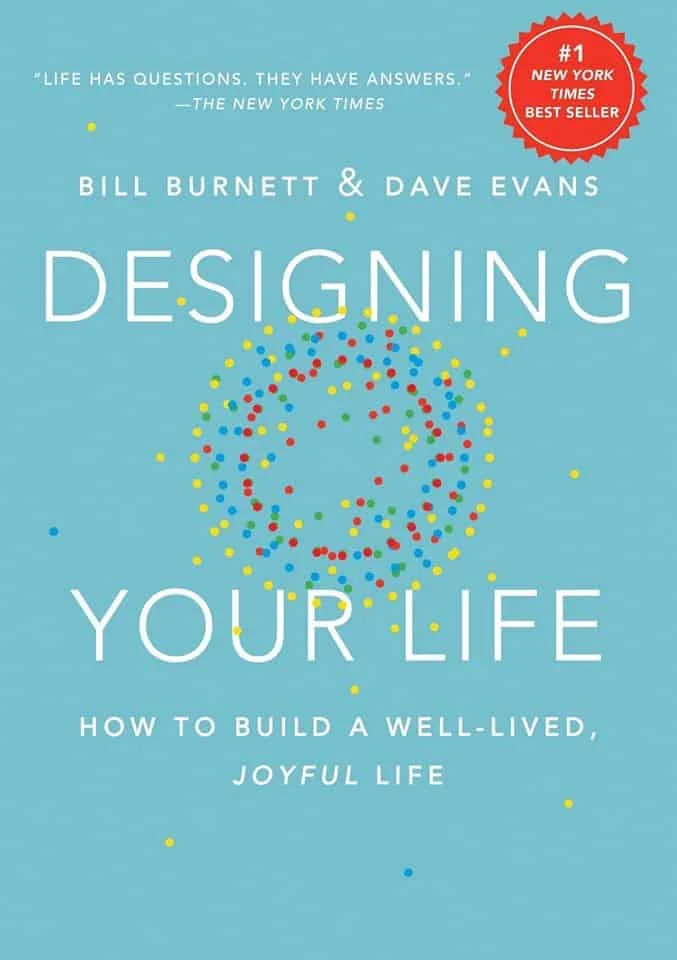
Designing Your Life is not a traditional self-help book; it is an application of design thinking—a methodology pioneered at the Stanford d.school—to the human experience. The core premise is that a "well-designed life" is one characterized by coherence.
Coherence, in this context, is the alignment of three pillars:
- Who you are: Your fundamental identity and internal compass.
- What you believe: Your Lifeview—your philosophy on what makes life worth living.
- What you do: Your Workview—how you apply your talents and time in the world.
When these three are out of sync, the result is the burnout and frustration that many professionals report today. The methodology suggests that we should treat our lives as a "prototype." In engineering, you don’t build a bridge without testing materials; similarly, in life design, you don’t commit to a total life overhaul without running "life prototypes"—small, low-stakes experiments that reveal whether a new path is truly viable.
The Odyssey Plan: Mapping the Multiverse
The most practical tool provided by Burnett and Evans is the "Odyssey Plan." This exercise requires individuals to draft three distinct, five-year visions of their future:
- Plan A (The Current Path): What does your life look like if you continue on your current trajectory? This is about optimization and deepening the commitments you have already made.
- Plan B (The Pivot): What would you do if your current career or path vanished tomorrow? This forces an exploration of latent interests and alternative professional identities.
- Plan C (The Pipe Dream): What would you do if money and social judgment were entirely removed from the equation? This is the version of the future that unlocks deep, often suppressed passions.
By drafting these three plans, the individual is effectively mapping their own multiverse. They realize that they are not stuck in one reality, but are instead architects of multiple possible futures.
Expert Perspectives and Institutional Methodology
The success of this approach is backed by the academic rigor of the Stanford Life Design Lab. Bill Burnett, an veteran of Apple’s early design team, and Dave Evans, a pioneer in the video game industry, argue that humans are "designers" by nature.
"The plain and simple truth is that you will live many different lives in this lifetime," they write. This philosophy rejects the "calling" myth—the idea that each person has one true purpose they must discover. Instead, it posits that purpose is something you build through consistent action and iteration.
Critics of the approach sometimes argue that the terminology—"prototyping," "ideation," "odyssey"—can feel overly clinical or corporate. However, the results speak for themselves. Participants who engage in the exercises, such as drafting a formal Workview and Lifeview, consistently report higher levels of clarity and agency. The act of writing down these perspectives creates a "coherence check," allowing people to see exactly where their beliefs and their daily actions are in conflict.
Implications: Building a Coherent Future
The intersection of Everything Everywhere All at Once and Designing Your Life provides a blueprint for modern living. It is a synthesis of high-concept existentialism and down-to-earth practicality.
For the individual, the implications are profound:
- Freedom from Sunk-Cost Fallacy: Recognizing that you have already lived many lives and will live many more lowers the stakes of any single decision.
- Increased Resilience: When you have a plan for "What if this fails?", you are less likely to be devastated by setbacks.
- Active Engagement: Rather than waiting for "the universe" to provide a path, the individual actively prototypes their way toward a life that feels authentic.
As we move further into an increasingly complex century, the ability to pivot, to design, and to find meaning within the chaos will be the ultimate competitive advantage. Whether through the lens of a multiverse film or the structured worksheets of a Stanford design course, the message remains the same: You are not a passenger in your own life. You are the lead designer.
If the current timeline isn’t working, take a page from the multiverse playbook. Don’t just watch the movie—start drafting the next version of the script. The tools are available, the multiverse is wide open, and the only thing required to begin is the decision to start designing.