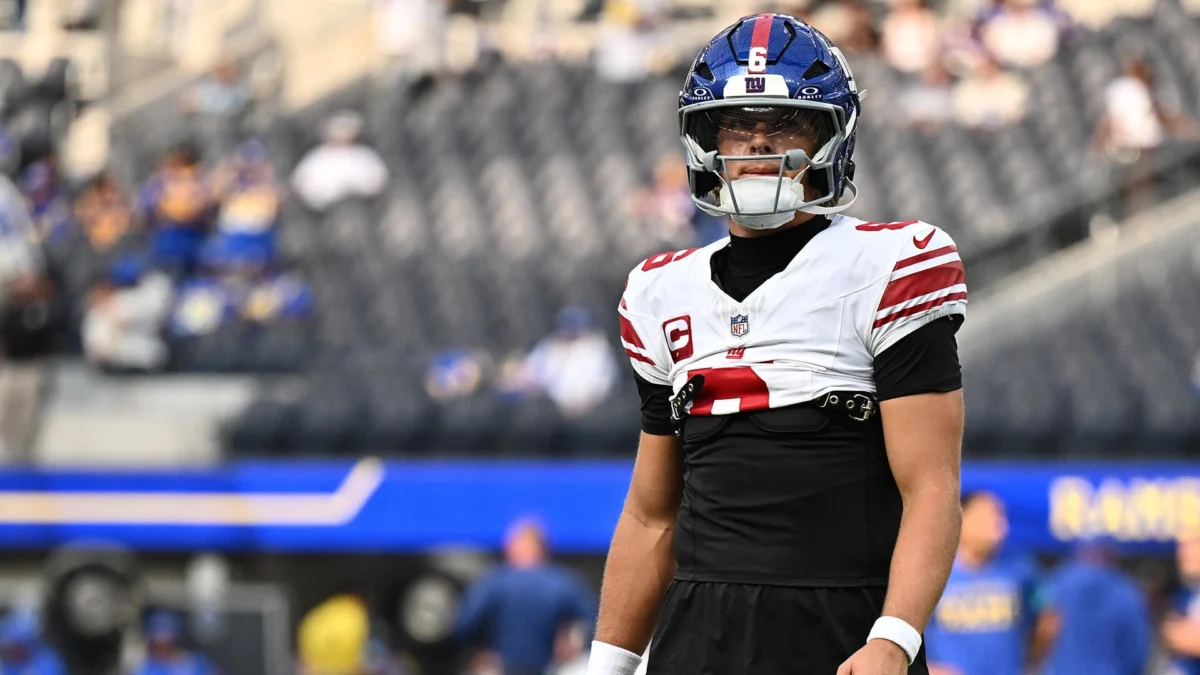
The New York Giants’ Sunday night clash against the Los Angeles Rams was meant to be a statement game for burgeoning star quarterback Jaxson Dart. Instead, the primetime showdown at SoFi Stadium morphed into a night of anxiety for the franchise. In a 28-6 loss that left the Giants reeling, the most significant development occurred during the team’s opening drive, when Dart suffered a knee injury that has cast a shadow over the immediate future of the team’s season.
While initial reports suggest the Giants may have dodged a catastrophic, season-ending scenario, the road ahead remains murky. As the team prepares for a critical week of evaluation, the organization must weigh the health of its franchise centerpiece against the rigors of an unforgiving NFL schedule.
The Sequence: A Moment That Changed the Game
The injury occurred on the final play of the Giants’ first possession. Facing a critical third-down conversion, Dart dropped back to pass, looking to ignite the offense early. As he stepped into a deep ball, he was met by a crushing collision from Rams defenders Josaiah Stewart and Byron Young.
The impact occurred mid-throw, pinning Dart between the two defenders. As his body went airborne, his left knee buckled awkwardly upon contact with the turf. The quarterback immediately collapsed, clutching his knee in visible agony. The sight of the team’s young signal-caller writhing on the field drew a hush over the stadium. Trainers sprinted onto the field, immediately surrounding Dart, who remained down for several minutes before eventually rising to his feet.
In a display of grit, Dart declined the use of a medical cart, opting to limp toward the sideline under his own power. However, the optimism provided by his ability to walk was tempered once he entered the medical tent. Following a brief evaluation, he was escorted to the locker room for further testing.
Medical Status and The Road to Diagnosis
In the immediate aftermath of the game, news regarding Dart’s condition began to filter through NFL circles. According to reports from ESPN and NFL Media, the team’s primary concern is an MCL sprain.
A silver lining emerged shortly after the game concluded: X-rays performed at SoFi Stadium returned negative, ruling out immediate structural bone damage. This discovery suggests that Dart has likely avoided a worst-case scenario, such as an ACL tear or significant tibial plateau fracture. However, the absence of a fracture does not clear him of a lengthy recovery timeline.
Dart is scheduled to undergo an MRI on Tuesday, which will provide a definitive diagnosis regarding the severity of the ligament sprain. The results of this imaging will dictate whether Dart misses a few weeks or a more substantial portion of the regular season.
Official Responses and Internal Optimism
Despite the grim nature of the injury, the messaging from Giants leadership has been surprisingly optimistic. Giants General Manager Joe Schoen offered a brief but telling update to ESPN’s Laura Rutledge, stating plainly that Dart is "going to be OK."
This sentiment is echoed by the coaching staff, who viewed the incident as a "scare" rather than a disaster. While the team is officially classifying the injury as week-to-week until further testing is completed, the internal narrative is focused on avoiding panic. For a front office that has invested heavily in Dart as the future of the franchise, the priority remains long-term health over short-term desperation.
Supporting Data: Dart’s Ascent Interrupted
The timing of this injury is particularly cruel given the trajectory of Dart’s young career. Entering his second season in the league, Dart had been widely praised for his development during the offseason.
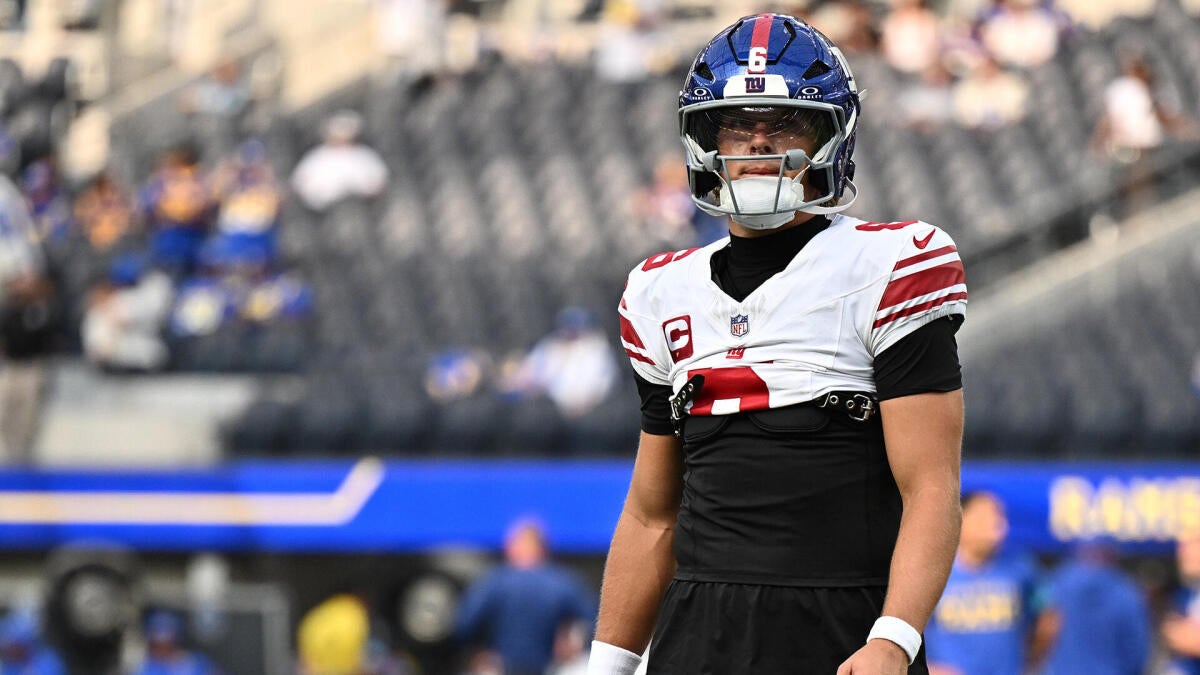
His performance in Week 1 against the rival Dallas Cowboys was arguably the finest of his career. In that divisional victory, Dart carved up the Dallas secondary, completing 23-of-29 passes for 230 yards and three touchdowns. His passer rating in that game reached elite levels, signaling that the "sophomore slump" was not a concern for the former college standout.
Prior to his exit on Sunday, Dart was 3-for-5 for 20 yards. While the statistical sample size was small, the flow of the offense suggested he was beginning to find his rhythm before the hit. The loss of his production is not just a tactical blow to the Giants’ offense, but a psychological one; the team had clearly found an identity around his playmaking ability, and re-establishing that chemistry will be the challenge if he is forced to the sidelines.
Implications for the Giants’ Season
The immediate consequence of Dart’s departure was a stagnating offense that failed to find the end zone against a swarming Rams defense. Jameis Winston, the veteran backup signed to provide insurance for exactly this type of scenario, took over for the remainder of the game. While Winston brings immense starting experience and a high-variance, high-reward playstyle, the team’s offensive rhythm shifted noticeably under his direction.
However, the outlook for the Giants isn’t necessarily dire. A look at the upcoming schedule offers a potential reprieve for New York:
- Week 3: Tennessee Titans
- Week 4: Arizona Cardinals
- Week 5: Washington Commanders
The Giants face a stretch of games that, on paper, appear winnable even without their QB1. If Winston can manage the game effectively and lean on the team’s defensive front, the Giants could realistically stay afloat in the NFC East standings until Dart is cleared for a return.
The Broader Context of QB Safety
Dart’s injury serves as yet another chapter in the ongoing NFL conversation regarding quarterback protection. The hit by Stewart and Young was a textbook example of the "sandwich" hit that has plagued pocket passers for decades. While the hit was not flagged for a penalty—appearing to be a standard, legal football play—the result underscores the inherent danger of modern pass protection.
For the Giants, the question now becomes one of adaptation. Will head coach Brian Daboll adjust his play-calling to protect his quarterback, or will they continue to lean on the aggressive, high-upside vertical passing game that defined Dart’s start to the season?
Looking Ahead: The MRI and Beyond
As the Giants travel back to New York, the medical staff’s focus shifts to the Tuesday MRI. The difference between a Grade 1 MCL sprain (usually 1-3 weeks) and a Grade 3 sprain (often requiring surgery or 6+ weeks of rehabilitation) is the difference between a minor hiccup and a season-altering event.
The fanbase, having tasted success in Week 1, is understandably apprehensive. Yet, there is a clear distinction between the fear of a season-ending injury and the reality of a mid-season setback. With Joe Schoen’s vote of confidence and the presence of a seasoned veteran like Jameis Winston, the Giants remain a team that expects to compete.
For now, the story of the Giants’ 2026 season is on pause, waiting for the results of an image on a screen. If the news is as positive as the team hopes, Sunday’s loss at SoFi Stadium will be remembered as a footnote. If the news takes a turn for the worse, the Giants will be forced to undergo their most difficult challenge of the year: proving they can win when their brightest star is relegated to the shadows.