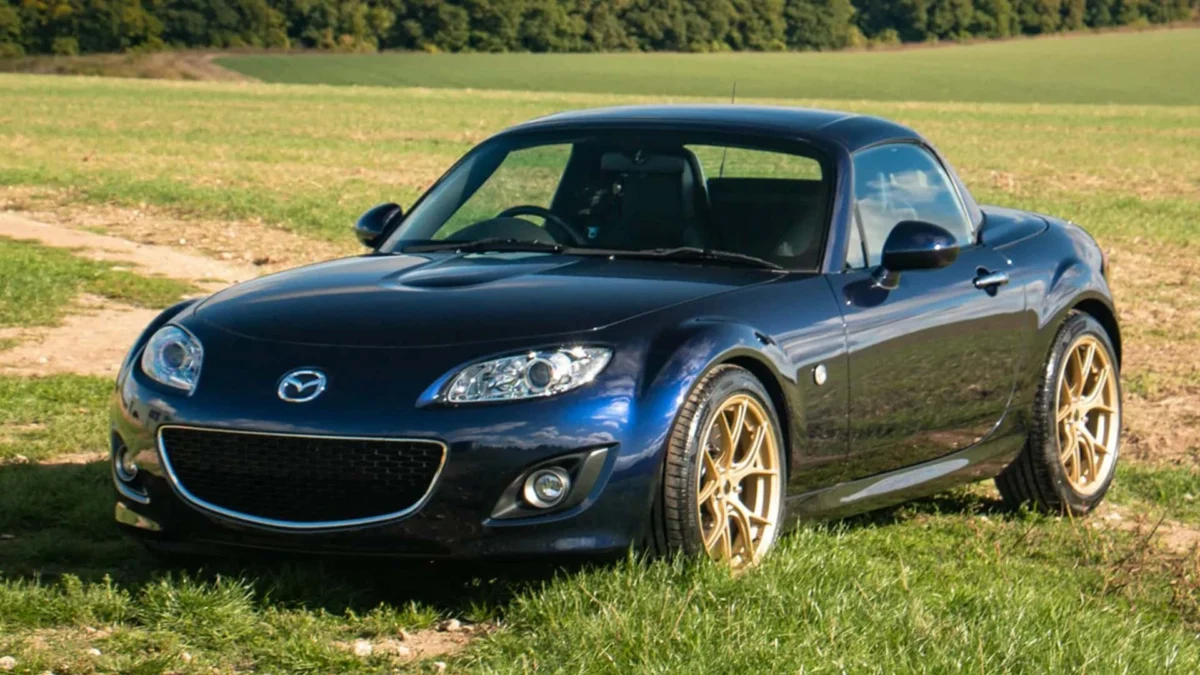
For years, the third-generation Mazda MX-5—known to enthusiasts as the "NC"—has occupied a strange purgatory in the automotive world. Often criticized for its softer lines and heavier curb weight compared to its predecessors (the NA and NB) and its successor (the ND), it has long been the "forgotten" Miata. However, the tides are turning. British engineering firm Rocketeer has officially confirmed a V6 conversion kit for the NC, transforming the oft-overlooked roadster into a high-performance powerhouse. This isn’t merely a backyard engine swap; it is a meticulously engineered, turnkey transformation that is already seeing build slots booked through 2027.
The Genesis of the Rocketeer NC Project
The Mazda MX-5 NC is widely regarded as the most robust chassis Mazda ever produced for its two-seat roadster. Built on a platform shared with the RX-8, it offers superior structural rigidity compared to the earlier, more "flexible" generations. While critics long lamented its weight, tuners have quietly recognized that this very mass—and the inherent strength of the unibody—provides the perfect foundation for a significant increase in power.
Rocketeer, which previously made waves by successfully shoehorning six-cylinder engines into the smaller NA and NB generations, has now turned its attention to the NC. The goal was simple but ambitious: to modernize the NC’s performance profile while maintaining the delicate, 50:50 weight distribution that defines the Miata driving experience. The company has confirmed that the car will make its grand public debut at the 2026 Goodwood Revival, a prestigious event that underscores the project’s legitimacy as a high-end, curated reinterpretation rather than a simple garage modification.
A Technical Breakdown: The Heart of the Beast
At the center of this conversion is the Jaguar AJ30 V6 engine. This 3.0-liter powerplant, sourced from post-2003 Jaguar models, is a descendant of the Ford Duratec family. While the stock NC arrived from the factory with either a 1.8-liter (126 hp) or 2.0-liter (160 hp) four-cylinder engine, the Rocketeer-tuned AJ30 produces upwards of 304 horsepower and 265 lb-ft of torque.
The engineering team at Rocketeer has gone to great lengths to ensure this power doesn’t compromise the handling. By utilizing a carbon fiber intake system, individual throttle bodies, and a heavily reworked cylinder head, the engine achieves a level of responsiveness that feels at home in a track-focused roadster. To manage the increased torque, the team has installed a lightweight flywheel and a reinforced, performance-rated clutch, ensuring that the power delivery remains sharp and immediate.
Perhaps the most impressive feat is the packaging. Rocketeer claims that the entire conversion is executed without modifying the car’s bulkhead or subframe, preserving the original chassis geometry. Despite the addition of two extra cylinders, the finished vehicle maintains a curb weight remarkably similar to the factory original. This balance is critical; in a car as light as a Miata, a front-heavy bias would destroy the steering feel and cornering neutrality. By keeping the mass centralized and the weight distribution even, Rocketeer has managed to retain the "tossable" nature of the car while adding a massive surge of linear, V6 power.
The Porsche Connection: Engineering Pedigree
The inclusion of the AJ30 engine is not a random choice. There is a deep, historically significant lineage tied to this engine block. The architecture of this V6 can be traced back to a design developed by Porsche. When Ford sought to create a world-class V6 for its premium applications, it leaned on the German manufacturer’s expertise.
This gives the Rocketeer NC a unique pedigree: it is a Japanese chassis, powered by a Ford-built, Jaguar-badged engine, underpinned by Porsche-developed engineering. This intersection of automotive cultures is precisely why the conversion has generated so much buzz among purists. It elevates the NC from a "budget sports car" to a bespoke, high-performance GT-killer that carries a story under its hood.
A Chronology of the Miata V6 Dream
The idea of a V6-powered Miata is not entirely new; it has been a "holy grail" for enthusiasts for decades. Even Mazda’s own internal skunkworks teams experimented with the concept during the development phases of the car’s history. However, those prototypes never made it to the production line, largely due to cost-benefit analyses and the limitations of packaging in the tight engine bays of the 1990s and early 2000s.
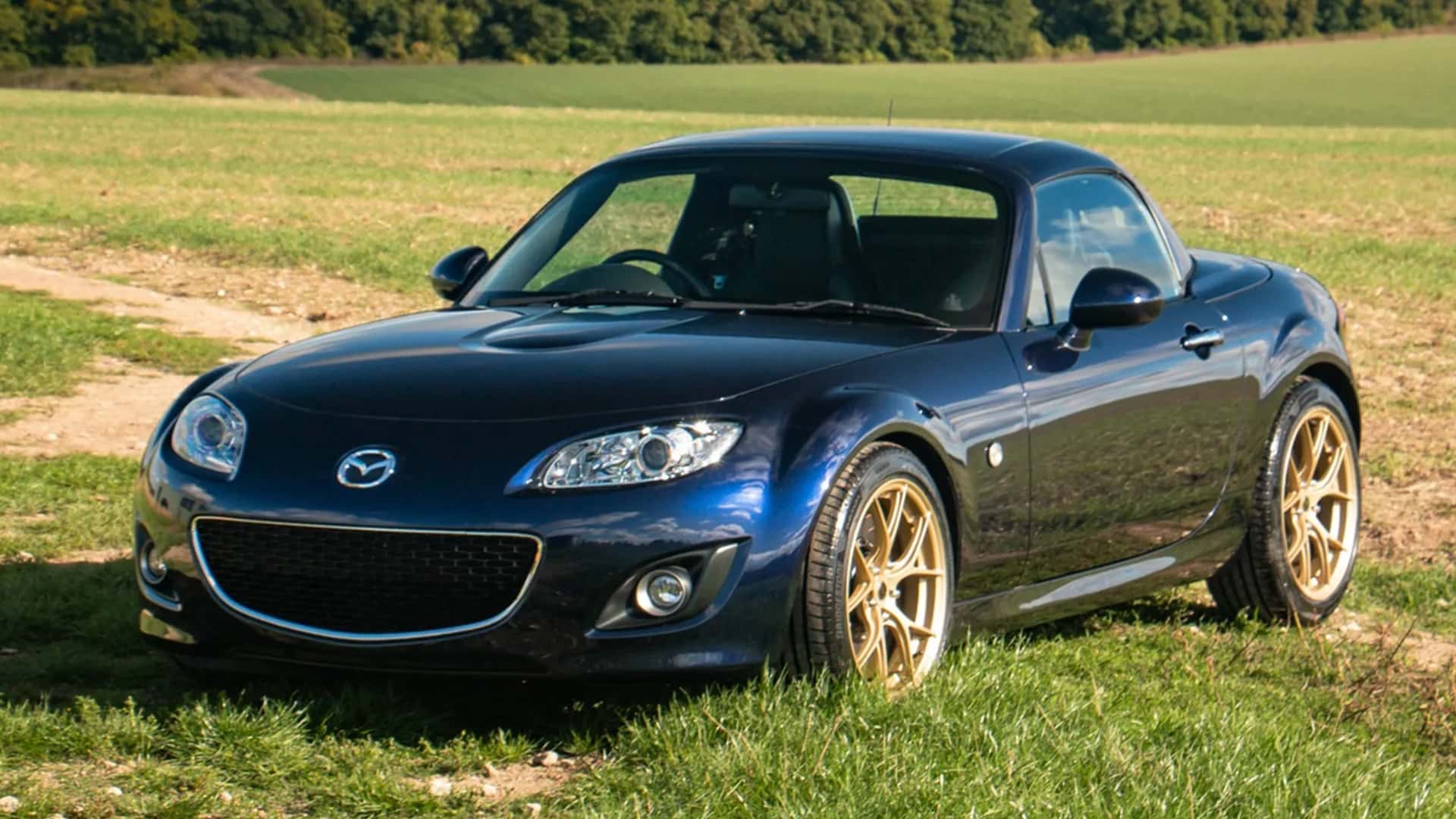
Rocketeer’s recent success is the culmination of years of iterative testing. Their previous work on the NA and NB generations provided the necessary R&D to refine the cooling, mounting, and electronic integration required to make a modern engine play nicely with older chassis architecture. By the time they reached the NC, they had effectively "perfected the playbook," allowing them to tackle the larger, more complex electrical systems of the third-generation car.
The announcement of the 2026 Goodwood debut signals the project’s transition from a niche modification to a formal, industry-recognized build. By choosing such a high-profile venue, Rocketeer is signaling that they are not just selling a kit; they are offering a refined, finished product that meets the standards of the most discerning automotive enthusiasts.
The Business Model: Scaling for the Global Market
For those interested in owning a piece of this performance history, the path to acquisition is structured. A complete "turnkey" build is currently priced at £25,000 (roughly $32,000 USD) plus VAT. While this represents a significant investment, it is a fraction of the cost of a modern, low-production sports car with similar performance metrics.
Rocketeer has been strategic in its expansion, opting not to ship finished cars across the Atlantic, which would be cost-prohibitive and logistically difficult. Instead, they are establishing a network of accredited partners in North America, Germany, and Australia. This ensures that customers can have their vehicles serviced and maintained by local experts who have been trained in the Rocketeer conversion process. This model of decentralized, high-quality production is designed to ensure the long-term sustainability of the vehicles, making them viable "daily drivers" rather than just show-car novelties.
The Implications for the Used Car Market
The impact of this conversion on the market for used NC Miatas cannot be overstated. For years, clean, unmodified NCs have been the bargain of the sports car world. Now, however, there is a clear "upward pressure" on these vehicles as they are increasingly viewed as the ultimate blank canvas for the Rocketeer treatment.
This shift has implications for the "collectability" of the NC. As emissions regulations in the UK and elsewhere make it increasingly difficult for manufacturers to produce naturally aspirated, high-displacement sports cars, the Rocketeer NC offers a "future-proofed" experience. Because the conversion uses modern, well-documented components and is designed for street legality, these cars are likely to hold their value far better than home-built "Frankenstein" projects.
Conclusion: A Credible Keeper
The Rocketeer V6 conversion is, at its core, a testament to the enduring appeal of the Mazda MX-5. By taking the most misunderstood generation of the car and injecting it with the soul of a Jaguar-Porsche hybrid, Rocketeer has created something that transcends the sum of its parts.
For the owner, this isn’t just about raw speed. It is about taking a chassis that they love—one that is stiff, reliable, and affordable—and giving it a long-term future. In an era where the automotive landscape is shifting rapidly toward electrification and autonomy, there is something deeply satisfying about a bespoke, internal-combustion project that celebrates the art of the driving machine. Whether you are a long-time Miata loyalist or a newcomer to the brand, the Rocketeer NC represents a credible, thrilling path forward for the classic roadster concept. It is not merely a modification; it is a re-imagination of what the Miata was always meant to be.